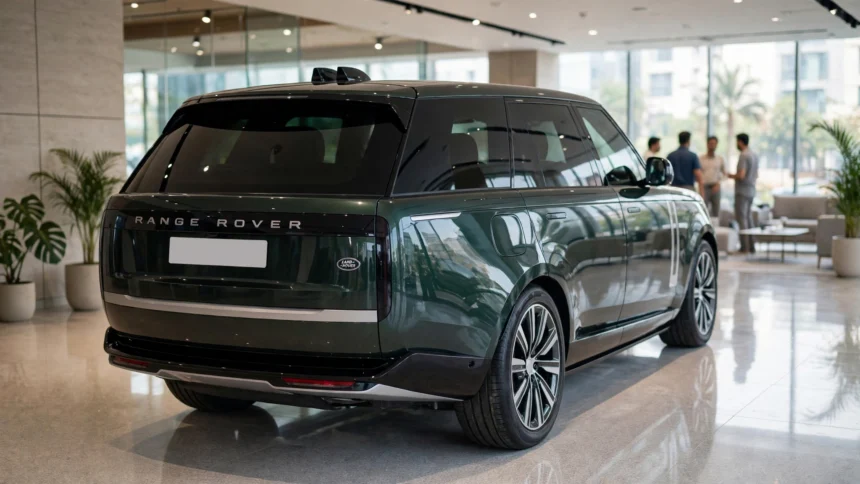
Buying a British luxury car in India could get noticeably cheaper next year. The government has opened applications for importing 24,500 UK-made passenger vehicles at concessional duties in 2027, the biggest quota yet under the India-UK trade deal, and the window is short. Importers have just over two weeks, from November 6 to November 21, to apply.
The move comes from the Directorate General of Foreign Trade (DGFT), which issued a public notice on Friday. It covers cars across three engine-capacity bands, plus a separate quota for goods vehicles. For buyers eyeing a Jaguar, Land Rover, Mini or a British-built BMW, this is the clearest sign yet that the trade pact is starting to change showroom prices.
What the new quota covers
The 24,500-car allocation for calendar year 2027 is split three ways:
- 6,000 cars with engines up to 1,500 cc
- 6,000 cars in the middle band, petrol engines above 1,500 cc and up to 3,000 cc, and diesel engines above 1,500 cc and up to 2,500 cc
- 12,500 cars in the large-engine band, petrol above 3,000 cc and diesel above 2,500 cc
On top of that, there is a separate quota of 2,750 completely built units of goods vehicles. The largest slice, the 12,500 big-engine cars, is where the duty savings are steepest, and that is exactly the segment where British luxury brands are strongest.
How much cheaper could cars get?
Under the India-UK Comprehensive Economic and Trade Agreement (CETA), import duties on British cars have been cut sharply. For cars with engines up to 1,500 cc, basic customs duty has come down to 50 per cent from 66 per cent. The same 50 per cent rate applies to the middle band.
The real difference is in the large-engine category, where the preferential duty has fallen to 30 per cent from the standard 110 per cent. On a luxury SUV or a high-end sedan, that is a cut of 80 percentage points, enough to move the final price by lakhs of rupees. Over the full 15-year life of the pact, duties on 3.78 lakh conventional-engine vehicles are set to fall gradually from 110 per cent to 10 per cent.
There is one important exception. To protect India’s mass-market segment, no duty cuts will apply during the first five years for British electric vehicles, hybrids and hydrogen-powered vehicles priced below 40,000 pounds on a cost, insurance and freight basis. The concessions in this round are aimed squarely at conventional petrol and diesel cars.
Why the quota is bigger than the first year
India had committed under CETA to allow 20,000 UK-made cars at preferential duties in the first year of the agreement. But because the pact came into force only on July 15, 2026, the quota available for the rest of that calendar year was restricted to 4,200 units.
In the first round of allocation for 2026, the government approved six of the eight applications it received, covering 642 vehicles. Jaguar Land Rover India secured the biggest share with 325 units, more than half the approved quota, while BMW India and Skoda Auto Volkswagen India received 75 units each. Three dealerships also secured allocations.
The fresh 24,500-car quota for 2027 goes well beyond the first-year figure. The Global Trade Research Institute has indicated that the DGFT may have applied a higher second-year quota earlier than scheduled, to account for the calendar-year overlap between the pact’s first year, July 2026 to June 2027, and its second year, July 2027 to June 2028, and to absorb unused allocations from late 2026.
What it means for buyers and the industry
For buyers, the practical effect should show up in 2027, when cars imported under this quota start reaching showrooms. Luxury models that were earlier priced out of reach by the 110 per cent duty could see meaningful price corrections, especially large-engine SUVs and sedans from Jaguar Land Rover and other British marques.
For the Indian automobile industry, the announcement will be watched closely. Carmakers were assured that their interests would be protected and that duty reductions on British cars would be staggered over 15 years. The industry will now study how the bigger, earlier quota is interpreted. By the time the transition is complete, India is expected to be selling more than one crore cars a year, so even a small share of concessional imports matters to domestic manufacturers.
Importers and authorised dealers now have until November 21 to file their applications. With the first round oversubscribed in interest, if not in numbers, the 2027 allocation is likely to be keenly contested.
FAQs
How many UK cars can be imported at low duty in 2027?
The DGFT has invited applications for 24,500 passenger vehicles from the UK at concessional duties in calendar year 2027, plus a separate quota of 2,750 goods vehicles.
When can importers apply for the quota?
Applications are open from November 6 to November 21, 2026, under a public notice issued by the Directorate General of Foreign Trade.
How much has the import duty on British cars fallen?
For large-engine cars, the preferential duty is now 30 per cent, down from the standard 110 per cent. Smaller and mid-size cars attract 50 per cent, down from 66 per cent.
Do the duty cuts apply to British electric cars?
No, not in the first five years. British EVs, hybrids and hydrogen vehicles priced below 40,000 pounds (CIF basis) get no duty cut under the pact during that period.
Which company got the biggest share in the first round?
Jaguar Land Rover India secured 325 of the 642 vehicles approved in the first 2026 allocation, more than half the total. BMW India and Skoda Auto Volkswagen India received 75 units each.
The India-UK trade pact is only four months old, but the 2027 quota shows it is already moving from paper to showrooms. For buyers, the next few months will tell whether the duty cuts turn into real price drops.