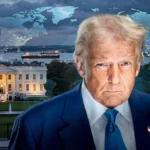
Washington, October 17: In a late-night executive order that caught both allies and critics off guard, US President Donald Trump has waived the sanctions, restrictions and duties his own administration was set to impose under the Lindsey O. Graham Sanctioning Russia and Iran Act, handing major relief to India and other big buyers of Russian oil.
The order, released late Friday night in Washington, invokes a national-interest waiver built into the law. Trump certified to Congress that holding back the measures was in America’s interest, acting just two days before the law’s 30-day tariff deadline was due to expire on October 18.
What the waiver covers
The Graham Act, passed by Congress on September 16 and signed by Trump two days later, was meant to be Washington’s sharpest tool yet against Moscow over its invasion of Ukraine. It authorised tariffs of up to 100 per cent within 30 days on goods entering the United States from the five largest importers of Russian crude oil or gas, including China, India and Turkey.
Friday’s order waives the duties provided under Sections 112 and 113 of the Act, along with a long list of sanctions provisions aimed at foreign persons and entities facilitating Russian oil sanctions evasion. The waivers stay in effect until the president or the secretary of state decides further action is appropriate.
One detail matters here. The order formally sets out the tariff provisions but suspends their implementation, which means the duties could be reimposed later if Trump chooses, and sanctions imposed under earlier executive orders against Moscow remain fully in force.
Why India breathes easier
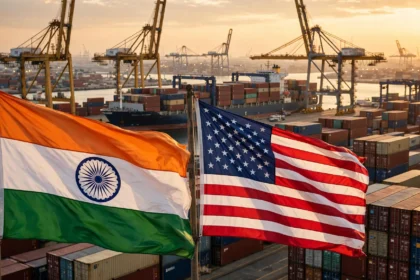
For New Delhi, the timing could hardly be better. India is one of the world’s largest buyers of Russian crude, and the threat of 100 per cent tariffs on Indian goods entering America had hung over trade talks like a dark cloud.
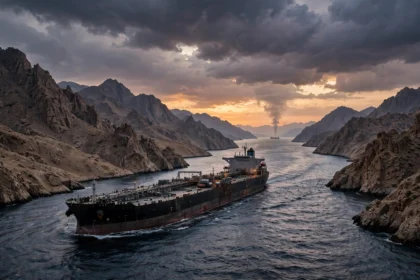
External Affairs Minister S. Jaishankar had flagged India’s concerns to US Secretary of State Marco Rubio at the UN General Assembly last month. His argument was practical: Indian refineries are configured largely for medium sour crude, the grade supplied by the Middle East and Russia, and with Middle East supplies disrupted by the Iran war, India had to depend on Russian crude.
The waiver also lands amid continuing legal drafting of the proposed India-US trade agreement, where the tariff threat was the single biggest friction point left on the table.
The diesel connection
The real driver of Friday’s decision may be closer to home. The waiver comes days after Trump announced a deal with Russian President Vladimir Putin under which Moscow will supply diesel to stabilise global energy markets, and diesel prices in the United States have been hovering near record highs, a politically dangerous issue weeks before the November 3 midterm elections.
That tension has not gone unnoticed in Congress. A bipartisan group of senators signed a letter this week demanding that Trump rescind the diesel arrangement with Putin and enforce the Graham Act in full, while House lawmakers urged that any waiver be narrow and time-limited. Friday’s order, which carries no end date, went further than they wanted.
Rubio lands in India as the ink dries
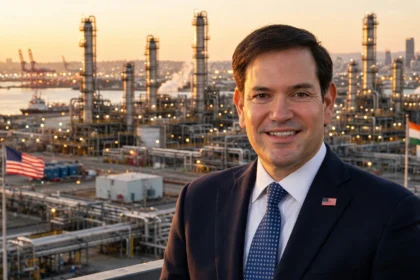
The diplomatic choreography is striking. The waiver arrives on the eve of Marco Rubio’s multi-city visit to India, covering Samarkand, Mumbai and Jamnagar from October 17 to 22. He is expected to hold talks with Jaishankar in Mumbai on October 20 and tour the giant Jamnagar refinery complex, a symbol of exactly the refining capacity India says it cannot afford to idle.
Pressure is not gone
Nobody in Washington is calling this a change of policy toward Moscow. The administration’s line is that the waiver is a tactical pause, taken in the national interest, while the diesel arrangement and broader energy diplomacy play out. For now, the October 18 deadline that had traders, refiners and trade negotiators bracing for impact has passed without the tariff guillotine falling.
Frequently asked questions
What is the Graham Act?
The Lindsey O. Graham Sanctioning Russia and Iran Act of 2026, passed by the US Congress on September 16 and signed by Trump on September 18, empowers the president to impose sweeping sanctions on Russia and tariffs of up to 100 per cent on the biggest buyers of Russian oil and gas.
Which countries were facing the tariffs?
The law targeted the five largest importers of Russian crude oil or gas, including China, India and Turkey, with tariffs of up to 100 per cent on all their goods entering the United States.
Does the waiver remove all Russia sanctions?
No. It waives only the measures under the Graham Act. Sanctions imposed under earlier executive orders against Russian entities and individuals remain in force.
Why did Trump act now?
The 30-day deadline was set to expire on October 18, US diesel prices are near record highs ahead of the November 3 midterms, and Trump had just struck a diesel supply arrangement with Vladimir Putin that would have clashed with the tariff threat.
Can the tariffs come back?
Yes. The executive order formally sets out the tariff provisions but suspends them, and the waivers remain until the president or the secretary of state determines that further action is appropriate. The US will keep monitoring Russian oil purchases.
Informeia will continue tracking this developing story. Follow our World desk for updates as reactions come in from New Delhi, Beijing and Moscow.