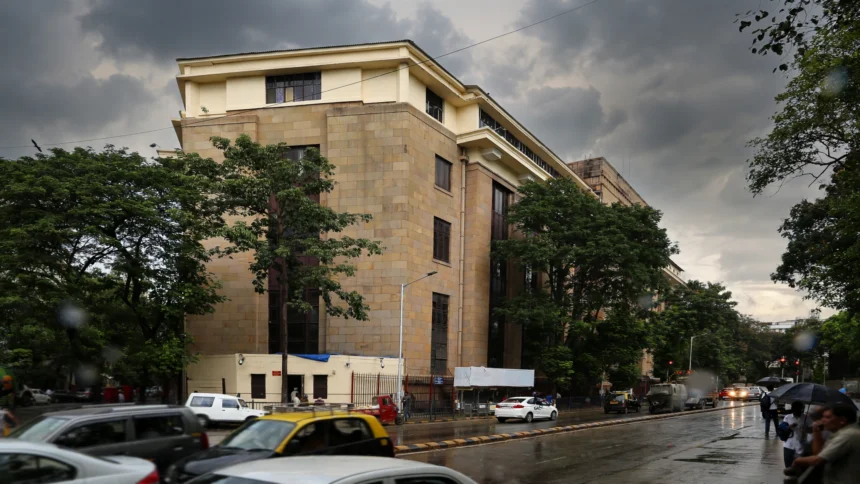
The Reserve Bank of India will pump Rs 50,000 crore into the banking system today, Monday, November 9, through a four-day Variable Rate Repo (VRR) auction. Banks can place their bids between 9:30 am and 10:00 am, and the money will return to the central bank on Friday, November 13.
It marks a rapid turnaround: just weeks ago the central bank was pulling money out, and now it is putting money back in.
Why the RBI is injecting cash now
In a repo auction, banks hand over government securities to the RBI for a few days and get cash in return. When the deal reverses, the banks get their securities back and repay the money with interest. It is a short-term tap the central bank opens when banks are running low on funds.
The need for that tap has grown sharply. Banking system liquidity, which was in surplus of around Rs 4,86,904 crore at the end of September, had shrunk to barely Rs 542 crore by October 21, according to RBI data. Festival-season cash withdrawals, tax outflows and the central bank’s own tightening measures drained the surplus in a matter of weeks. The RBI has also raised the daily cash reserve ratio maintenance requirement to 99 per cent from 90 per cent, and announced open market sales of government securities.
From draining cash to supplying it
For most of August, September and early October, the RBI was in absorption mode. It ran a series of Variable Rate Reverse Repo (VRRR) auctions, the mirror image of today’s operation, in which banks park surplus cash with the central bank. The surplus had built up after large foreign currency deposit inflows under a special swap window that ran from June 8 to August 31.
The turn came on October 19, when the RBI conducted a seven-day VRR auction for Rs 1 lakh crore after a gap of almost three months. On October 22, a one-day VRR auction drew bids worth Rs 1,62,354 crore against a notified amount of Rs 50,000 crore, more than three times the money on offer. The RBI accepted Rs 50,006 crore at a weighted average rate of 5.55 per cent. Since then the central bank has switched between the two tools almost daily, draining cash when the surplus looks comfortable and injecting it when banks turn thirsty.

What the last few auctions tell us
Friday, November 6, saw a three-day VRRR auction of Rs 25,000 crore. Banks offered Rs 18,133 crore and the RBI accepted the entire amount at a cut-off rate of 5.49 per cent. That operation reverses today, November 9, which is one reason the fresh VRR auction is timed for this morning.
Two days earlier, on November 4, an overnight VRRR auction drew offers of Rs 73,907 crore against a notified Rs 50,000 crore. The RBI accepted Rs 50,015 crore at 5.49 per cent. It showed some banks still had cash to park even as others queued to borrow, and the RBI’s daily auctions have become the valve balancing the two sides.
What it means for banks and borrowers
For banks, today’s auction is straightforward relief. The Rs 50,000 crore will ease overnight borrowing costs and keep the call money rate close to the policy repo rate. Banks borrowing at higher rates in the interbank market should find money cheaper and easier to get.
For borrowers, the effect is indirect but real: when banks are short of cash, lending slows and loan rates stay sticky, while comfortable liquidity supports credit growth. Non-food bank credit grew 19.1 per cent year on year as of September 30, 2026, against 11.2 per cent a year earlier, according to the RBI’s sectoral data.
For markets, the auction result due later this morning will be watched closely. Strong bids would confirm banks still need the RBI’s help; a muted response would suggest the crunch is easing. The result, expected shortly after the 10 am close of bidding, will set the tone for the week, and traders will also watch whether the RBI lines up more operations ahead of the December monetary policy meeting.
FAQs
What is a VRR auction?
The RBI lends money to banks for a short period against government securities. Banks bid the rate they are willing to pay, and the RBI accepts bids starting from the lowest.
How is a VRR different from a VRRR?
A VRR injects cash into the system, while a VRRR absorbs surplus cash. The RBI uses one or the other depending on whether banks are short of funds or flush with them.
How much is the RBI injecting today?
Rs 50,000 crore through a four-day VRR auction today, November 9, 2026. Bidding runs 9:30-10:00 am; the operation reverses on November 13.
Why does bank liquidity matter to ordinary people?
When banks have enough cash, they can lend more easily and at better rates, which affects home, auto and business loans. When cash runs short, credit tightens and borrowing can get costlier.
What was the result of the last VRR auction?
On October 22, banks bid Rs 1,62,354 crore for a Rs 50,000 crore one-day VRR auction, and the RBI accepted Rs 50,006 crore at a weighted average rate of 5.55 per cent.
Behind the stock market headlines, the RBI’s daily liquidity operations quietly keep India’s banking system running. The numbers at 10 am will show how much help banks still need.