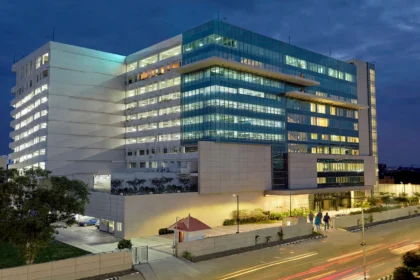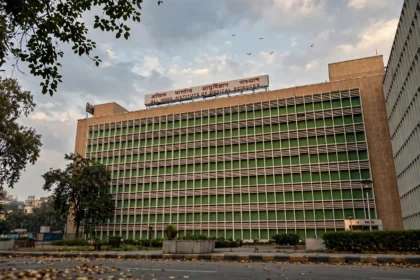
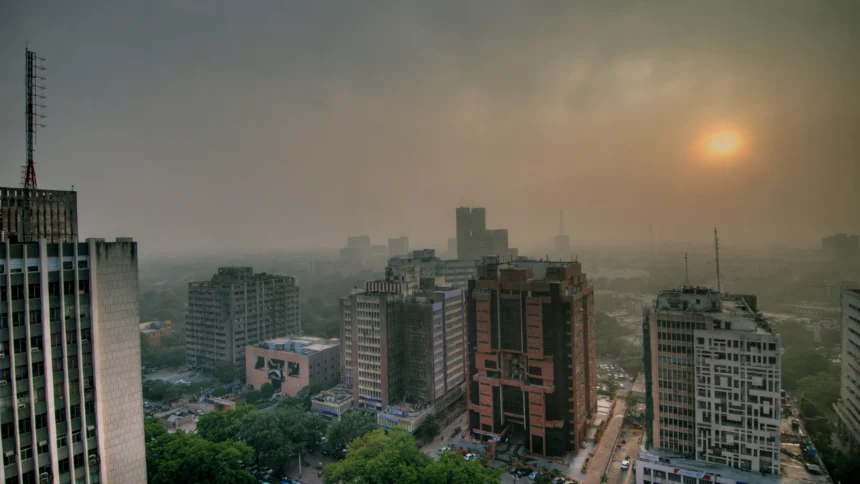
Delhi woke up on Monday morning to a sky it knows too well. A thick grey smog hung over the capital the day after Diwali, visibility dropped on several stretches, and the air smelled of smoke. The Central Pollution Control Board (CPCB) put the citywide average Air Quality Index (AQI) at 368 at 7 am on November 9, which falls in the “very poor” band. But the city average hides the worse picture in individual neighbourhoods, where 15 monitoring stations recorded readings above 400, the “severe” category.
Burari Crossing and Sonia Vihar recorded the highest AQI in the city at 441 each. Vivek Vihar followed at 437, Delhi Technological University at 434, and North Campus and Jahangirpuri at 433 each. Of the 54 stations reporting valid data, all were above 200 and 50 above 300.
What the numbers actually say
The AQI scale runs from 0 to 500: 0 to 50 is good, 51 to 100 satisfactory, 101 to 200 moderate, 201 to 300 poor, 301 to 400 very poor, and 401 to 500 severe. Delhi’s citywide reading of 368 sits at the top end of very poor, but 15 stations crossed into severe territory by early morning.
According to Delhi Pollution Control Committee data reported by Business Standard, PM2.5 levels at Akshardham touched 760.99 micrograms per cubic metre at 11 pm on Sunday, more than 50 times the World Health Organization’s recommended 24-hour guideline of 15 micrograms per cubic metre.
Private monitors showed even higher figures, with AQI.in above 1,000 for Delhi and above 1,600 in some central areas. In the National Capital Region, Bahadurgarh recorded 389, Ghaziabad 366, Faridabad 334, Noida 340 and Gurugram 316, while the AQI around India Gate and Kartavya Path stood at 381.
Why the air turned so bad, so fast
Firecrackers were the trigger, but they were not the only cause. Residents burst firecrackers well past the Supreme Court’s 10 pm deadline, with the activity picking up after 5 pm on Sunday and continuing through most of the night. The smoke had nowhere to go. Calm wind conditions after Diwali night meant the pollutants stayed trapped close to the ground instead of dispersing.
Underneath the festival spike sit the usual suspects. Vehicle emissions remain one of the biggest year-round contributors to Delhi’s pollution, a point the Supreme Court itself flagged while hearing the air pollution matter last week. Stubble burning in Punjab added to the load: Punjab Pollution Control Board data showed the state had logged 3,144 farm fire cases this season till November 6. Dust from construction and heavy traffic complete a mix that leaves Delhi little headroom before any festival or weather event tips it into severe. This is why Diwali week is so predictable: the city enters November already in the very poor band, and one night of heavy firecracker use, combined with still air, is enough to push station after station past 400.
GRAP Stage III: what is actually in force
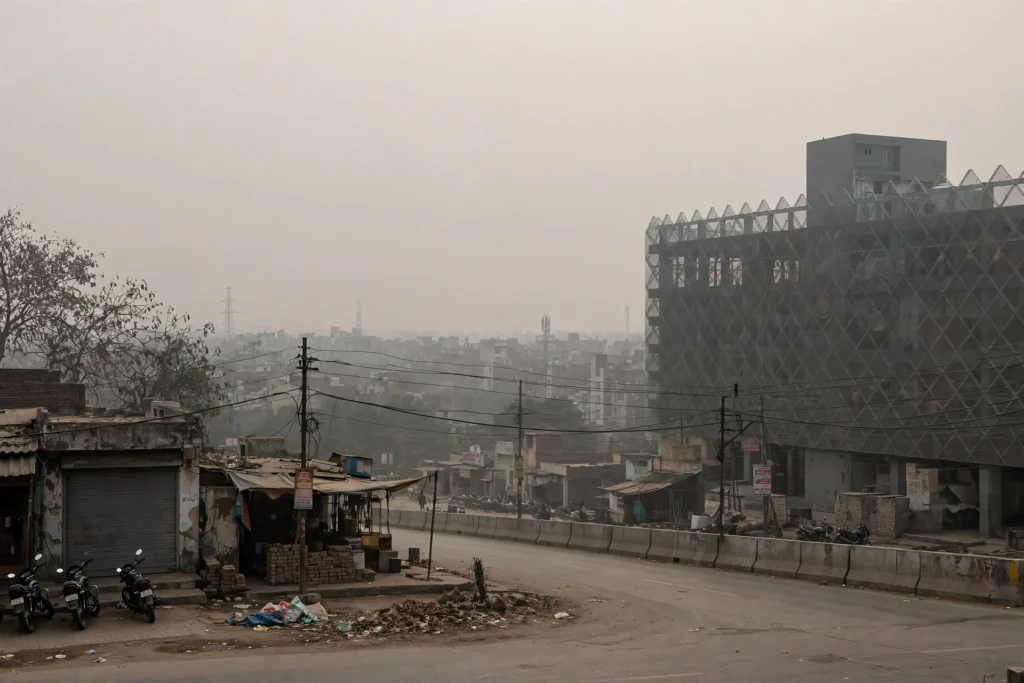
The emergency response was already switched on before Diwali. The Commission for Air Quality Management (CAQM) invoked Stage III of the Graded Response Action Plan (GRAP) on November 6, after Delhi’s average AQI reached 382, at the upper end of the very poor band. Stage III applies when the AQI enters the severe range of 401 to 450, and the CAQM acted ahead of Diwali as a precautionary step.
Under Stage III, non-essential construction and demolition work is suspended across Delhi-NCR, along with mining, stone crushers and polluting industries using unapproved fuels. Restrictions apply to older, more polluting vehicles, including BS-III petrol and BS-IV diesel four-wheelers.
Schools up to Class V in Delhi, Gurugram, Faridabad, Ghaziabad and Gautam Buddha Nagar have been directed to run hybrid classes, so parents can choose online lessons for young children. Offices can cap physical attendance at 50 per cent, with the rest working from home. The measures stay in force until the CAQM reviews them. If the AQI crosses 450, the framework moves to Stage IV, the severe plus category, which brings even stricter curbs.
What this air does to you, and what happens next
Air at these levels is not a minor inconvenience. At AQI readings above 400, health advisories ask everyone to avoid outdoor exertion, and people with asthma, heart disease or other respiratory conditions face a real risk of flare-ups. Children and older adults are the most vulnerable. Doctors advise staying indoors on severe days and wearing a properly fitted N95 mask when stepping out is unavoidable. Morning walks and outdoor exercise are best skipped until the air improves.
The Air Quality Early Warning System has forecast that air quality could slip into the severe category from November 9 and remain there over the next few days, fluctuating between very poor and severe over the following six days. What changes the picture is wind: stronger winds can clear the pollutants within a day, while calm conditions can keep the smog hanging for a week.
The CAQM will review the GRAP stage as fresh data comes in, and any deterioration toward 450 would trigger Stage IV curbs. For now: check the AQI for your area before stepping out, keep children indoors on severe mornings, and treat official advisories as instructions, not suggestions.
FAQs
What was Delhi’s AQI on the morning after Diwali?
368 at 7 am on Monday, November 9, in the very poor category. Fifteen monitoring stations were above 400, in the severe category, with Burari Crossing and Sonia Vihar highest at 441 each.
What is GRAP Stage III and what does it ban?
The emergency pollution-control stage the CAQM invoked on November 6. It suspends non-essential construction and demolition, restricts BS-III petrol and BS-IV diesel vehicles, and directs schools up to Class V to run hybrid classes, with offices advised to move to 50 per cent work from home.
How long will the severe air last in Delhi?
The Air Quality Early Warning System forecasts the air could remain in the severe category for the next few days, fluctuating between very poor and severe over the following six days. Wind conditions will decide how quickly it clears.
Is it safe to go for a morning walk in Delhi right now?
No, not while the AQI is in the very poor or severe range. Health advisories recommend avoiding outdoor exercise, staying indoors where possible, and wearing an N95 mask if you must go out.
Delhi’s air will clear eventually. The question is how many severe mornings the city has to breathe through first.