India’s unemployment rate eased to 5.1 per cent in the July-September quarter of 2026, down from 5.4 per cent in the previous three months, according to fresh data released by the National Statistics Office (NSO) on Tuesday. The improvement was driven almost entirely by rural India, where joblessness fell sharply while more people joined the workforce.
The figures come from the Periodic Labour Force Survey (PLFS), the government’s main survey of jobs and work, run by the Ministry of Statistics and Programme Implementation (MoSPI). The survey covers people aged 15 and above and measures activity under Current Weekly Status, which records what a person did during the seven days before the survey.
The headline number tells only part of the story. Behind it sits a labour market moving in two different directions at once: villages are adding work at a brisk pace, while cities are barely moving.
Rural India did the heavy lifting
Rural unemployment fell to 4.3 per cent in July-September, from 4.8 per cent in April-June, a drop of half a percentage point in a single quarter. The share of rural residents either working or looking for work, the labour force participation rate, climbed to 58.1 per cent from 56.9 per cent. The worker population ratio, the share of people actually employed, rose to 55.6 per cent from 54.2 per cent.
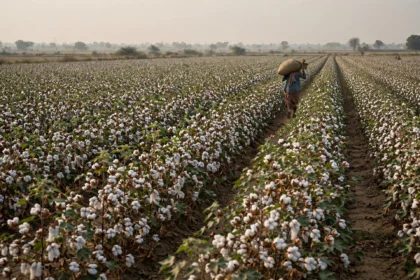
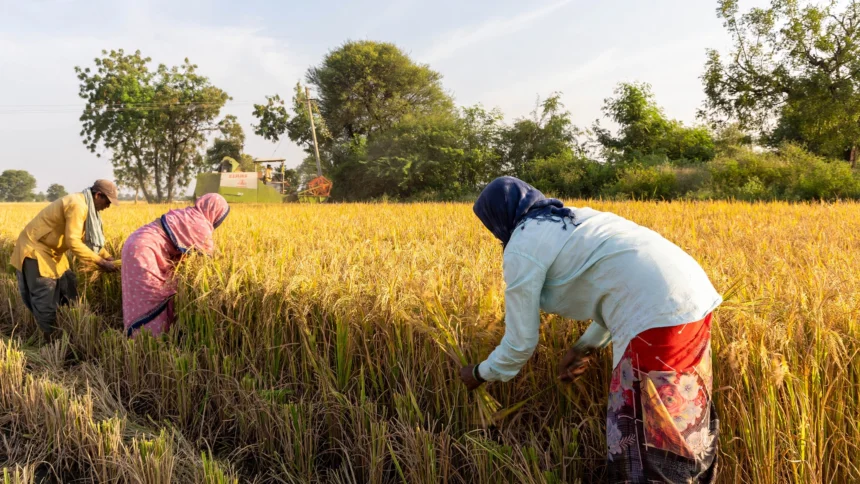
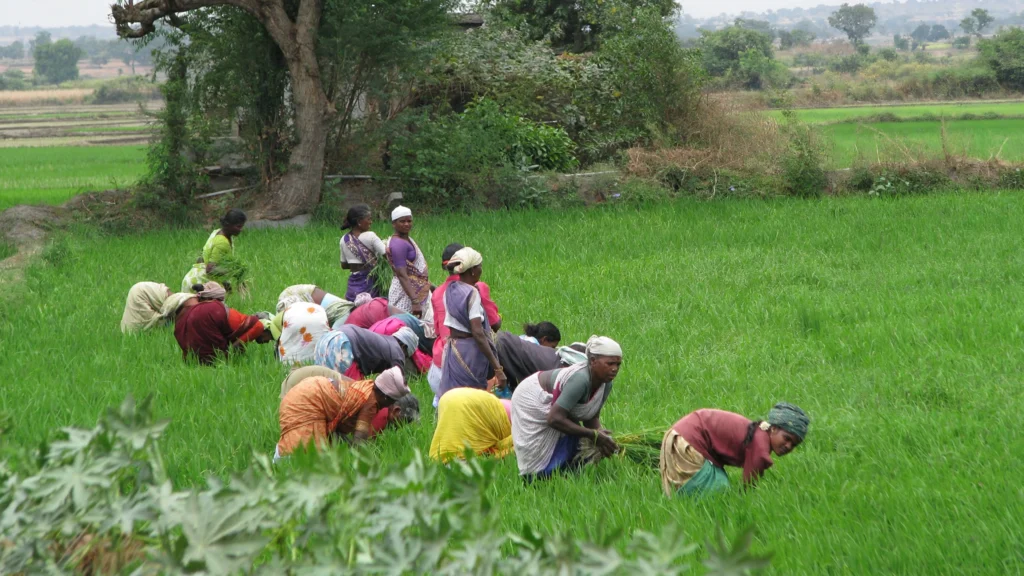
Much of this is tied to the farm calendar. The share of rural workers engaged in agriculture rose to 56.7 per cent from 52.9 per cent in the previous quarter, as the kharif harvest season pulled more hands into the fields. Self-employment in rural areas also increased, to 62.7 per cent from 61.4 per cent.
That seasonal lift is real work, but it carries a warning. Farm jobs swell during sowing and harvest and thin out afterwards, so the key question next quarter will be whether these gains hold once agricultural activity winds down.
Cities stayed flat
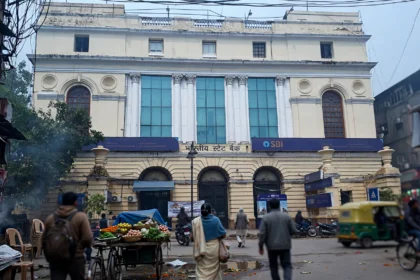
Urban India told a quieter story. The urban unemployment rate edged up to 6.8 per cent from 6.7 per cent, the worker population ratio stayed nearly unchanged at 46.9 per cent, and participation moved only slightly, to 50.4 per cent from 50.2 per cent.
There was one small bright spot in the cities. The share of urban workers in regular salaried jobs rose to 49.6 per cent from 49.3 per cent, a modest sign of formal employment holding steady.
The urban-rural gap remains wide. At 6.8 per cent, city unemployment is more than two and a half percentage points above the rural rate of 4.3 per cent, a reminder that job creation in towns and cities is still the harder problem.
More women are working
One of the strongest signals in the new data is about women. The share of women working or looking for work rose to 34.7 per cent from 33.2 per cent, the biggest single-quarter jump in recent data. The share of women actually employed climbed to 32.8 per cent from 31.3 per cent.
Overall, an estimated 57.9 crore people aged 15 and above were employed in India on average during July-September 2026. Of these, 40.5 crore were men and 17.4 crore were women. The survey covered 5,55,593 people across the country.
What the numbers mean
Nationally, the labour force participation rate rose to 55.5 per cent from 54.6 per cent, and the worker population ratio improved to 52.7 per cent from 51.7 per cent. In plain terms, more Indians were working, and more were looking for work.
The redesigned PLFS, in place since January 2025, now produces comparable quarterly estimates for both rural and urban India, making it easier to track these shifts as they happen rather than once a year.
Even so, the data comes with a caveat. These are sample estimates, and small changes may not always be statistically significant. The survey also says nothing about whether the new jobs are productive, secure or better paid.
The next test comes in the October-December quarter. If rural participation stays high after the harvest and urban hiring picks up, today’s 5.1 per cent will look like the start of a trend. If the farm-season effect unwinds, the rate could drift back up.
Frequently asked questions
What is India’s unemployment rate now?
India’s unemployment rate for people aged 15 and above stood at 5.1 per cent in July-September 2026, down from 5.4 per cent in April-June 2026, according to the NSO’s Periodic Labour Force Survey released on 10 November 2026.
Why did unemployment fall?
The fall was driven mainly by rural areas, where unemployment dropped from 4.8 per cent to 4.3 per cent as the kharif harvest increased farm work and self-employment.
What is the labour force participation rate?
It is the share of people aged 15 and above who are working or looking for work. It rose to 55.5 per cent in July-September 2026 from 54.6 per cent in the previous quarter.
How is urban unemployment doing?
Urban unemployment edged up slightly to 6.8 per cent from 6.7 per cent, with the urban worker population ratio nearly unchanged at 46.9 per cent.
What is the PLFS?
The Periodic Labour Force Survey is the National Statistics Office’s main survey of employment and unemployment in India. Since January 2025, it has provided quarterly estimates for both rural and urban areas.
The full PLFS quarterly bulletin for July-September 2026 is published by the Ministry of Statistics and Programme Implementation.