
The rupee is having a moment. As currency trading resumes in Mumbai today after Tuesday’s holiday, all eyes are on a currency that touched a six-month high of 93.69 against the US dollar on Monday and has quietly become one of Asia’s best-performing currencies this financial year.
The Indian currency has now strengthened 0.97% so far in 2026-27, according to Bloomberg data, a turnaround from the pressure it faced through much of last year. On Monday, it closed at 93.9275 per dollar, marginally weaker than Friday’s close of 93.9050, as dollar purchases by state-run banks snapped a six-session winning streak. But the bigger picture is clear: the rupee has gained 81 paise over the past week alone.
What pushed the rupee to a six-month high
Two forces have done most of the heavy lifting. The first is crude oil. Brent crude has slipped below 90 dollars a barrel for the first time since August, and cheaper oil directly shrinks India’s import bill. India buys most of its crude from overseas, so every fall in oil prices eases the demand for dollars and takes pressure off the rupee.
The second is foreign money coming back. Net foreign portfolio inflows into India stand at around 6.4 billion dollars so far in November, according to NSDL data cited by The Hindu BusinessLine. That flow of dollars into Indian stocks and bonds has given the rupee a steady tailwind through the past week.
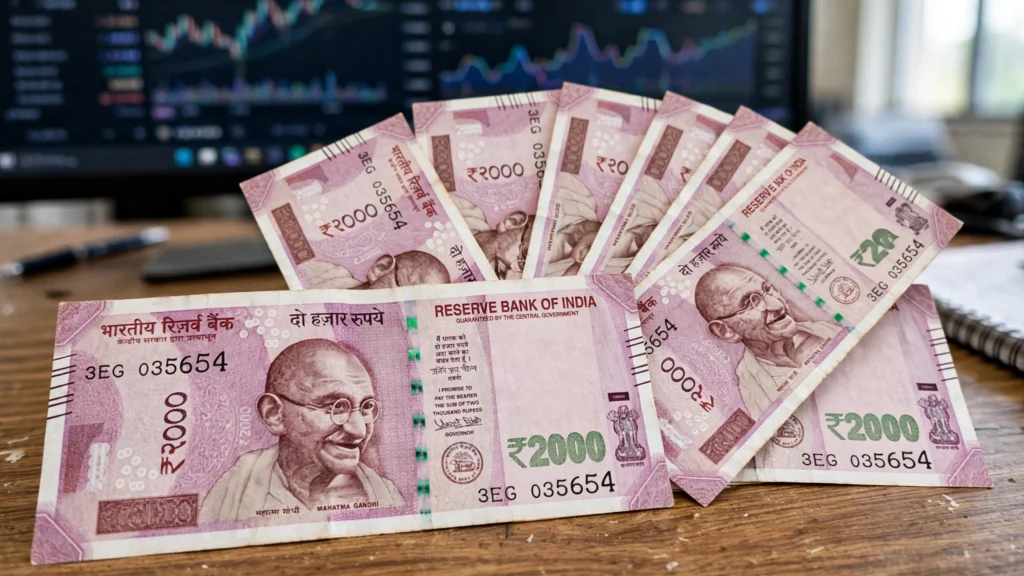
The RBI’s careful balancing act
Monday’s small pullback from the 93.69 high tells its own story. Traders said state-run banks were buying dollars through the session, and several believed those purchases were made on behalf of the Reserve Bank of India. The central bank has a long record of stepping in to smooth sharp moves in the currency, in both directions.
The RBI also has a practical reason to buy dollars now. Its net short position in the forward market ballooned to nearly 240 billion dollars in September, an all-time high, leaving it with large future dollar commitments. Madhavi Arora of Emkay Global expects the central bank to use any sustained improvement in inflows to rebuild its foreign exchange reserves rather than allow a sharp appreciation in the rupee.
Could the rupee reach 90?
Some market watchers think there is more room to run. Anindya Banerjee, head of commodities research at Kotak Neo, told news agency ANI that the rupee still looks undervalued against its peers at around 93.5 in the offshore market. If the situation in West Asia improves in the coming weeks and months, he said, the currency could appreciate to 91 or even 90 against the dollar.
There are risks, of course. Oil prices can turn quickly if West Asia tensions flare again, and the US Federal Reserve’s next move on interest rates will shape the dollar’s direction. US consumer inflation slowed to 0.4% in October, a number traders were watching closely. A strong US jobs report last week has already pushed markets to price in a high chance of a Fed rate increase next month, which could support the dollar.
What it means for you
A stronger rupee is good news in several everyday ways:
- Cheaper imports: Fuel, electronics and other imported goods cost less in rupee terms when the currency gains.
- Softer inflation: Cheaper crude and imports help keep price rises in check, which matters ahead of the October inflation data due on November 12.
- Better for travellers and students: A dollar at 93.69 instead of 97 buys more for Indians travelling abroad or paying overseas fees.
- Exporters feel the pinch: On the flip side, IT firms and exporters earn less in rupee terms when the currency strengthens.
For now, the rupee’s rally is a vote of confidence in India’s economy: strong growth, falling oil prices and returning foreign investors. Whether it can push towards 90 will depend on oil, global rates and how much room the RBI allows it.
FAQs
What is the rupee’s current level against the dollar?
The rupee closed at 93.9275 per dollar on Monday, November 9, after touching an intraday six-month high of 93.69. Currency markets were closed on Tuesday for a holiday and reopen on Wednesday, November 11.
How much has the rupee gained this financial year?
The rupee has appreciated 0.97% so far in 2026-27, making it one of Asia’s best-performing currencies this fiscal year, according to Bloomberg data.
Why is the rupee strengthening?
Falling crude oil prices, which have slipped below 90 dollars a barrel, and strong foreign portfolio inflows of around 6.4 billion dollars in November so far are the main drivers, along with easing geopolitical tensions.
Why did the RBI step in on Monday?
Traders believe state-run banks bought dollars on the central bank’s behalf to slow the rupee’s rise. The RBI holds a record net short forward position of nearly 240 billion dollars and is expected to use inflows to rebuild reserves.
Could the rupee reach 90 per dollar?
Kotak Neo’s Anindya Banerjee says it could, if West Asia stabilises and foreign inflows continue. But the RBI is likely to manage the pace, and oil prices and US interest rates remain key risks.
The rupee’s six-month high is a milestone, not a finish line. With inflation data due tomorrow and global markets watching the Fed, the next few sessions will show whether this rally has further to run.