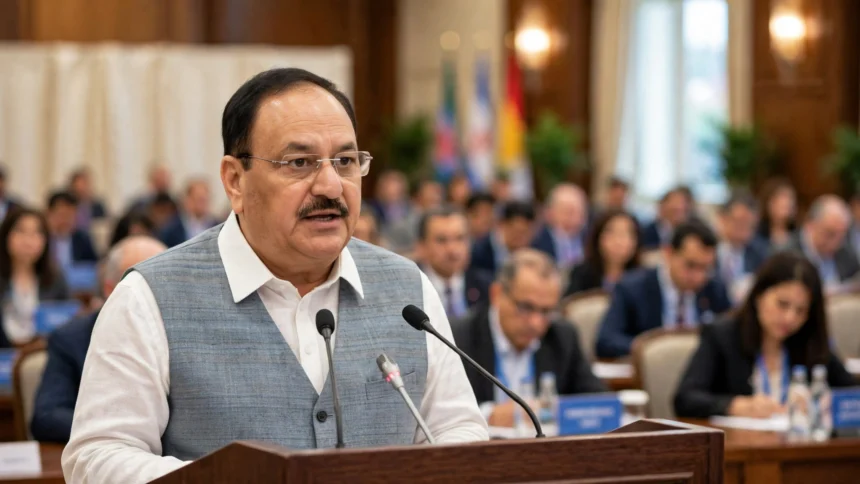
India took its biggest health programmes to a regional stage on Wednesday, as Union Health Minister J. P. Nadda addressed the first ever BIMSTEC Health Ministers’ Meeting in Colombo, Sri Lanka. The message from New Delhi was simple: what worked for India at scale can now work for its neighbours too.
Nadda pitched Ayushman Bharat, the government’s flagship health insurance scheme, along with digital health tools such as the eSanjeevani telemedicine platform, as shared assets for the seven-nation Bay of Bengal grouping. He also confirmed that India will host the BIMSTEC Centre of Excellence in Traditional Medicine at Jamnagar in Gujarat, giving the region a permanent hub for joint research on traditional medicine.
The meeting, held in Colombo on November 11, 2026, is the first time health ministers from all seven BIMSTEC countries have met in this format. A senior officials’ meeting on health on Tuesday laid the groundwork for the ministerial discussions.
What India offered its neighbours
At the centre of Nadda’s address was a readiness to share, not just to showcase. He told his counterparts that India was ready to share its expertise and best practices with BIMSTEC partners, framing Ayushman Bharat and eSanjeevani as models that neighbours facing similar access and affordability problems could learn from and adapt.
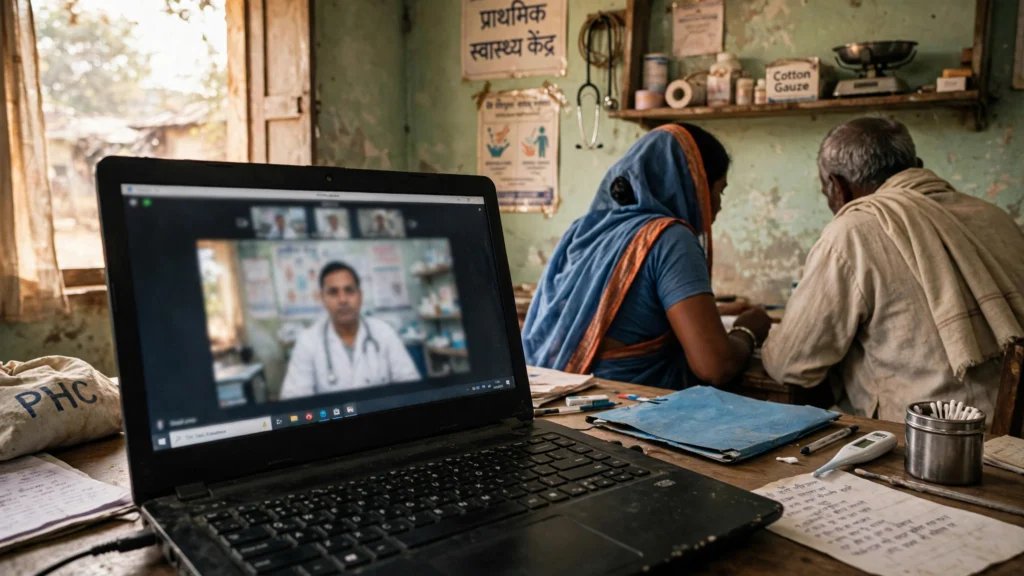
Ayushman Bharat, launched in 2018, is India’s flagship public health insurance scheme, covering hundreds of millions of low-income citizens. eSanjeevani, the government’s telemedicine platform, lets patients in far-flung areas consult doctors remotely, and it has become a routine part of healthcare delivery across the country. Both featured prominently in the minister’s address, alongside India’s broader push towards universal health coverage and stronger public health infrastructure.
Jamnagar to host traditional medicine centre
The sharpest institutional announcement from Colombo was the Jamnagar centre. India will host the BIMSTEC Centre of Excellence in Traditional Medicine at Jamnagar, Gujarat, a city already known for its Ayurveda research institutions. The centre is meant to drive joint research, capacity building and knowledge exchange across member states.
Nadda said India was proud to host the centre. For a region where traditional systems of medicine remain a first line of care for millions, the centre gives India’s AYUSH ecosystem a multilateral mandate.
Health security and pandemic preparedness on the agenda
Beyond the flagship schemes, the Colombo discussions covered health security, pandemic preparedness, One Health and traditional medicine. One Health, the idea that human, animal and environmental health must be tackled together, has gained ground across the region after the pandemic exposed how quickly a local outbreak can become a regional crisis.
Nadda framed the effort in the language of Prime Minister Narendra Modi’s vision of “One Earth, One Family, One Future”, and of the Neighbourhood First and Act East policies. In a post on X after his address, he said India remained committed to building a healthier, safer and more resilient Bay of Bengal region, and that no country should be left behind.
A goodwill gesture for Sri Lanka
Nadda’s visit also carried a concrete deliverable for the host country. During the visit, India was expected to sign an agreement to provide a grant for 100 new, fully equipped ambulances for Sri Lanka’s 1990 Suwa Seriya free national emergency ambulance service. Sri Lanka’s Cabinet spokesman and Health Minister Nalinda Jayatissa announced the plan a day earlier, saying the Cabinet had approved the proposal.
The new ambulances are expected to strengthen a fleet of 322 vehicles that has faced increasing mechanical strain after years of heavy use.
Why this meeting matters
BIMSTEC groups seven countries that share the Bay of Bengal’s coastline and hinterland: Bangladesh, Bhutan, India, Myanmar, Nepal, Sri Lanka and Thailand. The grouping was set up in 1997 to promote technical and economic cooperation, but health cooperation has historically moved slowly, limited to ad hoc exchanges between officials.
Wednesday’s meeting changes that. For the first time, health ministers have sat down together in a structured forum, with pandemic preparedness, digital health and traditional medicine on a shared agenda. Whether it becomes a turning point or a one-off photo opportunity will depend on the follow-through, but as a first step, India has put its cards on the table.
FAQs
What is the BIMSTEC Health Ministers’ Meeting?
It is a forum bringing together health ministers from BIMSTEC’s seven member states to coordinate on regional health priorities. The November 2026 meeting in Colombo was the first of its kind.
Which countries are members of BIMSTEC?
BIMSTEC has seven member states: Bangladesh, Bhutan, India, Myanmar, Nepal, Sri Lanka and Thailand. The grouping was established in 1997.
What did India offer at the Colombo meeting?
India offered to share its experience with Ayushman Bharat, digital health and the eSanjeevani telemedicine platform, and confirmed it will host the BIMSTEC Centre of Excellence in Traditional Medicine at Jamnagar, Gujarat.
What is eSanjeevani?
eSanjeevani is the Indian government’s telemedicine platform, which lets patients consult doctors remotely. It was highlighted in Colombo as a digital health tool India is willing to share with regional partners.
What is the Jamnagar centre for?
The BIMSTEC Centre of Excellence in Traditional Medicine at Jamnagar will support joint research, capacity building and knowledge exchange in traditional medicine among member states.
India’s health diplomacy now has a formal regional forum. The next step is turning Wednesday’s promises in Colombo into a working plan.