
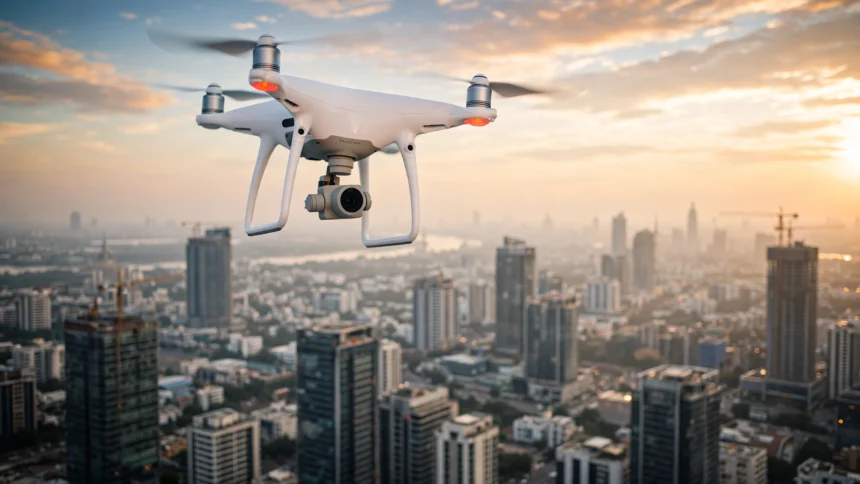
India’s drone industry is preparing for a sharp climb. Drone Federation India (DFI) said on Saturday that the sector could grow from Rs 5,720 crore in 2025-26 to around Rs 97,300 crore by 2030-31, a seventeen-fold jump in five years. The projection was shared at the Bharat Drone Stack Conference 2026 in Bengaluru, the country’s largest gathering focused on drone components.
The conference brought together more than 80 Indian component makers and about 3,000 delegates, along with senior officers from the armed forces, scientists from DRDO and national laboratories. The message from the stage was simple: India buys too many drone parts from abroad, and that has to change.
A whitepaper with 22 recommendations
The centrepiece of the day was a whitepaper titled ‘Making the Swadeshi Switch’, released by senior military officers and scientists. It carries 22 policy recommendations aimed at building a home-grown drone component industry.
The recommendations include Indian content norms for defence and civil drones, targeted support for component manufacturers, and testing and certification of components within India. DFI said it will take the recommendations to the ministries concerned and review progress at the next edition of the conference in 2027.
Among those who released the whitepaper were Lieutenant General Shamsher Singh Virk, Deputy Chief of the Army Staff (Capability Development and Sustenance), Air Marshal Samir Jayasinha Pendse, Senior Air Staff Officer at Training Command, Indian Air Force, and Dr Abhay A. Pashilkar, Director of CSIR-National Aerospace Laboratories.
Why components matter more than drones
India can already assemble drones. The harder part is what goes inside them. Motors, batteries, sensors, flight controllers and communication systems are still largely imported, which keeps costs high and supply chains fragile.
That dependence is the problem the Bharat Drone Stack initiative is trying to solve. Launched in August 2025, the initiative has identified 208 suppliers, including 83 startups, working on domestic drone components. The conference in Bengaluru, with its 10 thematic sessions, was built around that supply chain: who makes what, what is still missing, and what policy support is needed to close the gaps.
DFI estimates the component market alone at USD 3.08 billion by 2030-31. For component makers, that is the real prize. A drone assembled in India with imported parts creates far less value than one built largely from Indian parts, and in defence use, imported components also raise security questions.
Where the growth will come from
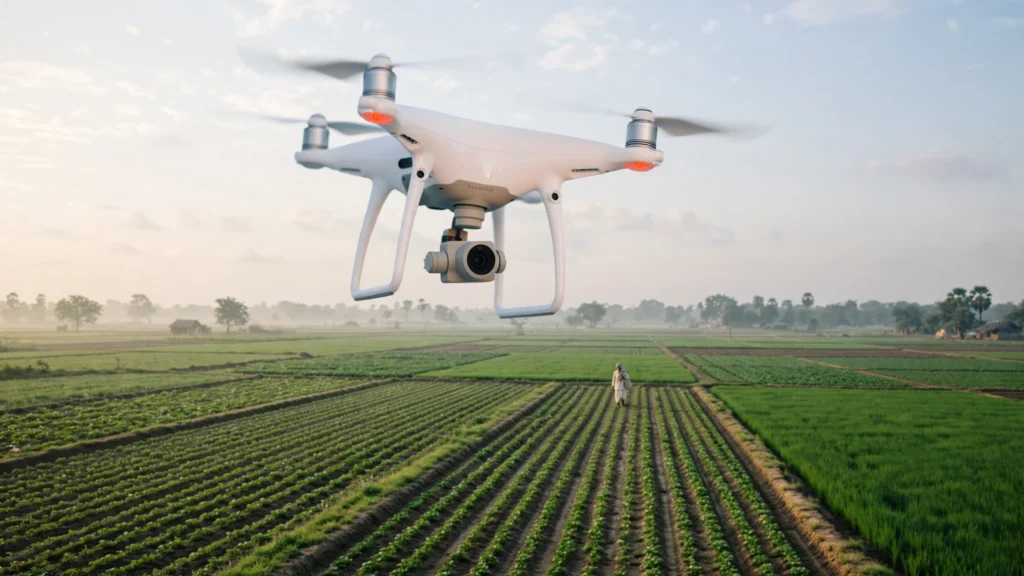
Drones in India are no longer a niche story. They are used in farming to spray crops, in surveys and mapping, in delivering medicines to remote areas, and increasingly in defence and border surveillance. The government’s PLI scheme for drones and the Namo Drone Didi programme, which trains women self-help groups to operate agricultural drones, have pushed adoption beyond cities.
The armed forces are the other big driver. With unmanned systems now central to modern warfare, the military’s demand for surveillance and combat drones is rising fast. The presence of senior Army and Air Force officers at a components conference shows how seriously the services take the supply question.
For startups, the next five years look like an open field. But the whitepaper’s warning is clear: without Indian content norms and proper testing infrastructure, the industry could grow in volume while remaining dependent on imports for its most critical parts.
What happens next
DFI will now carry its 22 recommendations to the government. The test will be whether the next edition of the conference, in 2027, can show real progress: more Indian-made components, certified testing facilities, and orders flowing to domestic suppliers.
The Rs 97,300 crore figure is a projection, not a promise. It depends on policy follow-through, manufacturing scale-up and steady demand from both civil and defence buyers. But the direction is clear. On Saturday in Bengaluru, India’s drone industry stopped talking only about flying drones and started talking about building them, part by part, at home.
FAQs
How big could India’s drone industry get by 2030?
Drone Federation India estimates the industry could grow from Rs 5,720 crore in 2025-26 to around Rs 97,300 crore by 2030-31, with the component market alone worth USD 3.08 billion.
What is the Bharat Drone Stack Conference?
It is India’s largest conference on drone components, hosted by Drone Federation India in Bengaluru. The 2026 edition had more than 80 Indian exhibitors, about 3,000 delegates and 10 thematic sessions.
What is the ‘Making the Swadeshi Switch’ whitepaper?
A DFI whitepaper released at the conference with 22 policy recommendations to localise drone component manufacturing, including Indian content norms and in-country testing and certification.
Why does India need to make drone components locally?
Most drone parts are still imported, which raises costs, weakens supply chains and creates security concerns in defence use. Local manufacturing would keep more value in India.
What is the Bharat Drone Stack initiative?
A DFI initiative launched in August 2025 to build self-reliance in drone components. It has identified 208 suppliers, including 83 startups.
India’s drone story is moving from assembly to manufacturing. The next few years will show whether the parts can keep up with the ambition.