

In October 2026, Indians made 25.47 billion UPI payments worth Rs 31.53 lakh crore in a single month. That works out to about 82 crore payments a day, and for the first time ever, the average value of a day’s UPI payments crossed Rs 1 lakh crore. It was one of four records UPI broke that month, and it barely made anyone look up from their phone.
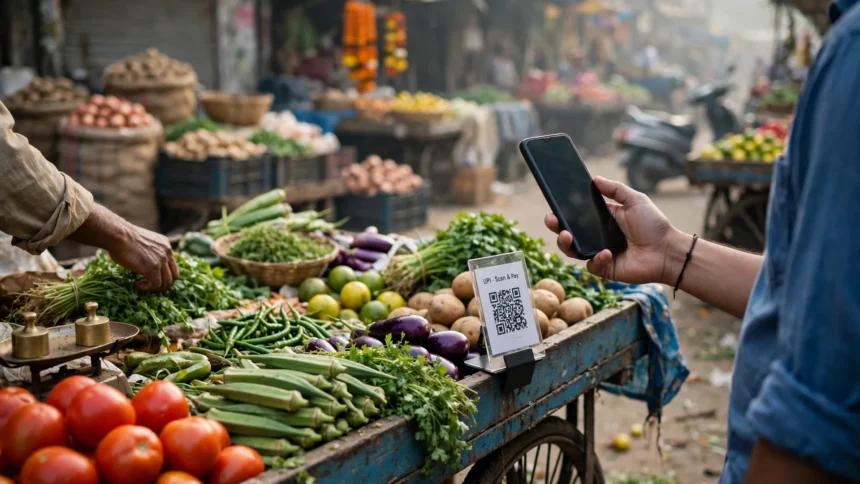
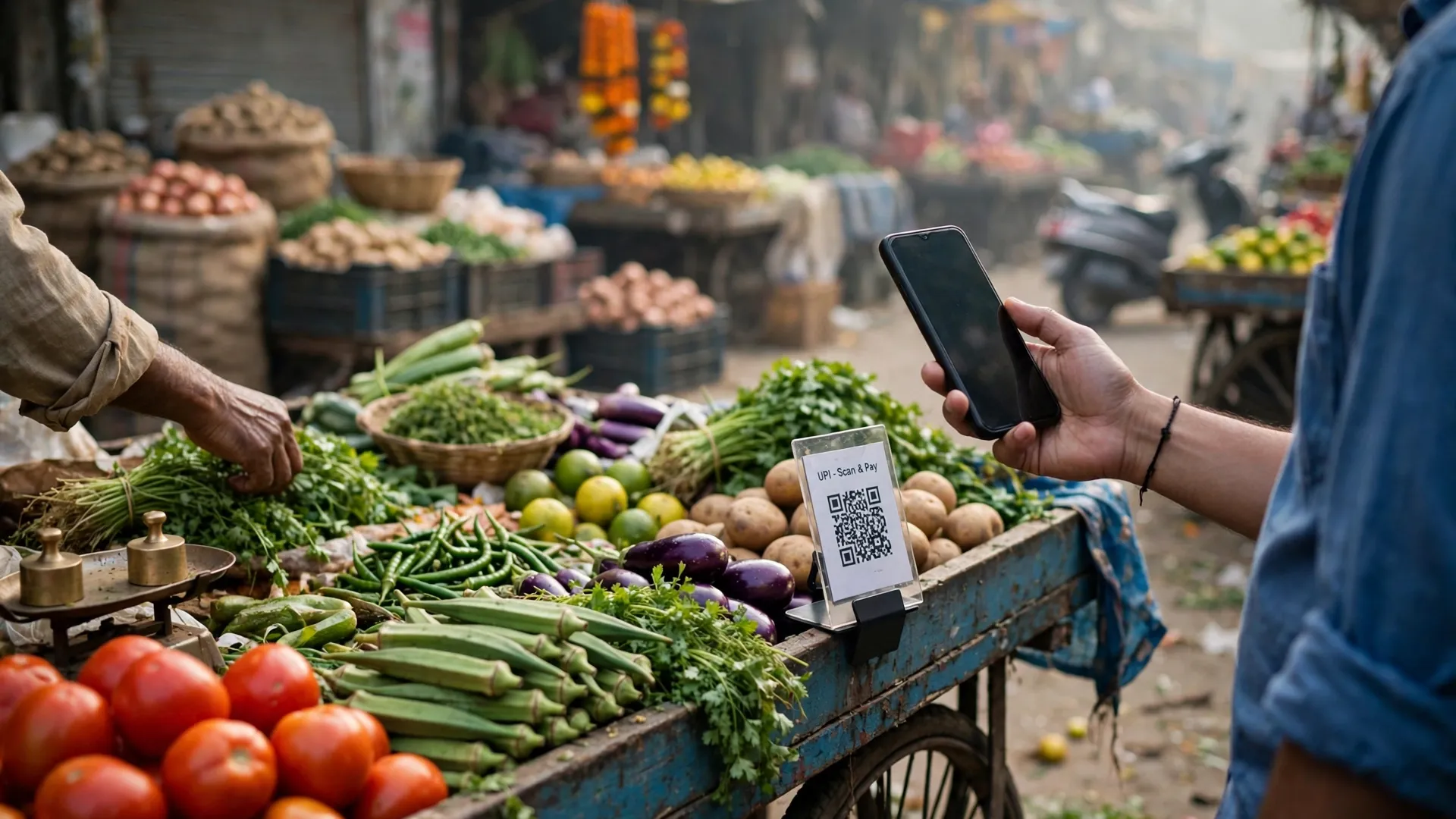
That is the point. Ten years ago, paying a vegetable vendor by scanning a code sounded like a demo at a tech conference. Today it is the most ordinary thing in India. The numbers behind that change are startling, and they come straight from the National Payments Corporation of India, the body that runs UPI, and the Finance Ministry’s ten-year account of the platform.
The decade in one table
UPI was launched on 25 August 2016. In its first year, it recorded 1.78 crore transactions. By 2025-26, the annual count had reached 24,162 crore, a jump of nearly 13,000 times. The value of those payments rose from Rs 0.07 lakh crore to around Rs 314 lakh crore, an increase of more than 4,000 times. No single year in between saw a fall, not even the pandemic year.
| Financial year | Transactions (crore) | Value (Rs lakh crore) |
|---|---|---|
| 2016-17 | 1.78 | 0.07 |
| 2017-18 | 91.5 | 1.10 |
| 2018-19 | 539.2 | 8.77 |
| 2019-20 | 1,251.9 | 21.32 |
| 2020-21 | 2,233.1 | 41.04 |
| 2021-22 | 4,596.8 | 84.18 |
| 2022-23 | 8,371.4 | 139.15 |
| 2023-24 | 13,112.9 | 199.95 |
| 2024-25 | 18,586.6 | 260.57 |
| 2025-26 | 24,162 | ~314 |
Source: Economic Survey 2025-26, Statistical Appendix Table 3.6 (data: NPCI) for 2016-17 to 2024-25; 2025-26 figures from the Finance Ministry release of August 2026. A financial year runs April to March.
What drove the growth
Four things did the heavy lifting. First, banks. Only 44 banks were live on UPI in its first year. By 2025-26, there were 703. Second, cost. UPI is free for the person paying, and for years merchants paid nothing either, so a QR code at a tea stall cost the seller almost nothing to accept. Third, timing. Cheap smartphones and cheap data put a payment terminal in nearly every pocket just as UPI arrived. Fourth, habit. Once a vegetable vendor and a customer have both used it twice, cash starts to feel like extra work.
The shape of the traffic tells the same story. Merchant payments now account for 63 per cent of all UPI transactions, and 86 per cent of those merchant payments are below Rs 500. The average UPI payment in October 2026 worked out to about Rs 1,238. This is not a system built for big transfers. It is a system built for chai, vegetables, auto fares and recharge top-ups, repeated hundreds of crores of times.
UPI now handles 89 per cent of all digital payments in India, according to NPCI data, and the platform processes more than 66 crore transactions on an average day.
UPI goes global
The International Monetary Fund has called UPI the world’s largest real-time payment system by transaction volume. In 2025, UPI accounted for nearly 49 per cent of all real-time payment transactions on the planet. The platform is now operational in 11 countries: the UAE, France, Bhutan, Sri Lanka, Nepal, Singapore, Mauritius, Qatar, Cambodia, Greece and Maldives. An Indian traveller can now pay a shopkeeper in Singapore or a cafe in Paris the same way they pay at home.
Why it matters
The headline numbers are impressive, but the important number is the small one. Most UPI payments are tiny, and tiny payments are where cash used to rule without question. When a street vendor accepts QR payments, three things change at once. The vendor stops losing sales to customers with no change. The money lands in a bank account, which creates a record that can one day support a loan. And the customer stops planning the day around an ATM visit. None of that shows up in the transaction count, but it is the real revolution inside the revolution.
What happens next is less settled. NPCI has proposed a merchant discount rate of 0.4 per cent on merchant payments above Rs 2,000, which would translate into Rs 8 on a Rs 2,000 payment and an estimated Rs 15,000 crore a year for banks and payment companies. The rollout was deferred until after Diwali 2026, and no fresh date has been announced. The question behind it is simple: somebody has to pay for a free system, and the answer will shape whether the smallest merchants keep their QR codes out.
The other open question is growth itself. October 2026 was up 23 per cent in volume and 16 per cent in value over a year earlier, strong numbers, but far from the triple-digit growth of the early years. That is normal. A system doing 25 billion payments a month cannot triple every year. The next phase of UPI is likely to be slower, wider and more global: more countries, more credit products riding on the rails, and more of India’s smallest sellers inside the formal economy.
Frequently asked questions
When was UPI launched?
UPI was launched by the National Payments Corporation of India on 25 August 2016, under the regulatory oversight of the Reserve Bank of India.
How many UPI transactions happen every day?
UPI processes more than 66 crore transactions on an average day. In October 2026, the daily average was about 82 crore payments, worth a little over Rs 1 lakh crore a day.
What is MDR, and will users have to pay to use UPI?
MDR, or merchant discount rate, is the fee a merchant pays for accepting a digital payment. NPCI has proposed 0.4 per cent on merchant payments above Rs 2,000, but the rollout was deferred until after Diwali 2026 and no new date has been announced. Person-to-person payments are not covered, and no charge for consumers has been announced.
Which countries accept UPI?
UPI is operational in 11 countries: the UAE, France, Bhutan, Sri Lanka, Nepal, Singapore, Mauritius, Qatar, Cambodia, Greece and Maldives.
How big is UPI compared with the rest of the world?
The IMF has recognised UPI as the world’s largest real-time payment system, accounting for nearly 49 per cent of global real-time payment volume in 2025.
Ten years in, UPI is no longer a fintech story. It is the plumbing of everyday India, and the numbers say the pipes are still getting wider.