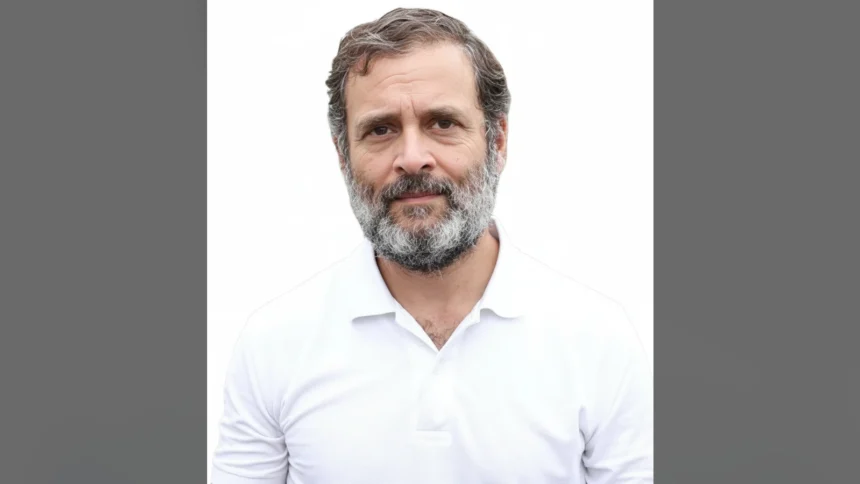
Leader of Opposition Rahul Gandhi and ten other INDIA bloc leaders have moved the Supreme Court with a fresh application in their challenge to the nationwide Special Intensive Revision (SIR) of electoral rolls, asking the court to direct the Election Commission of India (ECI) to answer 48 written questions on affidavit. The application was filed on Monday, and the case is listed for hearing today, Tuesday, November 17.
The move sharpens the Opposition’s case against the voter-roll exercise, which began in Bihar and was later extended across the country. The petitioners say the Commission’s affidavits assert that key decisions were unanimous, without producing the records to prove it.
What the 48 questions seek
The application asks the court for permission to serve interrogatories, formal written questions that the other side must answer on oath, under the Supreme Court Rules, 2013. The 48 questions fall into ten categories, and the petitioners want sworn responses from Chief Election Commissioner Gyanesh Kumar, Election Commissioners Sukhbir Singh Sandhu and Vivek Joshi, Deputy Election Commissioner Bhanu Prakash Yeturu, and the poll body’s Director General (IT).
At the centre is whether the nationwide SIR was authorised collectively by the three-member Commission, or whether the Chief Election Commissioner exercised the Commission’s powers without the knowledge, approval or concurrence of the other two Commissioners. The petitioners seek the file numbers and dates of each SIR decision, along with the minutes of the meetings where they were taken.
The questions also go into how the rolls were handled. The petitioners have asked for state-wise figures of voters excluded from the draft and final electoral rolls, broken down by the reasons for exclusion and by gender. They want to know who authorised changes to the online presentation of Form 6, the form used for new voter registration, whether private contractors or vendors had write access to the electoral-roll databases ECINET and ERONET, and whether bulk deletions took place without orders from Electoral Registration Officers.

The unanimity dispute at the heart of it
In its counter-affidavit of October 26 and a supplementary affidavit of November 14, both affirmed by Deputy Election Commissioner Bhanu Prakash Yeturu, the Commission stated that the SIR orders were issued following unanimous decisions of the three-member body. It has said its three SIR orders, dated June 24, 2025, October 27, 2025 and May 14, 2026, were passed unanimously.
The petitioners contend that the affidavits rely on bare assertions while withholding the crucial official files and records. They have pointed to an August 2025 reply under the Right to Information Act in which, according to them, the Commission’s authorities stated that no decision had been taken at that time to launch a nationwide SIR. The application also asks Commissioners Sandhu and Joshi to disclose every occasion between February 2025 and October 2026 on which they recorded written objections or dissent about the SIR, ECINET, Form 6 or related court appeals.
The Election Commission, in its 248-page response to the petitions challenging the SIR, defended the exercise and rejected the allegation that Form 6 had been amended.
Who filed the case, and where it stands
Besides Rahul Gandhi, the petitioners include Congress president Mallikarjun Kharge, Saugata Roy (Trinamool Congress), Akhilesh Yadav (Samajwadi Party), Tejashwi Prasad Yadav (RJD), Sanjay Raut (Shiv Sena UBT), M.A. Baby (CPI-M), D. Raja (CPI), Mahua Majhi (JMM), Supriya Sule (NCP-SP) and Mohammed Basheer (IUML).
The original writ petition, W.P.(C) No. 1351 of 2026, was filed on October 12, alleging irregularities in the SIR and large-scale voter deletions. The Supreme Court issued notice to the Election Commission on October 15, and the batch of pleas is listed before a bench led by Chief Justice of India Surya Kant.
What happens next
The court has not yet ruled on the application. If it allows the interrogatories, the Commission’s top officials will have to put their answers on affidavit, under oath, including on the internal decision-making the Opposition has questioned. If the court declines, the case will proceed on the affidavits already filed by both sides.
It is important to note that the allegations are the petitioners’ contentions, the Commission disputes them, and the court has expressed no view on the merits so far. What today brings into focus is narrower but significant: whether the poll body will be asked to open its files, and not just defend its conclusions, in a case that goes to the heart of how India’s voter rolls are prepared.
FAQs
What is the SIR?
The Special Intensive Revision is a door-to-door verification exercise to update electoral rolls. It began in Bihar and was later extended to other states across the country.
What are interrogatories?
They are formal written questions that the opposite party in a case must answer on affidavit, meaning on oath, under the Supreme Court Rules, 2013.
Why 48 questions?
The petitioners say the Commission’s affidavits assert that SIR decisions were unanimous but do not disclose the underlying records, such as file numbers, dates and meeting minutes.
What has the Election Commission said?
The Commission has said the SIR orders were unanimous decisions of the three-member body, and it has defended the exercise in a 248-page response.
When is the hearing?
The batch of SIR pleas, including this application, is listed for hearing in the Supreme Court on Tuesday, November 17.
Today’s hearing will show whether the court wants the Commission to put its answers on record under oath.