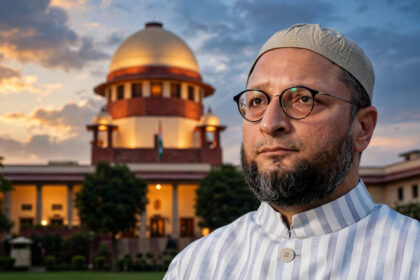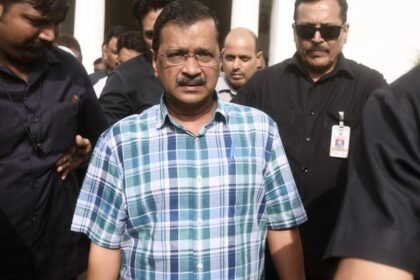
New Delhi: The Supreme Court is set to hear on Thursday a petition filed by Leader of Opposition in the Lok Sabha Rahul Gandhi and 12 other INDIA bloc leaders, challenging the Election Commission of India’s Special Intensive Revision (SIR) of electoral rolls. The plea, which has become the legal centrepiece of the Opposition’s campaign against alleged voter deletions, will be taken up by a bench headed by Chief Justice of India Surya Kant and Justice Joymalya Bagchi.
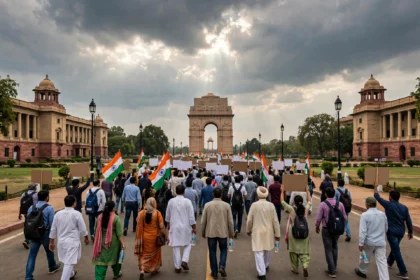
The petition was filed on Monday, October 12, hours after Gandhi and several Opposition leaders marched to the Supreme Court in what they called a “March for Democracy.” It seeks a full disclosure of the Election Commission’s internal records on the SIR exercise, a judicial examination of whether CEC Gyanesh Kumar acted arbitrarily, and an interim stay on the revision until the court decides the matter.
What the petition asks for
The plea does not just question the outcome of the SIR. It asks the court to open up the decision-making process itself. The petitioners want the complete set of “files, agendas, minutes, notings and objections” recorded by Election Commissioners Sukhbir Singh Sandhu and Vivek Joshi in connection with the SIR, including the June 2025 decision to initiate the exercise.
Beyond disclosure, the petition seeks:
- An independent audit of all deletions and modifications made during the SIR, by a committee headed by a retired Supreme Court judge and assisted by technical experts.
- A direction that no elector be deleted from the rolls without notice and a reasonable opportunity of being heard.
- Publication, booth by booth, of every deletion with the reasons recorded for removal.
- Access logs of the ECINET and ERONET systems used during the revision.
- Permission for eligible voters in Punjab and other states headed to polls to seek inclusion in the rolls until the last legally permitted date.
Who is behind the plea
The petitioners read like a roll call of the INDIA bloc: alongside Rahul Gandhi are Congress president Mallikarjun Kharge, Samajwadi Party chief Akhilesh Yadav, RJD leader Tejashwi Prasad Yadav, NCP (SP) leader Supriya Sule, Shiv Sena (UBT) leader Sanjay Raut, TMC MP Saugata Roy and CPI leader D Raja, among others.
According to the petition, the SIR exercise has led to the deletion of roughly 13 crore voters across the country, infringing the constitutional right of eligible citizens to be registered and to vote. Gandhi has been hammering this charge for weeks, repeatedly alleging “vote chori” at public rallies and protests in the capital.
A bumpy road to the hearing
The petition did not sail through the Supreme Court registry smoothly. After it was filed on Monday, the registry flagged several procedural defects: a clear copy of Kharge’s ID card was missing, the vakalatnamas for petitioners numbered 3 to 11 were unsigned, there was a shortfall of Rs 220 in the court fee, and the registry asked why the Election Commissioners had been named individually as private respondents in a writ petition under Article 32.
Those defects were cured, the petition was registered as W.P.(C) No. 001351/2026 on October 13, and it now finds a place on Thursday’s cause list.
The bigger battle around the courtroom
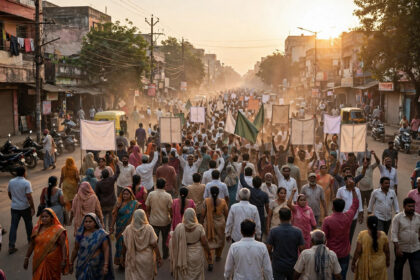
Thursday’s hearing will not be limited to the SIR plea alone. The same bench is expected to take up a batch of petitions connected to the October 10 agitation in Delhi against CEC Gyanesh Kumar, covering the closure of metro stations, disruptions in train services, the detention of protesters, and the de-notification of Jantar Mantar as a protest venue.
In a special hearing on October 11, the court had directed authorities not to shut metro stations entirely unless there was a grave law and order threat, and had cautioned that lawyers, journalists and petitioners must not be prevented from accessing courts. The capital has stayed restless since: earlier this week the Delhi Police detained NSUI and Youth Congress workers protesting against the CEC, and two leaders of the Cockroach Janta Party were sent to judicial custody. Rahul Gandhi, who had earlier kept his distance from that party’s protests, publicly condemned the custody on Wednesday, with several INDIA bloc allies offering legal assistance to the detained activists.
What happens next
Legal experts say Thursday’s hearing is likely to be procedural rather than decisive: the court may issue notices and decide on the interim relief seeking a suspension of the SIR. For Gandhi, who has staked considerable political capital on the vote chori campaign, a hearing that opens up the Election Commission’s files would be a victory in itself. Whatever the court orders will shape the political narrative in the months ahead, and the country will be watching.
Frequently asked questions
What is the SIR of electoral rolls?
The Special Intensive Revision is a door-to-door exercise by the Election Commission to verify and update voter lists, removing ineligible entries such as duplicates, shifted voters and deceased persons. The Opposition alleges it was used to delete crores of genuine voters.
What does Rahul Gandhi’s petition ask the Supreme Court to do?
It seeks full disclosure of the Election Commission’s internal records on the SIR, an independent audit of deletions, an interim stay on the revision, and safeguards so no voter is removed without notice and a hearing.
Informeia will track the Supreme Court’s hearing through the day and update this story as orders are passed.