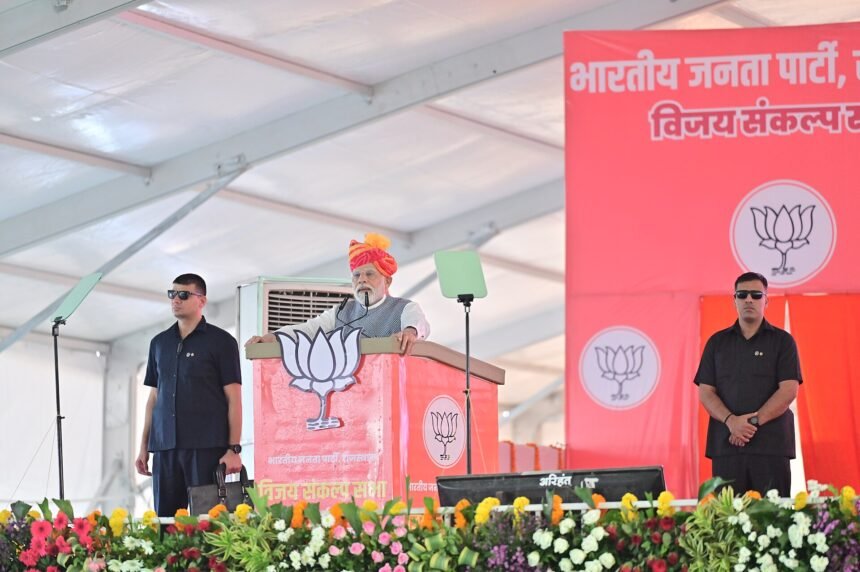
The Bharatiya Janata Party has finalised its battle plan for the 2027 Uttar Pradesh Assembly elections, and it is built around six statewide yatras, five campaign issues and a big closing rally in Lucknow to be addressed by Prime Minister Narendra Modi.
The strategy took shape at a two-day meeting of the party’s top leadership in Mathura on November 16 and 17. From next month, PM Modi, Union Home Minister Amit Shah and BJP president Nitin Nabin will lead the campaign as the party chases a third straight term in India’s most politically important state.
What was decided in Mathura
Around 50 senior BJP leaders attended the two-day session in Mathura, including Chief Minister Yogi Adityanath and Deputy Chief Ministers Keshav Prasad Maurya and Brajesh Pathak. The meeting reviewed the party’s organisation, its booth-level preparedness and the issues it will take to voters.
The plan that emerged is straightforward. The party’s top three leaders will tour the state through December, senior state leaders will run six regional yatras, and the campaign will close with a massive rally in Lucknow where PM Modi will address the gathering. The detailed schedule of the top leaders is still being finalised.
Home Minister Amit Shah will also address conferences of the party’s power centres, its smallest organisational units, as part of a push to reach workers directly. Booth-level programmes will run alongside the yatras so the campaign reaches voters street by street.
Six Jan Ashirwad Yatras across six regions
A major part of the campaign will be six Jan Ashirwad Yatras covering all six organisational regions of Uttar Pradesh:
- Braj
- West UP
- Kanpur-Bundelkhand
- Kashi
- Awadh
- Gorakhpur
Senior state leaders will oversee the yatras, which begin next month and end with the Lucknow rally.
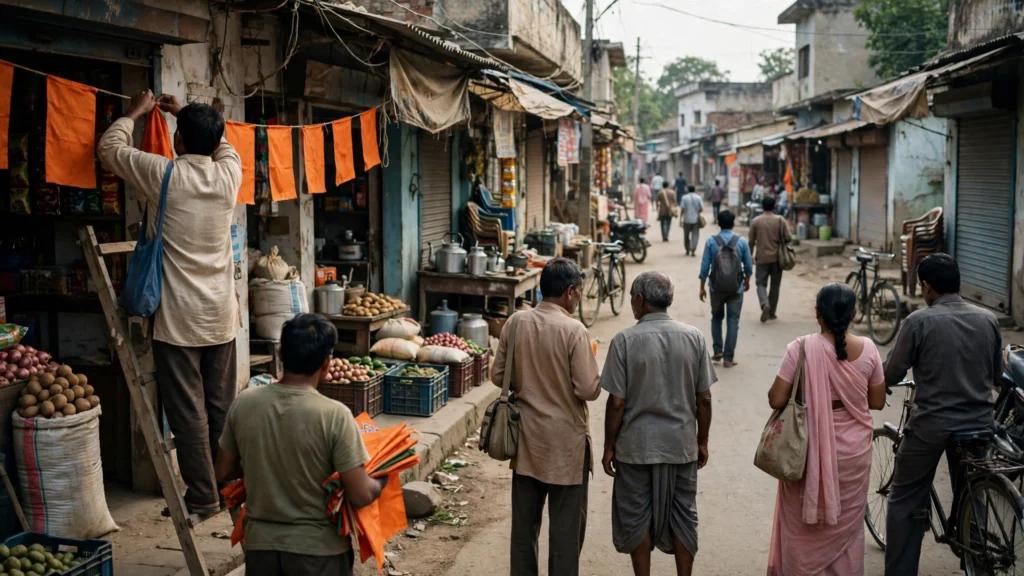
The party has already tested its organisation this month. From November 3 to 5, the BJP held six padyatras under its Save Democracy, Remove Anarchy campaign, targeting at least 25,000 participants at each event. Amit Shah is also set to begin a separate tour of the state from the last week of November, covering two regions in the first phase.
The five Mahamantras
The Mathura meeting also identified five key issues, described by the party as its Mahamantras, to guide the election campaign:
- Construction of a grand temple at Shri Krishna Janmabhoomi
- Implementation of the Uniform Civil Code
- Infrastructure development
- Improvement in law and order
- Promotion of nationalism and cultural heritage
The list blends the party’s cultural pitch with its governance record. The Krishna Janmabhoomi issue carries particular weight in Mathura, where the strategy was finalised, while infrastructure and law and order are the planks the Yogi Adityanath government has campaigned on before.
Why it matters
Uttar Pradesh is the biggest prize in Indian state politics. Its 403-member Assembly is the largest in the country, and the state sends 80 MPs to the Lok Sabha, more than any other. No party can claim national dominance without a strong showing here, which is why the BJP is putting its three biggest names on the road together.
The timing matters too. With the campaign gathering pace from December, the party gets roughly two months of sustained groundwork before polling in early 2027. The yatras are designed to do two jobs at once: energise the organisation and take the government’s record directly to voters, region by region, rather than relying on a few large rallies alone.
The choice of issues is also a signal. By pairing temple and Uniform Civil Code with infrastructure and law and order, the BJP is pitching a campaign that is both cultural and developmental, while the opposition presses it on electoral rolls and unemployment.
What happens next
The build-up has followed a clear sequence: the broad plan was reported in early November, the November 3 to 5 padyatras tested the organisation, Shah’s regional tour begins in the last week of November, and the Mathura meeting has now locked in the final strategy. The six Jan Ashirwad Yatras and the top leaders’ tours begin in December, building towards the Lucknow rally.
Alongside the campaign, draft electoral rolls were published in Uttar Pradesh on November 12. Claims and objections close on December 11, and the final rolls are due on January 4, 2027.
Frequently asked questions
When are the Uttar Pradesh Assembly elections?
The elections are due in early 2027. The BJP has governed the state since 2017 and is aiming for a third straight term under Chief Minister Yogi Adityanath.
What are the Jan Ashirwad Yatras?
They are six statewide yatras planned by the BJP across its six organisational regions of Uttar Pradesh: Braj, West UP, Kanpur-Bundelkhand, Kashi, Awadh and Gorakhpur. Senior state leaders will lead them, and they will end with a big rally in Lucknow addressed by PM Modi.
Who will lead the BJP’s campaign in UP?
Prime Minister Narendra Modi, Home Minister Amit Shah and BJP president Nitin Nabin will lead the statewide campaign from next month, with Chief Minister Yogi Adityanath playing a key role in district-level outreach.
What are the five Mahamantras?
The five key campaign issues finalised at the Mathura meeting are the Shri Krishna Janmabhoomi temple, the Uniform Civil Code, infrastructure development, law and order, and nationalism and cultural heritage.
With the strategy set, the focus now shifts to the ground. December will show how much of the Mathura plan turns into visible momentum across Uttar Pradesh.