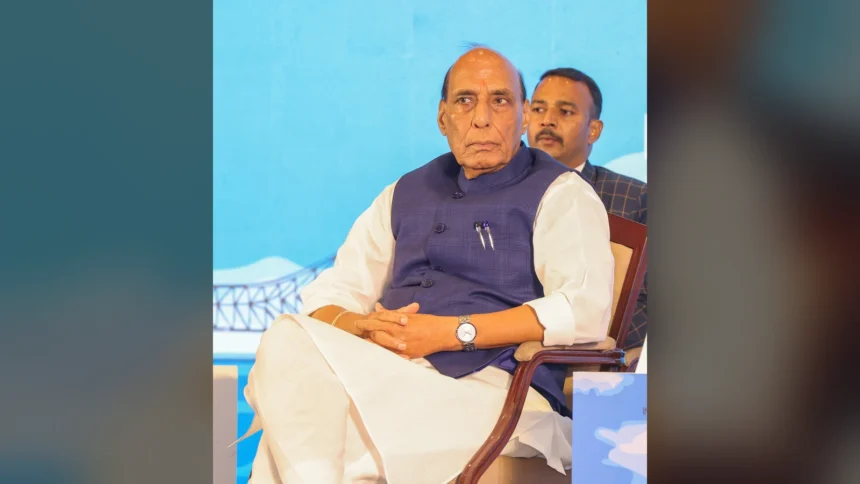
Japan will fire live missiles on Indian soil for the first time next year, under a landmark agreement signed in Tokyo on Thursday that opens Indian firing ranges to Japanese forces. Sealed at the fourth India-Japan 2+2 ministerial meeting, it lets the Japan Self-Defence Forces conduct live-fire training, including with surface-to-ship missiles, at ranges in India.
What was agreed in Tokyo
Defence Minister Rajnath Singh and External Affairs Minister S. Jaishankar signed a Letter of Intent with their Japanese counterparts, Foreign Minister Toshimitsu Motegi and Defence Minister Shinjiro Koizumi, on the use of Indian firing ranges. The joint statement welcomed the signing, under which the Japan Self-Defence Forces “would, for the first time, conduct live-fire training etc., including those involving surface-to-ship missiles, at firing ranges in India.”
Announcing the outcome, Koizumi said: “We agreed that next year, the Self-Defense Forces will use an Indian firing range for the first time. This is also a major step strategically.” The two sides will now speed up coordination between their defence authorities to put the plan into practice.
The two sides also agreed to accelerate cooperation in niche underwater and missile technologies, and to move faster on a Maritime Ship Repair Arrangement for reciprocal ship repairs. Singh cited the framework of “Design with Japan, Make in India.” The joint statement also named Pakistan-based Lashkar-e-Taiba and Jaish-e-Mohammed in a strong message on cross-border terrorism.
Why Japan needs Indian ranges
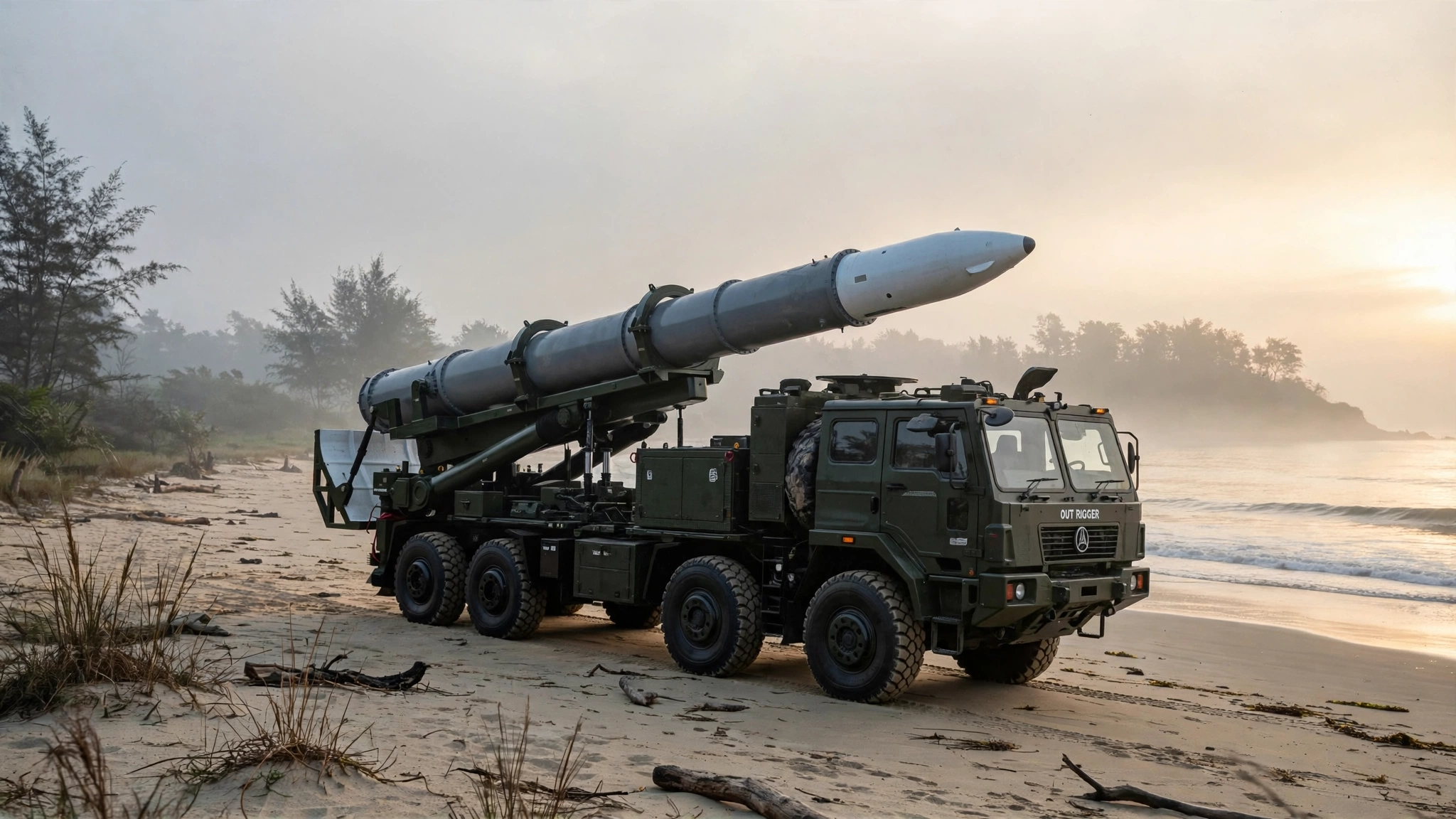
The heart of the deal is a practical problem. Japan is an island nation with limited open space, and it does not have room at home to test-fire a missile that can fly about 1,000 kilometres. Tokyo is now building such weapons, and it needs somewhere safe to fire them.
The missile is the Type-25, an upgraded Type-12 surface-to-ship missile. It entered service in March this year as Japan’s first home-grown stand-off missile, with a range of roughly 1,000 kilometres. Reports say Tokyo wants to train with the Type-25 and smaller attack drones in India.
The likely venue is the Defence Research and Development Organisation’s Integrated Test Range at Chandipur, on the Odisha coast, which India uses for its own missile trials. The exact range and dates are still to be finalised, and Japan struck a similar arrangement with Australia earlier this year.
Beyond the ranges: UNICORN, ships and underwater tech
The firing-ranges deal was the headline, but the meeting produced a wider package. The two sides set February 2027 as the target for India to clear the UNICORN naval antenna, short for Unified Complex Radio Antenna, a stealth mast Japan will help produce in India. Co-producing UNICORN was first agreed when Japanese Prime Minister Sanae Takaichi visited New Delhi in July.
The ministers also agreed to explore joint development of naval ships and deeper cooperation in maritime domain awareness. Japanese fighter aircraft had already taken part for the first time in the Veer Guardian 26 air exercise in India.
Why it matters
This is more than a training arrangement. For India, it is the first time a foreign military will fire live missiles on its ranges. India’s test infrastructure, built over decades for its own missile programme, is now a strategic asset that partners want to use. It also marks a shift: India is now a country whose ranges and factories sit inside other nations’ military planning, not just a buyer of equipment.
For Japan, the deal solves a hard physical limit. Live-fire practice is essential to a credible missile force, and a 1,000-kilometre weapon is of little use if it can never be fired in training. Japan has been fortifying its southwestern islands and deploying long-range missiles there this year as China’s military activity grows nearby.
For the wider Indo-Pacific, it tightens the military links between two Quad members. What to watch is implementation: dates, a confirmed range and a training schedule are still to come, and the UNICORN clearance target of February 2027 will test whether the momentum holds.
How the partnership reached this point in 2026
- July 2026: Japanese PM Sanae Takaichi visits New Delhi; the first UNICORN co-production agreement is announced.
- November 2026: Japanese fighters join the Veer Guardian 26 exercise in India for the first time.
- 19 November 2026: The firing-ranges Letter of Intent is signed at the fourth 2+2 meeting in Tokyo; first drills follow in 2027.
FAQs
Will Japanese troops fire missiles in India?
Yes, starting next year. Under Thursday’s Letter of Intent, Japan’s Self-Defence Forces will conduct live-fire training, including surface-to-ship missiles, at Indian ranges for the first time.
Which missile will Japan test?
The Type-25 surface-to-ship missile, an upgraded Type-12 with a range of roughly 1,000 kilometres. It entered service in March 2026 as Japan’s first home-grown stand-off missile.
Where will the drills happen?
DRDO’s Integrated Test Range at Chandipur on the Odisha coast, according to reports. The final range and dates are yet to be confirmed.
What is UNICORN?
Unified Complex Radio Antenna, a stealth naval mast that Japan and India will co-produce in India. February 2027 is the target for India to clear it.
The focus now shifts to the two defence establishments, which must turn the Letter of Intent into a training calendar. The first Japanese missile fired from an Indian range will show how deep this partnership really is.