
In a verdict seven years in the making, the International Court of Justice ruled on Thursday that Myanmar committed genocide against its Rohingya minority during the military crackdown of 2017. It is the first time in the court’s 80-year history that judges have found a state responsible for genocide, and the decision is final, with no appeal possible.
ICJ President Yuji Iwasawa read out the ruling in the court’s Great Hall of Justice in The Hague, declaring: “The Republic of the Union of Myanmar has committed genocide against the Rohingya group in northern Rakhine State.” The court found by nine votes to six that Myanmar violated its obligations under the 1948 Genocide Convention.
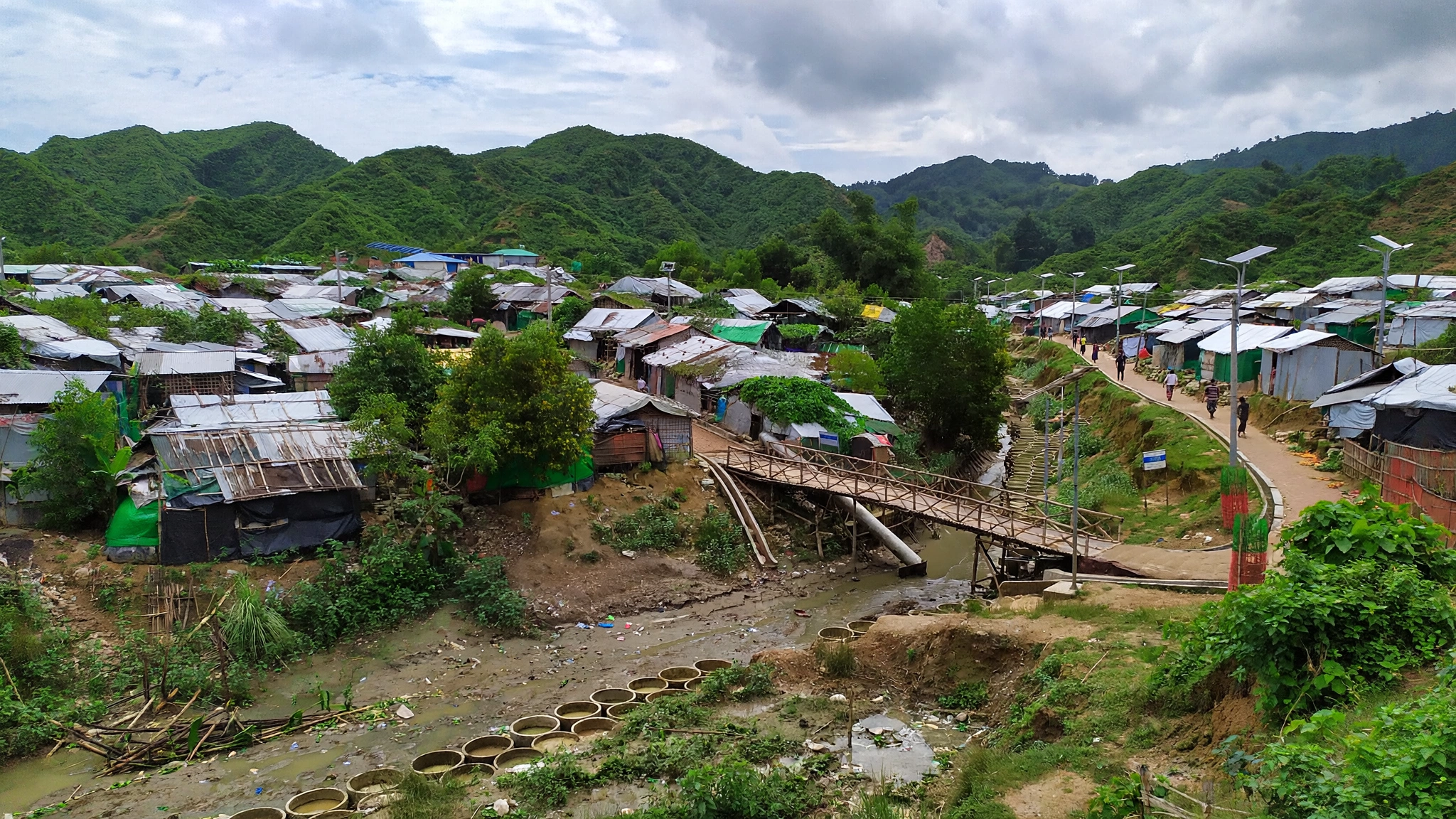
More than 730,000 Rohingya fled into Bangladesh during the 2017 crackdown, creating one of the largest refugee crises of recent decades. Most still live in crowded camps around Cox’s Bazar, with no clear path home.
What the court found
The judges examined the evidence from Myanmar’s clearance operations in northern Rakhine State and concluded that security forces killed around 10,000 Rohingya, about 1.2 percent of the Rohingya population living there at the time. The court said the estimate of 10,000 violently killed was supported by the evidence before it.
Beyond the killings, the court found that Myanmar’s forces committed widespread sexual violence against women and girls, and acts of what the judges called extreme violence against children. Rohingya villages were systematically destroyed and then replaced with non-Rohingya inhabitants, the court said, ruling that the only reasonable inference was that Myanmar intended to destroy the population in whole or in part.
That question of intent is the heart of any genocide case. The Genocide Convention does not punish killing alone. It requires proof that the acts were carried out with the specific intent to destroy a national, ethnic, racial or religious group. In a 191-page ruling, the judges said the scale and the pattern of the operations left no other reasonable explanation.
A seven-year case
The case was brought by The Gambia, a small West African nation, which filed its application at the ICJ in November 2019. Any state party to the Genocide Convention can bring such a case, even with no direct connection to the events.
Myanmar had not responded to the ruling as of Thursday evening. Its military government has consistently denied that genocide took place, describing the 2017 operations as a legitimate response to attacks by Rohingya militants. UN Secretary-General Antonio Guterres welcomed the verdict.
Why it matters
This ruling changes the legal landscape in two ways. First, it is the first time the ICJ has held a state, rather than an individual, responsible for genocide. Until now, genocide findings have come from criminal tribunals trying individuals, as in Rwanda and the former Yugoslavia. A finding against a state opens a different door: reparations and a formal obligation to change course.
Second, the ruling sets a precedent that will echo well beyond Myanmar. It is only the fourth time since the Holocaust that an international court has ruled that genocide was committed. Legal experts expect the judgment to be studied closely in South Africa’s case at the same court accusing Israel of genocide in Gaza, where intent is again central.
For the Rohingya themselves, the practical effect is less certain. Around a million refugees remain in Bangladesh, and their return depends on a military government in Naypyidaw that has shown no sign of accepting the court’s authority. The ruling gives them a binding judgment that their community was the victim of genocide, and an order that they must be allowed home safely. What it cannot do on its own is make that return happen.
What happens next
The court ordered Myanmar to allow and facilitate the safe, voluntary and dignified return of Rohingya refugees, and to cease all acts of violence against the group. It also ordered reparations and restitution. Myanmar has two years to report to the court on the restitution measures taken and the compensation it will pay, though the court said it could not fix the compensation figure itself.
The harder question is enforcement. ICJ decisions are binding and cannot be appealed, but the court has no police force and no way to compel compliance. For now, the verdict stands as a landmark in international law, and a long-awaited answer for the Rohingya.
Frequently asked questions
What did the ICJ rule?
Myanmar committed genocide against the Rohingya in northern Rakhine State during the 2017 crackdown, violating the 1948 Genocide Convention. The decision was by nine votes to six.
Why is this ruling historic?
It is the first time in the ICJ’s 80-year history that a state has been found responsible for genocide.
How many Rohingya were killed?
The court found the evidence supported an estimate of around 10,000 Rohingya violently killed, with hundreds of thousands more driven into Bangladesh.
What has Myanmar been ordered to do?
Stop all violence against the Rohingya, investigate and punish those responsible, allow refugees a safe and dignified return, pay reparations, and report back within two years.
Can the ruling be enforced?
The decision is binding and cannot be appealed, but the ICJ has no enforcement power of its own. Enforcement would depend on the UN Security Council or pressure from other states.
The verdict closes a seven-year wait for the Rohingya. Whether it opens a road home is the question the world will now watch.