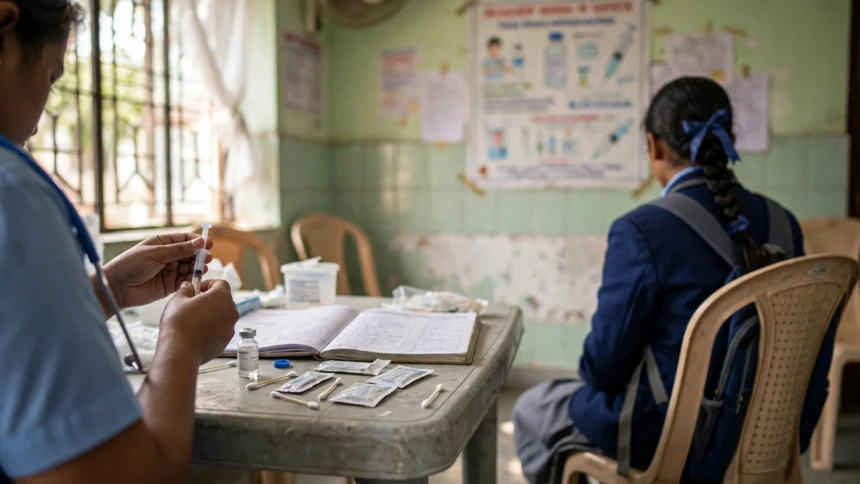
India has crossed a major milestone in its fight against cervical cancer. More than one crore doses of the Human Papillomavirus (HPV) vaccine have been given under the National HPV Vaccination Campaign in less than nine months, the Union Health Ministry said on Saturday, November 21.
The campaign has now reached nearly 87 percent of its annual target group, around 1.2 crore girls aged 14 years. Six states have already vaccinated their entire identified target population, and 12 states have crossed the 80 percent mark.
Union Health Minister JP Nadda said the progress reflects the collective commitment of states, healthcare professionals, frontline health workers and parents across the country. With free, safe and effective single-dose vaccination available at government health facilities, he said, India is moving closer to a future free from cervical cancer.
The numbers behind the milestone
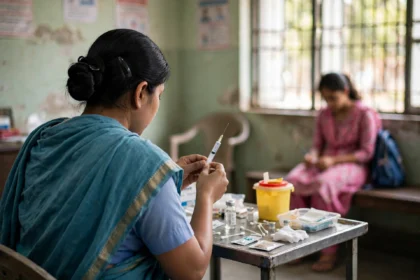
The campaign was launched by Prime Minister Narendra Modi in February 2026. It offers free, voluntary, single-dose HPV vaccination to 14-year-old girls at designated government health facilities, with parental consent. The target cohort of about 1.2 crore girls is based on the Registrar General of India 2021 population estimates.
- Six states at 100 percent: Gujarat, Uttar Pradesh, Andhra Pradesh, Mizoram, Madhya Pradesh and Bihar have covered their entire identified target population.
- Close behind: Assam has recorded 95.63 percent coverage, followed by Telangana at 95.28 percent, Karnataka at 93.16 percent and Uttarakhand at 90.17 percent.
- Above 80 percent: Chhattisgarh (86.21 percent) and Rajasthan (85.23 percent) have also crossed the mark, taking the total to 12 states above 80 percent.
- Still catching up: Kerala is at 77.02 percent, Tamil Nadu at 76.12 percent, Odisha at 74.90 percent and Dadra and Nagar Haveli and Daman and Diu at 72.99 percent.
- Biggest numbers: Uttar Pradesh leads the country with more than 29.33 lakh girls vaccinated, followed by Bihar with over 13.70 lakh and Gujarat with over 7.75 lakh.
How the campaign works
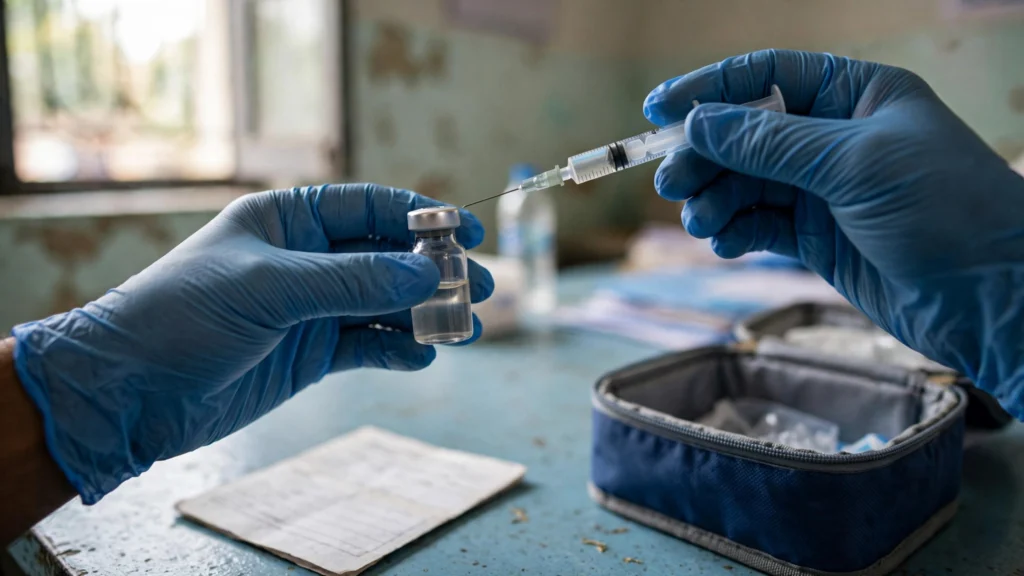
The design of the campaign is deliberately simple. One dose, free of cost, at a government health facility, with a parent’s consent. There is no second appointment to remember and no fee to pay, which removes two of the biggest reasons vaccination drives usually lose people midway.
Why it matters
Cervical cancer is one of the most common cancers among women in India, and it is also one of the most preventable. The HPV vaccine protects against the virus strains responsible for most cases, and vaccinating girls before exposure is the most effective step a country can take. That is why the World Health Organization has set a 90-70-90 elimination goal for 2030.
The single-dose design is the quiet reason this campaign has moved so fast. Earlier programmes that needed two or three doses routinely lost a share of beneficiaries between appointments. A single visit closes that gap entirely. At the current pace, the campaign has averaged roughly 37,000 doses a day since launch, a speed that would have been hard to sustain with a multi-dose schedule.
The state leaderboard also tells a useful story. Uttar Pradesh alone accounts for nearly three in every ten doses given so far, which shows that scale is not the constraint. The harder test now is the last stretch: around 15 lakh girls, roughly 13 percent of the target group, are still to be reached, and the states trailing at 72 to 77 percent, including Kerala and Tamil Nadu, are exactly where the remaining work is concentrated.
For parents, the practical point is simple. If your daughter is 14, the vaccine is available free at a government health facility, with your consent, and it takes one visit. The ministry says more than 800 million HPV vaccine doses have been given worldwide, backed by nearly two decades of research on safety and effectiveness.
What happens next
The Health Ministry says its focus now shifts to the remaining eligible girls and to pushing coverage higher in the states still below 80 percent. State-led drives in Bihar, Tamil Nadu and Sikkim have already been folded into the national campaign, and U-WIN tracking will keep the remaining gaps visible district by district. The next milestone is full coverage of the annual cohort, which would put India firmly on course for its 2030 cervical cancer elimination goal.
FAQs
Who can get the HPV vaccine under this campaign?
Girls aged 14 years can get the vaccine free at designated government health facilities across the country, with parental consent.
Is the HPV vaccine free?
Yes. The vaccine is provided free of cost at government health facilities under the National HPV Vaccination Campaign.
How many doses are needed?
Just one dose. The campaign uses a single-dose schedule, so there is no follow-up appointment to keep.
Where can parents get their daughter vaccinated?
At designated government health facilities. Sessions are also organised through schools and community outreach, and records are maintained on the U-WIN platform.
Is the HPV vaccine safe?
According to the Health Ministry, more than 800 million HPV vaccine doses have been administered worldwide, with nearly two decades of research supporting their safety and effectiveness. Sessions are supervised by trained medical officers, with round-the-clock arrangements for any adverse event.
India has shown that a large, free, single-dose programme can move fast. The next test is finishing the job, reaching every last eligible girl in every state.