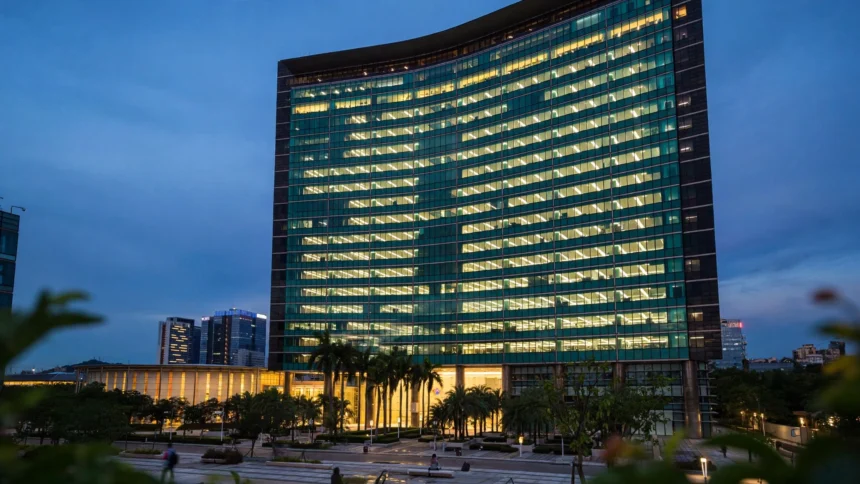
A federal jury in Brooklyn has convicted Chinese telecom giant Huawei of stealing trade secrets from American companies and defrauding global banks, delivering a verdict on Tuesday that closes one of the longest running corporate criminal cases in recent US history. The jury found Huawei guilty on 10 of the 12 counts it faced, but cleared the company of the two most serious charges, racketeering conspiracy and conspiracy to obstruct justice.
The verdict came after a 12-week trial in which prosecutors called more than 60 witnesses. Huawei now faces sentencing on September 14, 2027, when it could be ordered to pay billions of dollars in fines and restitution. Its lawyer said the company will appeal.
What the jury decided
The jury convicted Huawei and its affiliates of conspiracy to steal trade secrets, bank fraud, wire fraud, money laundering conspiracy, conspiracy to defraud the United States, and violating US sanctions on Iran. Prosecutors argued that Huawei misled banks including HSBC, Standard Chartered and BNP Paribas about its secret business in Iran, to keep access to US dollar clearing services.
The acquittals matter too. The racketeering charge had accused Huawei of operating as a criminal enterprise, a claim its lawyer Brian Heberlig called a “profound rejection” of the government’s case.
A case eight years in the making
- 2018: US prosecutors open the criminal case, and Huawei’s chief financial officer is arrested in Canada.
- 2019: The US formally indicts Huawei, and places the company on a trade blacklist that cuts off its access to American technology.
- 2020: Prosecutors add charges alleging Huawei conspired to steal trade secrets from US firms over two decades.
- September 2026: The trial finally opens in Brooklyn federal court before Judge Ann Donnelly.
- November 24, 2026: After four days of deliberations, the jury returns guilty verdicts on 10 of 12 counts.
- September 14, 2027: Sentencing is scheduled, when fines and forfeiture will be decided.
The trade secrets at the centre of the trial
The theft allegations read like a catalogue of the American telecom industry. Prosecutors told the court that Huawei stole source code from Cisco Systems for its internet routers, took antenna technology from wireless firm Quintel, and hired a professor to gain access to a circuit board developed by semiconductor company CNEX. Other victim companies named in court records included Motorola Solutions and Fujitsu.
One of the most striking episodes involved T-Mobile. Prosecutors said Huawei wanted access to the carrier’s phone-testing robot, nicknamed Tappy, which was a closely guarded T-Mobile trade secret used to test how touch screens respond. In another episode, a Huawei worker slipped into a competitor’s booth at a Chicago trade show to photograph a networking device’s circuits.
Why it matters
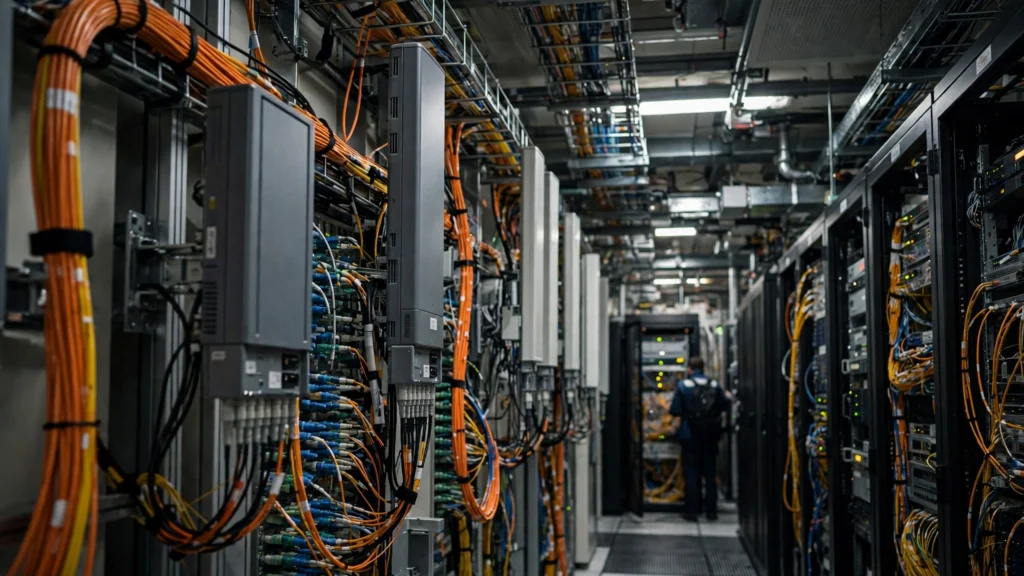
Governments around the world already treat Huawei as a security question, not just a commercial one, and India is firmly in that camp. Huawei and its Chinese rival ZTE were left out of India’s 5G trials in 2021, and that exclusion has never been reversed. India’s 5G networks were built instead with gear from Ericsson, Nokia and Samsung, plus home-grown technology.
The conviction gives New Delhi’s cautious stance court-tested backing. In September, the Department of Telecommunications was reported to be collecting details from operators about their Chinese-supplied equipment and the cost of replacing it, a “rip and replace” debate over legacy Huawei and ZTE gear still in Indian 4G networks. The final call rests with the Ministry of Home Affairs.
For Indian readers, the practical stakes are about the networks in their pockets. Replacing legacy equipment is expensive and disruptive, so operators and the government will weigh cost against risk. What the verdict does is tilt that argument: the company whose gear sits in parts of India’s networks has now been found guilty in a US court of stealing the very technology it competes with. It also arrived the same day Washington proposed new tariffs of up to 25 percent on Indian goods, a reminder that technology, trade and geopolitics are now argued in the same room.
What happens next
Huawei will appeal, its lawyer confirmed, so the legal fight is far from over. Sentencing is set for September 14, 2027, when Judge Donnelly will decide financial penalties that could run into billions of dollars. No individual executives were defendants, so the punishment falls on the companies.
China has consistently called the case political, and Beijing is expected to protest. The bigger question is whether other governments now move faster to remove Huawei equipment from their networks, and whether the verdict changes the terms of the wider US-China technology rivalry.
Frequently asked questions
What was Huawei found guilty of?
Conspiracy to steal trade secrets, bank fraud, wire fraud, money laundering, and violating US sanctions on Iran, on 10 of 12 counts.
What was Huawei cleared of?
Racketeering conspiracy, the charge that it operated as a criminal enterprise, and conspiracy to obstruct justice.
When will Huawei be sentenced?
September 14, 2027. The company could face billions of dollars in fines, forfeiture and restitution.
Does the verdict affect Huawei in India?
Huawei is already excluded from India’s 5G trials, unchanged since 2021. The verdict adds weight to the debate over replacing legacy Chinese equipment in Indian networks.
Will Huawei appeal?
Yes. Its lawyer said the company will challenge the convictions.
The verdict is a landmark in the US-China technology rivalry, and its ripples will reach far beyond a Brooklyn courtroom, including into India’s telecom networks.