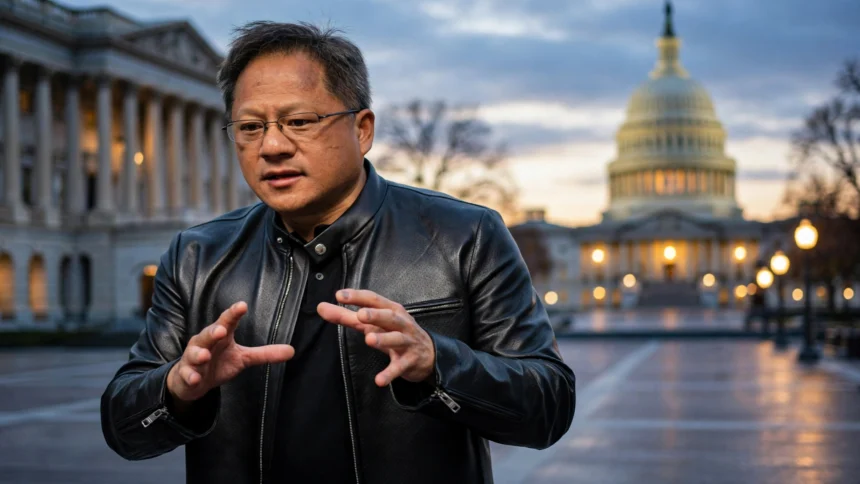
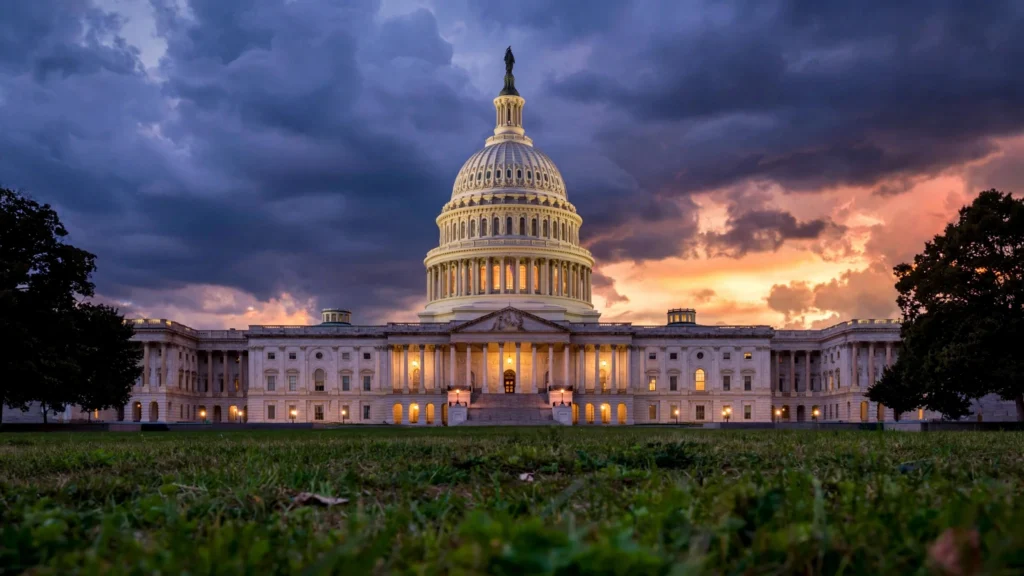
Nvidia chief Jensen Huang walks into the United States Congress on Tuesday, December 1, for the most consequential week of his career. Just eight days after his shock return as chief executive, Huang will face closed-door questioning from three House committees over a scandal that mixes advanced AI chips, alleged espionage and a suspected Chinese intelligence link. Nvidia’s chips power the data centres on which the AI boom runs, and Washington wants to know whether some of that technology reached China through the back door.
Three committees, one question
Huang is scheduled to be questioned behind closed doors on Tuesday by three Republican-led House committees: Foreign Affairs, Intelligence, and the select committee on China. The committee chairmen said in a joint statement that the board’s brief internal investigation and Huang’s reinstatement “do not erase the national security threats and questions that must be addressed.”
“We remain committed to getting answers on the mass smuggling of Nvidia products, their diversion for Chinese military purposes, and their key role in advancing our foremost adversary’s AI capabilities,” the chairmen said. Nvidia’s general counsel Tim Teter faces the same committees on Wednesday, and Huang is set to appear at a public hearing before the Senate Banking Committee on Thursday.
At the heart of the scandal: Megaspeed
The central allegation is that Nvidia’s advanced AI chips were diverted to China through Megaspeed, a Singapore-based company formerly led by Alice Huang, whom US intelligence suspects of working for Beijing. Reports have identified her as one of the women with whom Huang had an affair.
How the scandal unfolded
Nvidia’s board announced on November 8 that it had opened a probe after Huang acknowledged an affair with a woman US officials say was working for Chinese intelligence. Huang resigned on November 12, ending 33 years at the helm. Eleven days later, on November 23, the board reinstated him, and Nvidia’s shares jumped sharply.
The reinstatement itself has become part of the controversy. The Trump administration worked behind the scenes to push for Huang’s return, an unusually direct government intervention. President Donald Trump said on Thursday that Huang was not a security threat. Nvidia’s board said it had received assurances from senior US officials and was confident the reinstatement posed no security risk, even though its own independent investigation remained unfinished.
Not everyone in Washington is convinced. Outgoing Republican congressman Don Bacon wrote on X that “Nvidia should have moved on without Huang,” adding: “Congress needs to get to the bottom of who approved high end computer chips sales to China.”
Why it matters
This is no longer just a story about one executive. The hearings will shape how tightly the United States controls the flow of advanced AI chips, and that has direct consequences far beyond Washington. For India, the stakes are practical: Nvidia’s graphics processors are the workhorses of the AI data centres now being built across the country, and any tightening of export rules can slow supply and push up prices.
Indian investors are watching too. Nvidia is one of the most widely held foreign stocks among Indian retail investors, and its shares have swung sharply through every twist of this saga, surging on Huang’s return after weeks of losses. Analyst Dan Ives warned of a “rollercoaster ride ahead” and said “next week Jensen carries the weight of the entire tech sector when he marches into DC.”
The politics cut across party lines. Antipathy toward China is one of the few issues that unites Democrats and Republicans in Washington. Senate Democratic leader Chuck Schumer has said his party will investigate any wrongdoing once Democrats take control of both houses in January.
What happens next
- Tuesday, December 1: Huang faces closed-door questioning from three House committees.
- Wednesday, December 2: Nvidia general counsel Tim Teter faces the same committees.
- Thursday, December 3: Huang appears at a public hearing before the Senate Banking Committee.
- January 2027: Democrats take control of both houses of Congress, with more probes expected.
Markets will be watching every leak from the closed-door sessions. At an all-hands meeting at Nvidia’s California headquarters, where Huang apologised to employees, he ditched his signature black leather jacket for a navy cotton coat, a more subdued look many observers read as a sign of remorse.
FAQs
Why is Jensen Huang facing Congress?
US lawmakers want answers about allegations that Nvidia’s advanced AI chips were diverted to China, and about Huang’s reinstatement as CEO just 11 days after he resigned.
When are the hearings?
Huang faces three House committees behind closed doors on Tuesday, December 1. Nvidia’s general counsel Tim Teter is questioned on Wednesday, and Huang appears at a public Senate Banking Committee hearing on Thursday.
What is Megaspeed?
Megaspeed is a Singapore-based company formerly led by Alice Huang, whom US intelligence suspects of working for Beijing. Lawmakers allege Nvidia’s chips were diverted to China through the firm.
Did Huang resign and return?
Yes. He resigned on November 12 after the board opened a probe on November 8, and was reinstated on November 23 after the Trump administration pushed for his return.
Does this affect India?
Potentially, yes. Tighter US export controls on AI chips could slow supply and raise prices for India’s growing AI data centre industry, and Nvidia’s share price swings affect Indian investors who hold the stock.
The hearings this week will set the tone for the next phase of the US-China technology contest.