



Reliance Jio made its boldest network claim yet on Friday. At the India Mobile Congress 2026 in New Delhi, the company said India could be among the first countries in the world to launch commercial 6G services, and that it is already building the technology to get there.
It is quite a statement. Jio entered 4G late and then steamrolled the market. This time it wants to be at the front of the queue, not playing catch-up.
What Jio actually put on the table
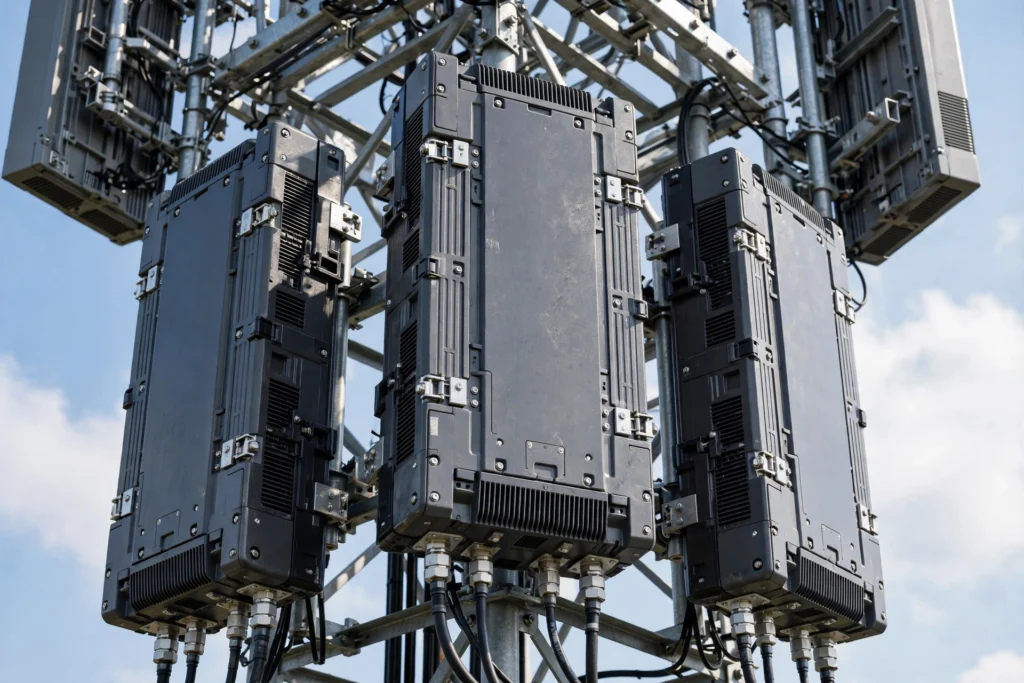
This was not just a speech. Jio displayed hardware: what it described as India’s first Giga MIMO Radio, a proprietary pre-6G technology stack, and a common baseband unit built to support both 5G and 6G networks.
The company also talked numbers. It says it has filed more than 8,000 patents, with hundreds related to 6G, and made over 934 contributions to global telecom standards. In plain terms, Jio wants a seat at the table where 6G gets defined, not just a licence to sell it later.
What 6G is supposed to deliver
According to Jio, 6G networks could offer up to five times the capacity of today’s 5G networks with nearly ten times lower latency. If those numbers hold, the difference will not just be faster downloads.
The pitch is about real-time everything: AI services that respond instantly, holographic video calls, remote healthcare and classrooms that feel present. Jio pointed to possible uses for farmers, doctors and students, the three groups that show up in every Indian tech keynote.
The company also said it is working toward AI-native and quantum-safe networks, pairing faster connectivity with stronger security from the ground up.
The 2030 timeline, decoded
Here is the important fine print. Global 6G standards are expected to be finalised around 2030, and Jio’s “first wave” claim is tied to that date. Nobody is launching commercial 6G next year. What Jio is really saying: when standards land, India should be ready on day one rather than years later.
That is a meaningful shift in ambition. India was a late and messy adopter of 3G and 4G, and 5G arrived years after South Korea and the US. A first-wave 6G launch would be a first for the country.
Why it matters beyond the hype
There are solid reasons to take the announcement seriously. Jio built its 5G rollout on indigenous technology rather than imported kit, which gives it unusual control over its roadmap. The patent filings suggest years of quiet R&D behind Friday’s showcase.
And the timing is deliberate. With AI models getting hungrier for bandwidth and latency, whoever owns the next network generation owns a toll booth on the AI economy. Jio clearly wants that toll booth in India to be Indian-built.
Reasons to stay sceptical
That said, Friday’s showcase was a vision, not a product. Commercial 6G needs three things Jio cannot control alone: finished global standards, affordable 6G devices, and spectrum policy that makes business sense. All three are years away.
The global race is crowded too. China, South Korea, Japan, the US and Europe all have national 6G programmes with serious money behind them. Being “among the first” is a contest with many confident entrants.
And Indian telecom has a habit of announcing the future early. Worth remembering the next time a launch date gets mentioned.
Quick answers
When will 6G launch in India?
Not before global standards are finalised around 2030. Jio says India could be in the first wave of commercial launches after that.
How fast will 6G be compared to 5G?
Jio claims up to five times the network capacity and nearly ten times lower latency than current 5G.
What is the Giga MIMO Radio Jio showcased?
An advanced antenna system Jio describes as India’s first, displayed at IMC 2026 as part of its pre-6G stack.
Will my 5G phone work on 6G?
No. 6G will need new devices and new network hardware. Jio’s common baseband unit is designed to ease the network side of that transition.
Who else is racing for 6G?
China, South Korea, Japan, the US and Europe all run national 6G programmes. India wants a seat at that table through Jio’s standards contributions.
Team Informeia