



The world’s richest man is publicly taunting India’s richest man, and the government is not amused. On Saturday, Elon Musk escalated his weeks-long feud with Mukesh Ambani over the delayed India launch of Starlink, sharing media reports about political funding linked to Reliance, even as New Delhi insisted its satellite internet rules are fair for everyone.
The row has turned what should have been a quiet regulatory clearance into one of the most dramatic corporate showdowns Indian telecom has seen in years, with the country’s telecom minister now weighing in personally.
Musk’s Latest Volley: “Prime Minister Ambani”
The latest flare-up began on Thursday, when Musk posted on X: “Is Ambani the real boss of India?” A day later, on Friday, he went further, addressing the Reliance Industries chairman directly as “Prime Minister Ambani” and sarcastically apologising for not realising who he believed really runs the country.
Mockery aside, his message carried a serious charge. Musk accused Ambani of protecting a monopoly and asked, pointedly, whether he would allow Starlink to compete in India. He argued that satellite internet could reach areas still without connectivity, giving children better access to learning and helping small businesses find customers across the world.
Then on Saturday morning, Musk raised the stakes again. He shared a 2022 Al Jazeera report about a Reliance-funded firm boosting BJP campaigns on Facebook, alongside a 2024 report in The Indian Express that said the Reliance-linked company Qwik Supply had donated Rs 385 crore to the BJP and Rs 25 crore to the Shiv Sena through electoral bonds. Reliance has not publicly responded to any of Musk’s allegations.
New Delhi Pushes Back
Telecom Minister Jyotiraditya Scindia responded on Friday, telling reporters that India does not allow monopolies in any sector. His remark was a direct rebuttal to Musk’s suggestion that Ambani wields political influence to keep Starlink out.
The Ministry of Communications went further a day earlier, rejecting Musk’s claims outright. It said the country’s authorisation framework for satellite communications is “fair and non-discriminatory” and that all three licensed operators, Starlink, OneWeb India and Jio Satellite Communications, are at broadly the same regulatory stage. Suggestions of selective treatment, the ministry said, are “baseless and misconceived.”
The statement matters because Starlink has actually secured a licence to operate in India. What it still lacks is a commercial launch approval, which depends on meeting security compliance conditions and receiving a spectrum assignment. It has been waiting for nearly four years.
Why This Fight Matters
India’s internet market is enormous, with more than a billion users, and it is dominated by two players. According to Telecom Regulatory Authority of India data for July 2026, Reliance Jio had about 535.12 million mobile subscribers, while Bharti Airtel had roughly 384.23 million. Together, they serve more than 919 million subscribers.
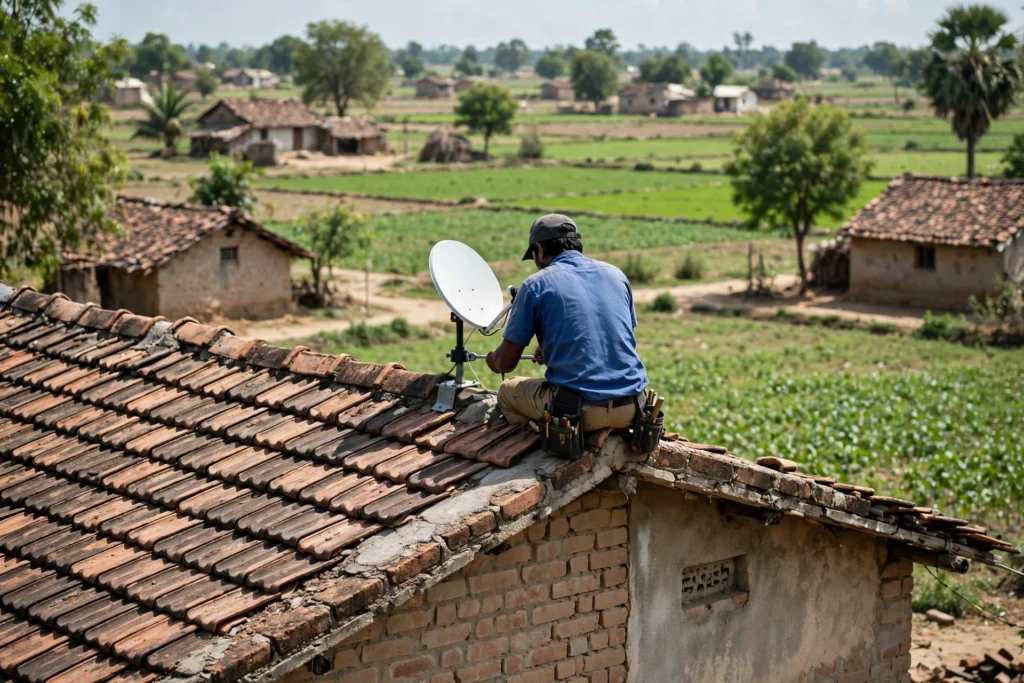
Starlink works differently from their networks. Instead of towers and fibre, it beams broadband from thousands of satellites in low Earth orbit to small dish terminals on the ground. In theory, that makes it ideal for remote and hilly regions where laying cables is expensive or impractical.
Here is the irony that has not escaped industry watchers. Last year, SpaceX signed distribution agreements with both Reliance Jio and Bharti Airtel to offer Starlink once approvals came through. The company that Musk now accuses of blocking him was once signed up to help sell his service.
The Key Facts So Far
- Musk accused unnamed “oligarchs” earlier this week of blocking Starlink’s India launch, then named Ambani directly.
- On Thursday he asked whether Ambani is “the real boss of India”; on Friday he called him “Prime Minister Ambani”.
- On Saturday he shared reports about Reliance-linked political donations via electoral bonds.
- Minister Scindia said on Friday that India permits no monopolies in any sector.
- The government says Starlink, OneWeb India and Jio’s satellite arm are at the same regulatory stage.
- Starlink still needs security clearances and spectrum assignment before a commercial launch.
The timing adds another layer. The India Mobile Congress, the telecom industry’s annual flagship event, is currently underway in Delhi, putting the dispute squarely in the spotlight just as industry leaders gather in the capital.
FAQs
Why is Elon Musk angry with Mukesh Ambani?
Musk claims powerful business interests, specifically naming Ambani, are blocking Starlink’s commercial launch in India to protect Reliance Jio’s dominance. He has offered no evidence for the claim.
What does the Indian government say?
Telecom Minister Jyotiraditya Scindia says India allows no monopolies in any sector, and the communications ministry says the satcom approval process is fair and non-discriminatory for all three licensed operators.
Has Starlink been approved in India?
Starlink has secured a licence but cannot launch commercially until it meets security compliance conditions and receives a spectrum assignment. It has been waiting for nearly four years.
How does Starlink compare with Jio and Airtel?
Jio and Airtel dominate with over 919 million subscribers combined. Starlink uses low Earth orbit satellites to deliver broadband, which could suit remote areas where conventional networks struggle.
Did Starlink partner with Reliance earlier?
Yes. Last year, SpaceX signed distribution agreements with both Reliance Jio and Bharti Airtel to offer Starlink in India once regulatory approvals were granted.
This one is far from over. With Musk showing no sign of backing down and the government holding its line, the satellite internet race in India just got personal. Whatever happens next, rural India, where the real connectivity gap lies, will be watching closely.