


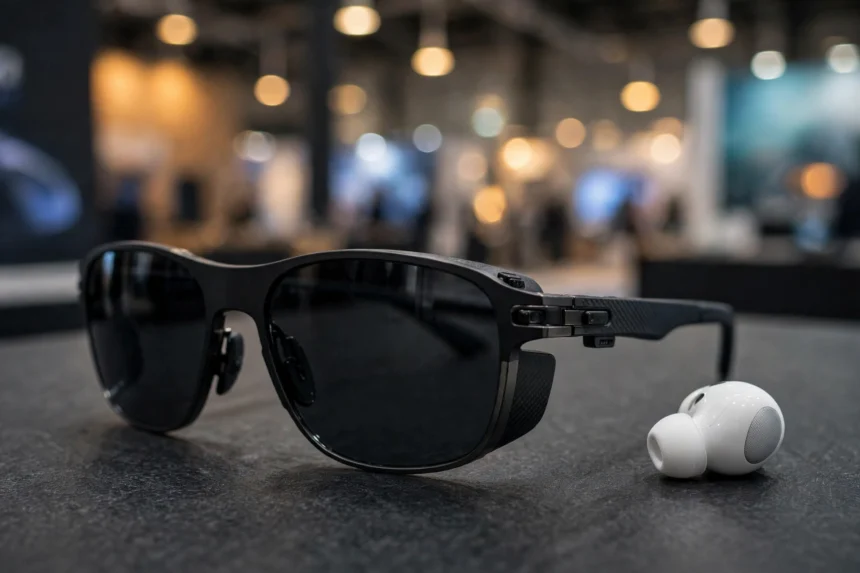
New Delhi, October 10: The most talked-about gadget at this year’s India Mobile Congress was not a phone at all. As the tenth edition of IMC wound down at Yashobhoomi on Friday, Indian companies were showing off AI-powered wearables designed specifically for local needs: voice-led artificial intelligence assistance, digital payments without touching a phone, and smart glasses that help visually impaired users navigate the world.
The biggest name in the conversation is Reliance Jio. The company is preparing to launch AI-powered wearable devices in India, and its artificial intelligence division, Reliance Intelligence, is developing devices in several form factors, including glasses and audio devices, that connect directly to its AI services. Company representatives at the event said the wearables are expected to reach Indian buyers around November or December 2026.
Jio’s next screen may not be a screen at all
The pitch is simple. Instead of pulling out a phone, a user could ask a question out loud and get an answer through smart glasses or ear-worn devices, powered by Jio’s AI stack. Voice becomes the interface, and Indian languages are central to the plan.
This matters because India never really became a typing-first market. Hundreds of millions of users search, shop and message by voice, and a wearable that understands Hindi, Tamil, Bengali or Marathi naturally could do more for adoption than any spec sheet. Jio’s bet appears to be that the next big Indian computing device sits on the face or in the ear, not in the hand.
Smart glasses that help people see
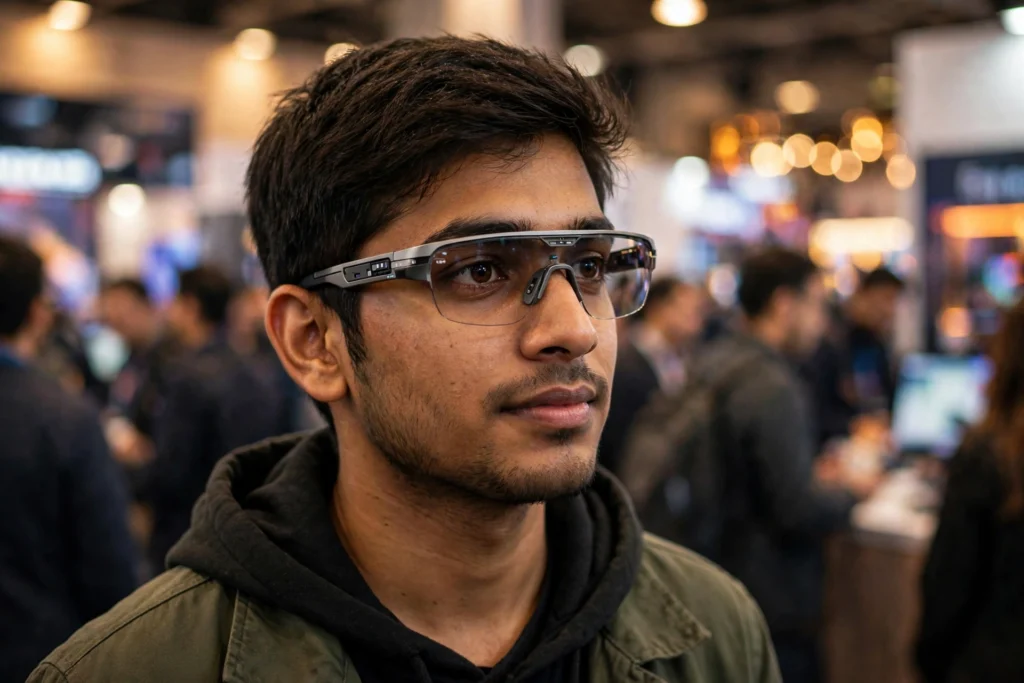
One of the most moving demos came from Torchit, an Indian assistive technology startup developing smart glasses for visually impaired users. The glasses use onboard AI to describe surroundings, read text and identify obstacles, turning a wearable into a genuine independence tool.
Accessibility could turn out to be wearables’ first true killer feature in India. When a device can narrate the world for someone who cannot see it, the question is no longer whether the market exists.
Why India could be where wearables finally click
Global smart glasses have struggled to find buyers, but the Indian pitch looks different. US chip maker Qualcomm, which has worked with Jio and eyewear retailer Lenskart on wearable devices, sees glasses emerging as an early growth segment, driven by local applications in payments, education and productivity rather than novelty.
Think about what that means in practice. A student in a tier-3 town could get lessons read aloud and explained through an audio device. A street vendor could accept a payment with a nod instead of juggling a phone. A commuter could get train updates whispered in her own language. None of this needs a screen, and all of it plays to India’s voice-first habits and its payments infrastructure.
- A late-2026 launch window: Jio’s AI wearables are expected around November or December 2026, giving the category its first big Indian push before the year ends.
- Voice-led everything: The devices are being built around spoken AI assistance, with Indian language support as a headline feature rather than an afterthought.
- Payments beyond the phone: Digital payments through wearables could extend UPI-style convenience to situations where a phone is impractical.
- Accessibility at the core: Startups like Torchit are showing that smart glasses can serve visually impaired users, widening the market beyond tech enthusiasts.
- Chips are ready: Qualcomm’s work with Indian partners signals that the underlying hardware and ecosystem are maturing fast.
The road ahead
Wearables have been promised as the next big thing for a decade, so scepticism is healthy. Battery life, price and privacy will decide whether these devices earn a place in daily Indian life. But the conversation at Yashobhoomi this week was not about importing a foreign trend. It was about building for the way India actually uses technology: by voice, in many languages, often without a screen at all.
Frequently asked questions
When will Jio launch its AI wearables in India?
Reliance Jio’s AI wearables, developed by Reliance Intelligence in glasses and audio-device form factors, are expected to launch around November or December 2026, according to statements made at IMC 2026.
What did Indian companies showcase at IMC 2026?
AI-powered wearables aimed at India-specific needs: voice-based AI assistance, digital payments, education, and accessibility, with the market moving beyond basic fitness tracking and phone notifications.
What is Torchit developing?
Torchit, an Indian assistive technology startup, is developing smart glasses for visually impaired users, using AI to describe surroundings and read text aloud.
Why does Qualcomm see an opportunity in smart glasses?
Qualcomm, which has worked with Jio and Lenskart on wearables, sees glasses as an early growth segment, with local applications in payments, education and productivity rather than just novelty features.
What makes India a strong market for AI wearables?
India’s voice-first digital habits, many spoken languages, and mature digital payments ecosystem suit screen-free devices that work through speech, which is exactly what the new wave of wearables is built around.
That is all for this edition of the tech desk. We will keep tracking Jio’s wearable launch as the expected late-2026 window approaches.