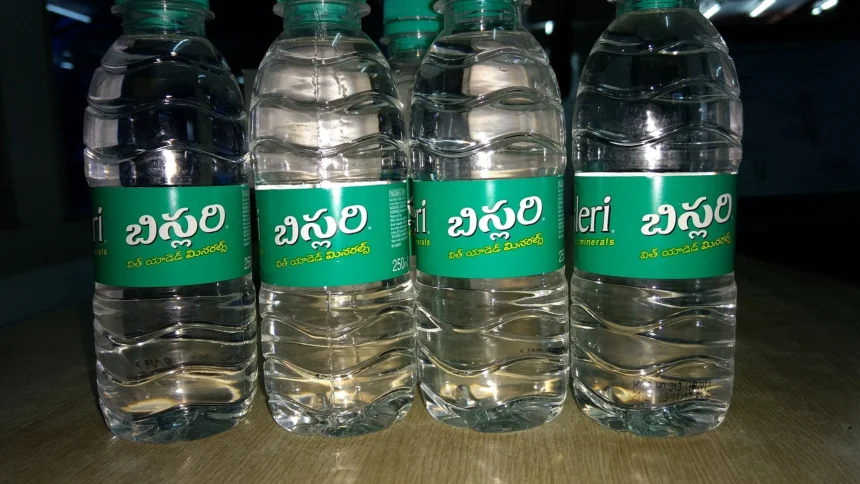
India’s food safety regulator has ordered prosecution against Bisleri International, the country’s best known packaged water brand, after a sample of its drinking water failed safety tests twice. The Food Safety and Standards Authority of India (FSSAI) announced the action on Sunday, 22 November, saying the sample was declared unsafe under the Food Safety and Standards Act, 2006.
It matters because Bisleri, selling packaged water in India for over five decades, is almost another word for bottled water. When the regulator moves against a name that familiar, every buyer will now ask: how safe is the water in the bottle I just bought?
What the tests found
FSSAI said a regulatory sample of “Packaged Drinking Water (other than Mineral Water)” was collected from Bisleri International’s premises for analysis. The first laboratory test found the sample non-compliant with the prescribed bromate limits and declared it unsafe.
Bisleri appealed, as the law allows, and the sample was sent to a referral food laboratory for a fresh examination. The second laboratory also declared it unsafe, this time after detecting polynuclear aromatic hydrocarbons, known as PAHs. With two laboratories reaching the same conclusion, FSSAI said the findings established violations relating to unsafe food and granted sanction to launch prosecution. FSSAI did not say where the sample was collected, and mentioned no response from the company.
What are bromate and PAHs?
Bromate can form in drinking water during ozonation, a disinfection process in bottling plants. Indian rules set a strict limit for it because, at high levels, it is considered a possible carcinogen. The first test found Bisleri’s sample over that limit.
PAHs, or polynuclear aromatic hydrocarbons, are chemicals that occur from the incomplete burning of coal, oil, gas and other organic matter, and can enter water through contaminated sources. Both bromate and PAHs are classified as carcinogens, substances associated with the potential to cause cancer, which is why even small amounts in drinking water are taken seriously.
A wider crackdown, not a one-off
The Bisleri action was part of a broader enforcement announcement. In the same post, FSSAI said it had sanctioned prosecution against a few other companies, including Vasant Masala Pvt Ltd, Tit-Bit Foods India Pvt Ltd and Mimansa Industries, and ordered a recall of pre-packed chocolate-filled cookies made by Asha Confectionery after lab findings raised safety concerns.
Bisleri has faced such action before. In July 2025, officials in Haridwar seized 120 sealed Bisleri bottles from a distributor and recalled 250 more after tests found samples below prescribed standards.
The rules around bottled water have also changed recently. In October 2024, FSSAI removed the mandatory Bureau of Indian Standards (BIS) certification requirement for packaged drinking water, shifting the emphasis to testing, and a mandatory testing scheme took effect from 1 January 2026. The safety net for bottled water now rests on testing and enforcement, which makes this case a test of whether that system works.
Why it matters
People buy bottled water precisely because they do not trust the tap. A sealed bottle is treated as the safe option, the one purchase where you pay extra to avoid a health risk. That trust is the entire business model of the packaged water industry. When the regulator finds a leading brand’s sample unsafe, it shakes the assumption behind millions of everyday purchases.
Prosecution sanction is a legal step, not a verdict. It clears the way for court proceedings, but it does not by itself amount to a conviction, and the company will have its chance to defend itself. If it succeeds, it signals that even the biggest names face real consequences when samples fail. With the BIS requirement gone and the new testing regime in force only since January, FSSAI also needs to show testing-led regulation can catch problems. A high-profile prosecution does that, if the process is followed through and not left at the announcement stage.
What shoppers should check
Until the case is decided, a few simple precautions help with any brand of bottled water. Check the seal and cap are intact; a loose cap or broken seal is a warning sign. Look for the FSSAI licence number, manufacturing date and expiry date on the label. Buy from known shops rather than unverified vendors. Check the water is clear, with no smell, particles or odd taste. And if something seems wrong, keep the bill and the bottle, and report it to FSSAI. Buyer complaints are one of the main ways problem batches get traced.
FAQs
Is all Bisleri water unsafe?
No. The regulator tested one sample, declared unsafe by two laboratories. That does not mean every Bisleri bottle is unsafe, and prosecution sanction is a step towards legal proceedings, not a conviction.
What exactly did the laboratories find?
The first test found the sample over the prescribed bromate limit. After the company’s appeal, a referral lab also declared it unsafe, detecting polynuclear aromatic hydrocarbons (PAHs). Both are classified as carcinogens.
Has FSSAI acted against other companies too?
Yes. In the same announcement, it sanctioned prosecution against Vasant Masala, Tit-Bit Foods and Mimansa Industries, and ordered a recall of Asha Confectionery’s chocolate-filled cookies.
What happens next?
The sanction clears the way for prosecution under the Food Safety and Standards Act, 2006, where the company can present its defence.
The case will be watched closely in the weeks ahead. For now, the message for buyers is simple: trust the seal, but verify it too.