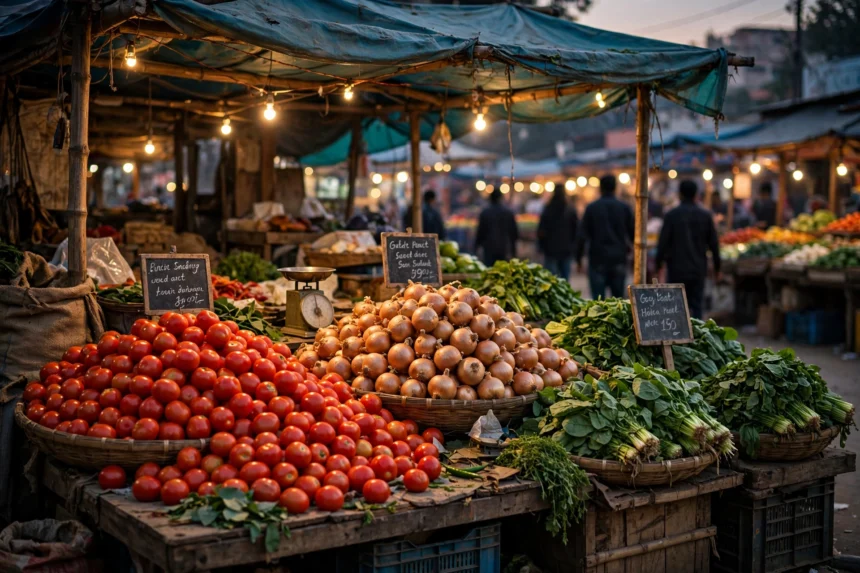
The festive shopping season has opened with an unwelcome guest. India’s retail inflation touched a 21-month high in September, official data released on Monday showed, squeezing household budgets just as families begin spending for Diwali and the wedding season.
Consumer price index (CPI) inflation rose to 5.54 per cent in September from 4.83 per cent in August, the National Statistics Office reported. The jump was driven almost entirely by food prices, which surged to 7.74 per cent from 5.97 per cent a month earlier. That is well abov

e the Reserve Bank of India’s 6 per cent tolerance ceiling for food inflation, and it is showing up in every kirana list and restaurant bill across the country.
Rural India felt the pinch hardest. Retail inflation in rural areas climbed to 6.08 per cent, while rural food inflation touched an alarming 8.06 per cent. For a farm labourer or a small-town salaried worker, that means the same monthly grocery basket now costs noticeably more, with little room to cut back on essentials.
It is no longer just about food
Economists say what worries them most is that price pressure is spreading beyond the kitchen. Of the 12 sub-groups tracked in the CPI, 11 recorded higher inflation in September. Only personal care, the one category tied to discretionary spending, stayed calm.
That broadening is what keeps central bankers awake. When inflation is limited to onions and tomatoes, it usually fades with the next harvest. When it spreads to clothing, housing, health and education, it signals something more persistent: input costs rising across the board and businesses passing them on to consumers.
- Food and beverages: the biggest driver, with vegetables, oils and cereals all contributing
- Housing and clothing: creeping upward as input costs rise
- Health and education: services inflation is firming, which tends to stick
- Fuel and light: relatively contained for now, but crude above $100 is a risk
The timing could hardly be worse. FMCG, consumer durables and automobile companies have already announced price hikes that will feed into the CPI over the next few months, according to economists tracking the data.
October could be worse
India Ratings chief economist Devendra Pant warned that headline inflation could reach around 6 per cent in October. The culprit, he said, is partly arithmetic: an adverse base effect from October 2025, when food prices were unusually low, could push food inflation as high as 9.1 per cent this month.
Three risks are stacked against a quick cooldown:
- Crude oil above $100: Brent has been hovering around $103, raising import costs for everything from transport to plastics
- Below-normal rainfall: a patchy monsoon threatens the kharif harvest, which directly feeds into food prices
- Unfavourable base effects: last year’s low numbers make this year’s figures look worse through December
There is one silver lining. The rupee strengthened about 1 per cent on Monday after the RBI stepped in to redirect oil companies’ dollar demand and curb certain forex transactions. A stronger rupee makes imports cheaper and takes some heat off imported inflation, Pant noted.
What it means for your money
For borrowers and savers, the inflation print has one clear implication: interest rates are going up, not down. The RBI already raised the repo rate by 25 basis points to 5.50 per cent at its October policy meeting, its first hike since February 2023, and changed its stance to “calibrated tightening”.
Bank of Baroda chief economist Madan Sabnavis said the third quarter would be challenging, with inflation expected to peak at 6 per cent. “Therefore, our view still holds that December will warrant another rate hike,” he said. A Systematix Institutional Equities report went further, warning inflation could run at 6 to 7 per cent in coming quarters and the repo rate may need to rise by 100 to 150 basis points in total.
What does that mean in plain terms? Home loan and car loan EMIs are likely to rise again by December. Fixed deposit rates, which had been drifting down, should stabilise or inch up. And anyone hoping for cheaper credit to buy a house or expand a business will have to wait.
The RBI itself now projects full-year FY27 inflation at 5.2 per cent, with the third quarter at 6 per cent and the fourth at 5.7 per cent. In other words, the central bank expects the pain to peak right in the middle of the festive quarter before easing.
FAQs
What is India’s retail inflation rate right now?
CPI inflation stood at 5.54 per cent in September 2026, the highest in 21 months, up from 4.83 per cent in August. Food inflation surged to 7.74 per cent.
Why is inflation rising in India?
A mix of surging food prices, crude oil above $100 a barrel, below-normal monsoon rainfall, and price pressures spreading across most consumption categories. An adverse base effect is also inflating the numbers.
Will the RBI raise interest rates again?
Most economists expect a 25 basis point hike at the December policy review, which would take the repo rate to 5.75 per cent. Some warn of a longer hiking cycle if inflation stays above 6 per cent.
How does high inflation affect common people?
It erodes purchasing power: groceries, eating out, travel and EMIs all cost more. Savers benefit slightly from higher deposit rates, but borrowers pay more.
When will inflation come down?
The RBI expects inflation to peak at 6 per cent in the October-December quarter and moderate to 5.7 per cent in the following quarter, assuming a decent rabi harvest and stable crude prices.
For now, households will have to budget tighter through the festive season. The inflation tiger is not roaring yet, but it has clearly woken up, and the RBI has its rate-hike stick firmly in hand.