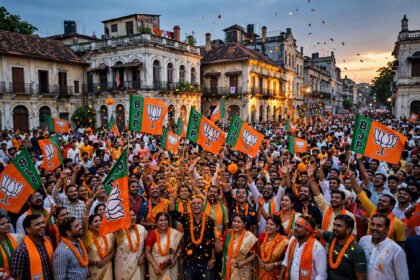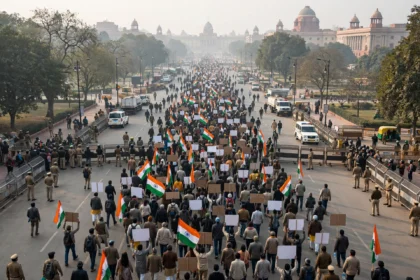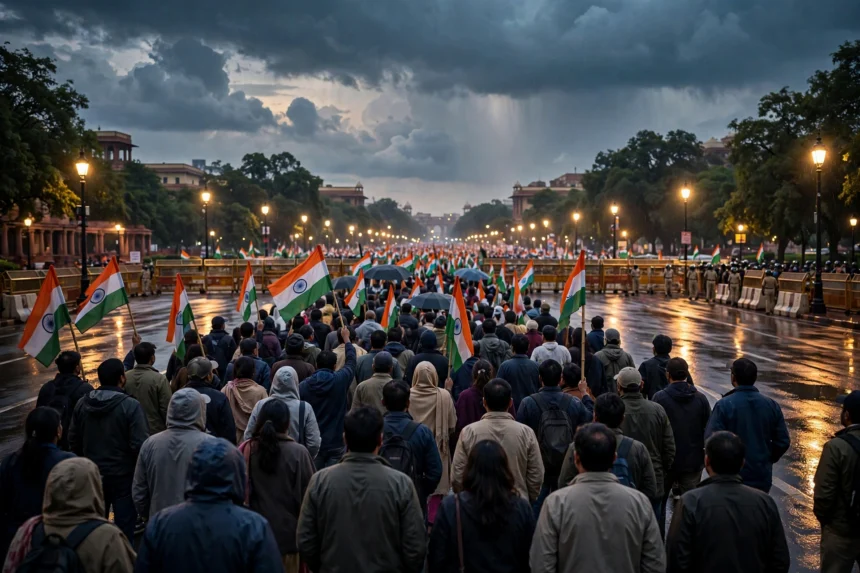
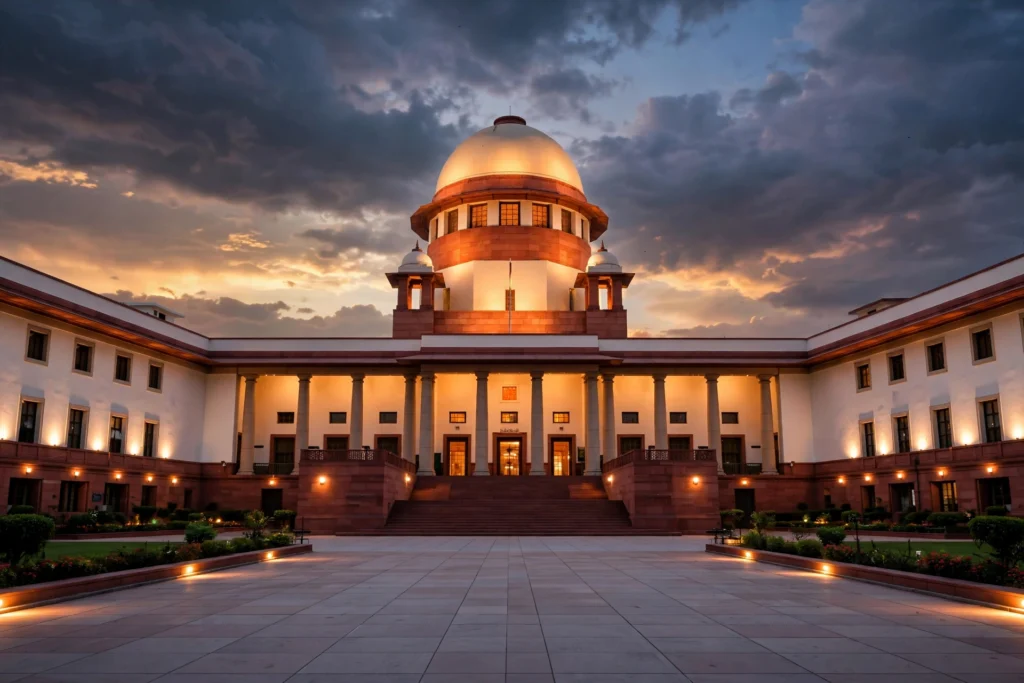
Monday afternoon in central Delhi felt like the entire opposition had decided to walk to the country’s highest court, and in a way, it had. Led by Rahul Gandhi, Mallikarjun Kharge and Akhilesh Yadav, thousands of INDIA bloc supporters marched toward the Supreme Court, demanding the resignation of Chief Election Commissioner Gyanesh Kumar and an end to what they call “vote chori”. The court, which the protesters wanted to address, politely told them to come back the proper way: as petitioners, not as a march.
A march to the Supreme Court’s doorstep
The “March for Democracy”, as the bloc billed it, rolled through some of the capital’s busiest stretches. Barakhamba Road, Mandi House and Bhagwan Das Road, all roads feeding toward the Supreme Court complex, were lined with barricades and heavy police deployment. RAF and CRPF personnel stood alongside Delhi Police as protesters waved national flags and raised slogans against the Election Commission’s Special Intensive Revision (SIR) of electoral rolls.
At points the march hit a wall. Police pushed back protesters near Barakhamba Road, and more barricades were added on Bhagwan Das Road as the afternoon wore on. The leaders’ bus was turned towards Copernicus Marg, away from the court complex, with barricades blocking the final approach. Still, the show of unity was the real message, with Congress, Samajwadi Party, Shiv Sena (UBT) and other alliance partners marching under one banner.
The meeting that did not happen
Before a single flag was unfurled, the day’s first drama had already played out on paper. Gandhi and Kharge had written to Chief Justice of India Surya Kant, asking for a meeting between 4 and 5 pm on Monday to hand over a memorandum. Their demands: an end to “vote chori”, the CEC’s resignation, a halt to the SIR exercise, and a return to paper ballots.
The Chief Justice declined. Sources said the CJI pointed out that no orders can be passed on the administrative side, and that the matters the opposition wanted to raise were already sub judice before the Supreme Court. His advice to the Congress leadership was procedural but pointed: file a petition on the judicial side, and it could be taken up on Tuesday. He also underlined that the court remains open round the clock for any citizen whose fundamental rights are violated.
The petition is now in court
That judicial route is now in motion. Congress leaders Rahul Gandhi, Mallikarjun Kharge and others filed a petition in the Supreme Court on Monday afternoon, alleging irregularities in the SIR. If the CJI’s indication holds, the petition could come up for hearing on Tuesday, which is the development to watch.
The core of the opposition’s case has been building for weeks. Rahul Gandhi has been publicly pressing the “vote chori” charge, arguing that voter lists were manipulated in states such as Haryana, Assam and Bihar, and warning that Punjab could be next. Karnataka minister Priyank Kharge questioned the poll body’s paperwork, asking who authorised the bulk printing of forms. Congress MPs at the march framed it in starker terms, saying the path to justice through constitutional bodies was being blocked.
A day of lockdown in central Delhi
For ordinary Delhiites, Monday was about navigating the security grid. Entry and exit gates of several metro stations, including Patel Chowk, Janpath, Rajiv Chowk, Mandi House and Barakhamba Road, stayed closed from 6 am to 4 pm. Meanwhile the Supreme Court told authorities to keep transport and internet services running normally, and held that peaceful, unarmed protesters must not be detained except in accordance with law. India also dismissed remarks by the UN Human Rights Office on detentions during the protests, calling them unwarranted interference.
What happens next
- Tuesday’s hearing: the CJI indicated the Congress petition could be taken up on Tuesday. How the court treats it will set the tone for the week.
- The SIR question: the Special Intensive Revision of electoral rolls remains the opposition’s central target, and any judicial direction here will echo far beyond Delhi.
The opposition wanted to meet the Chief Justice on Monday. Instead it got a date. Whether that date becomes a turning point or just another headline is what Tuesday will tell.
FAQs
Why did the opposition march to the Supreme Court?
INDIA bloc leaders led a march to the Supreme Court demanding Chief Election Commissioner Gyanesh Kumar’s resignation over alleged “vote chori” and irregularities in the Special Intensive Revision of electoral rolls.
Did the CJI meet Rahul Gandhi and Mallikarjun Kharge?
No. CJI Surya Kant declined the meeting request, saying similar matters are sub judice and no orders can be passed on the administrative side. He asked them to file a petition on the judicial side instead.
What is the SIR controversy about?
The opposition alleges the Election Commission’s Special Intensive Revision of voter lists involves irregular deletions and additions, which they claim amounts to rigging elections in states like Haryana, Assam and Bihar.
Was a petition filed in the Supreme Court?
Yes. Congress leaders including Rahul Gandhi and Mallikarjun Kharge filed a petition on Monday afternoon alleging SIR irregularities. The CJI indicated it could be taken up on Tuesday.
How did the march affect Delhi?
Central Delhi saw heavy security, barricades and metro station closures between 6 am and 4 pm on Monday. The Supreme Court directed that transport and internet services must keep running and peaceful protesters not be detained unlawfully.
Stay with Informeia for Tuesday’s Supreme Court hearing and what it means for the CEC row.