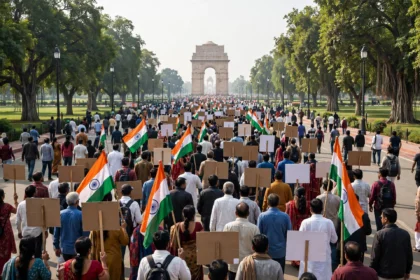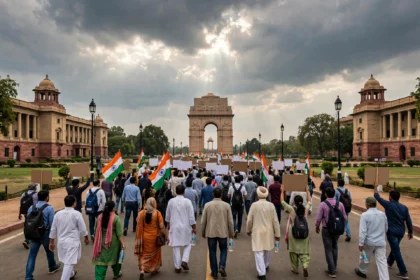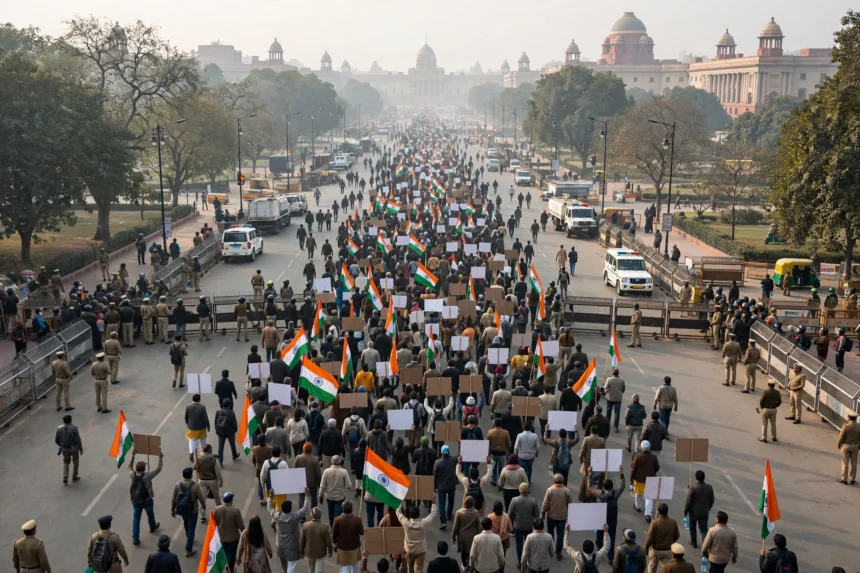
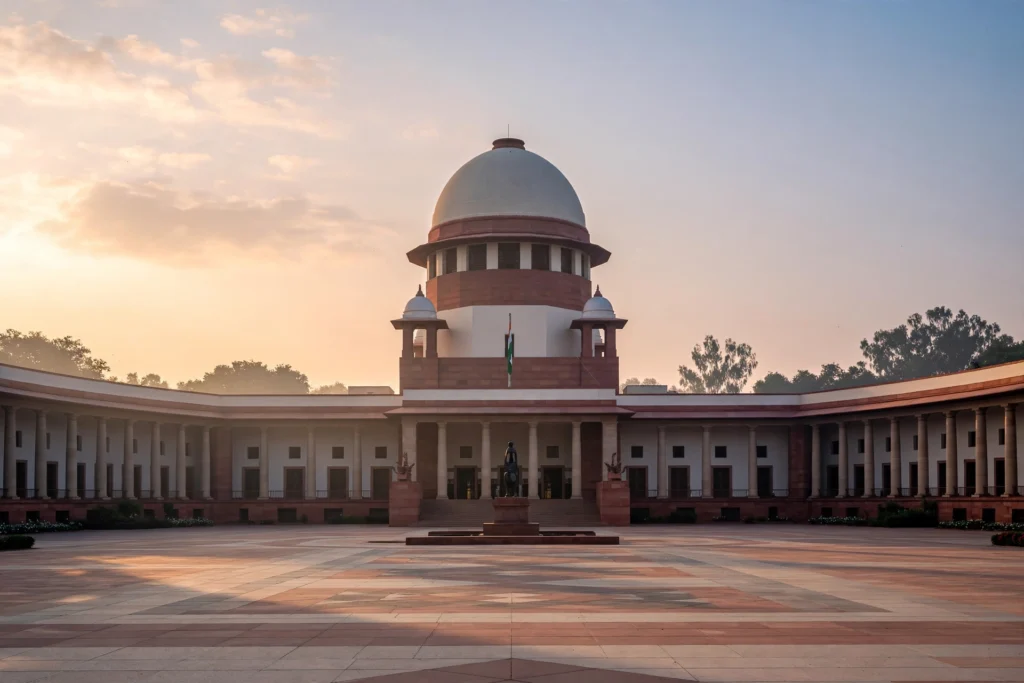
New Delhi woke up to barricades and shut metro gates on Monday as the Opposition turned the national capital into the frontline of its battle with the Election Commission. Led by Rahul Gandhi, leaders of the INDIA bloc marched toward the Supreme Court, demanding an end to what they call “vote chori”, a halt to the controversial Special Intensive Revision of electoral rolls, and the resignation of Chief Election Commissioner Gyanesh Kumar.
The march, which Gandhi had announced late on Sunday night, is the most dramatic escalation yet in a standoff that has already seen 7,000 protesters detained across Delhi over the weekend. With entry and exit at six central metro stations closed from 6 am to 4 pm and traffic diversions in place across Lutyens’ Delhi, the capital spent the day in the grip of high political theatre.
What the Opposition is demanding
According to a post by Gandhi on X on Sunday, the INDIA bloc delegation planned to hand over a memorandum to Chief Justice of India Surya Kant between 4 and 5 pm. The demands listed in that note were crisp and familiar: stop “vote chori”, put the brakes on the SIR exercise, ease out Gyanesh Kumar, and switch the country back to the paper ballot format.
Addressing supporters, Gandhi said the country’s youth had poured onto Delhi’s streets on Saturday in what he described as a peaceful protest driven by love for the Constitution, and alleged that both the Delhi Police and BJP workers had beaten them. “We will walk together, above every wall of party, gender, caste, community and state,” his message read, calling on youth, civil society and opposition parties to join the march.
The CJI said no to a meeting
But the plan hit a constitutional wall before the marchers could reach the Supreme Court. The Chief Justice’s office confirmed that the request for a meeting with Gandhi and Congress president Mallikarjun Kharge had been declined. Sources told The Hindu that the issues the delegation wanted to raise are already sub judice on the judicial side of the court, and that the court cannot intervene in matters of governance on its administrative side.
The rejection has given the BJP fresh ammunition. Assam Chief Minister Himanta Biswa Sarma accused the Congress of trying to pressure the judiciary after being refused a meeting, and announced peaceful BJP rallies at district headquarters across Assam from October 13 to October 31. “Constitutional institutions cannot be made answerable to a party’s electoral frustrations,” Sarma said.
A capital on lockdown
For Delhi residents, Monday was defined less by slogans and more by logistics. The Delhi Metro Rail Corporation announced that Patel Chowk, Janpath, Rajiv Chowk, Mandi House, Central Secretariat and Barakhamba Road stations would remain closed for entry and exit for ten hours. Traffic police issued advisories with diversions effective from 6 am.
The scale of the security operation recalls Saturday’s clampdown, when police fanned out across the city to stop protesters from reaching Jantar Mantar. Among those detained were AAP national convenor Arvind Kejriwal, CPI(M) leader MA Baby, former Kerala chief minister Pinarayi Vijayan, and several Trinamool MPs. The detentions turned the anti-CEC campaign into a rare moment of united opposition street action.
Why the SIR fight matters
At the heart of the row is the Special Intensive Revision of electoral rolls, which the Opposition claims is designed to delete legitimate voters. The INDIA bloc had already taken the issue to Rashtrapati Bhavan last week, submitting a memorandum to President Droupadi Murmu seeking Kumar’s resignation. The President, according to Congress leaders, asked for evidence, and the Opposition says it will deliver it.
The BJP, meanwhile, has dismissed the campaign as “drama and charade”. MP Bansuri Swaraj accused both Rahul Gandhi and Arvind Kejriwal of manufacturing excuses after voters rejected them, describing what she called “a competition of anarchy” between the two leaders.
What happens next
With the CJI declining the meeting, the memorandum route appears closed, at least for now. The Opposition’s options narrow to the streets, the courts and Parliament, and the march on Monday was clearly designed to keep all three in play. Whether the SIR exercise is paused or Kumar survives the onslaught will determine the shape of the next round.
FAQs
Why is the Opposition marching to the Supreme Court?
The INDIA bloc wants the CJI’s intervention on its demands: an end to alleged “vote chori”, a halt to the SIR of electoral rolls, CEC Gyanesh Kumar’s resignation, and a return to paper ballots.
Did the CJI agree to meet Rahul Gandhi?
No. The CJI’s office confirmed the request was declined, citing that the matters raised are sub judice and the court cannot act on them administratively.
Which metro stations were shut in Delhi?
Patel Chowk, Janpath, Rajiv Chowk, Mandi House, Central Secretariat and Barakhamba Road were closed for entry and exit from 6 am to 4 pm on October 12.
What is the SIR controversy?
The Special Intensive Revision of electoral rolls is an Election Commission exercise the Opposition claims could wrongly remove genuine voters, a charge the poll body and the BJP reject.
How did the BJP respond?
The BJP called the protests a “drama and charade”, accused the Congress of targeting constitutional institutions after electoral defeats, and announced counter-rallies across Assam.
Informeia will continue tracking this developing story as the Opposition charts its next move.