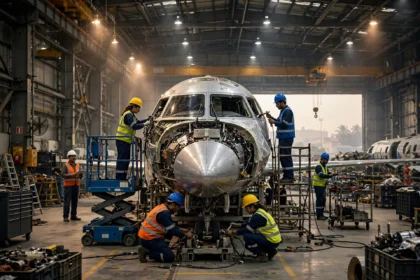
India’s push to make the hardware behind the AI boom just got a serious new backer. On Tuesday, Adani Enterprises and American electronics manufacturer Jabil signed a non-binding agreement that sets out the framework for a proposed 50:50 joint venture to manufacture and assemble AI and data centre equipment in India.
The announcement formalises what the two companies first hinted at in June, when they said they were exploring the creation of an AI and data centre infrastructure manufacturing platform in the country. Tuesday’s pact gives that idea a formal shape, even though a binding deal still lies ahead.
What the venture will make
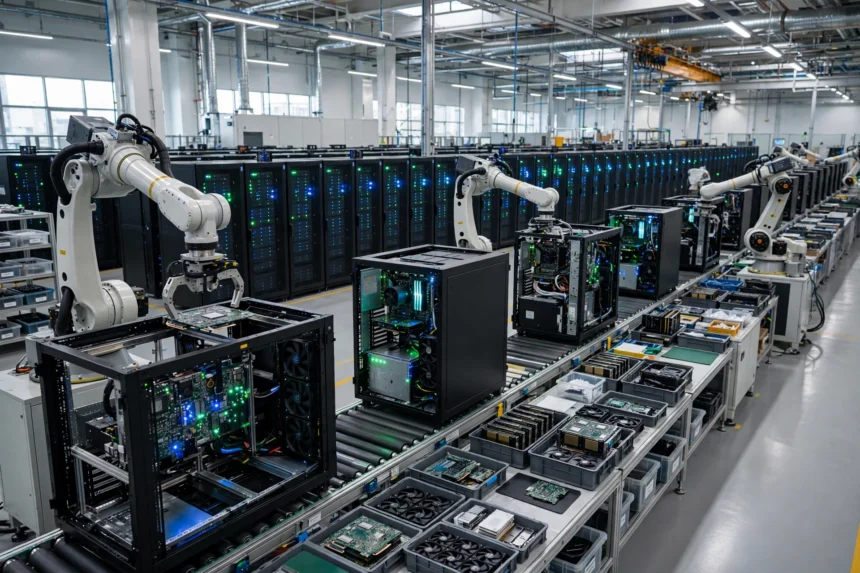
The proposed joint venture covers the unglamorous but critical gear that keeps AI data centres running. That includes AI racks, servers, storage and networking equipment, the four building blocks of modern compute infrastructure.
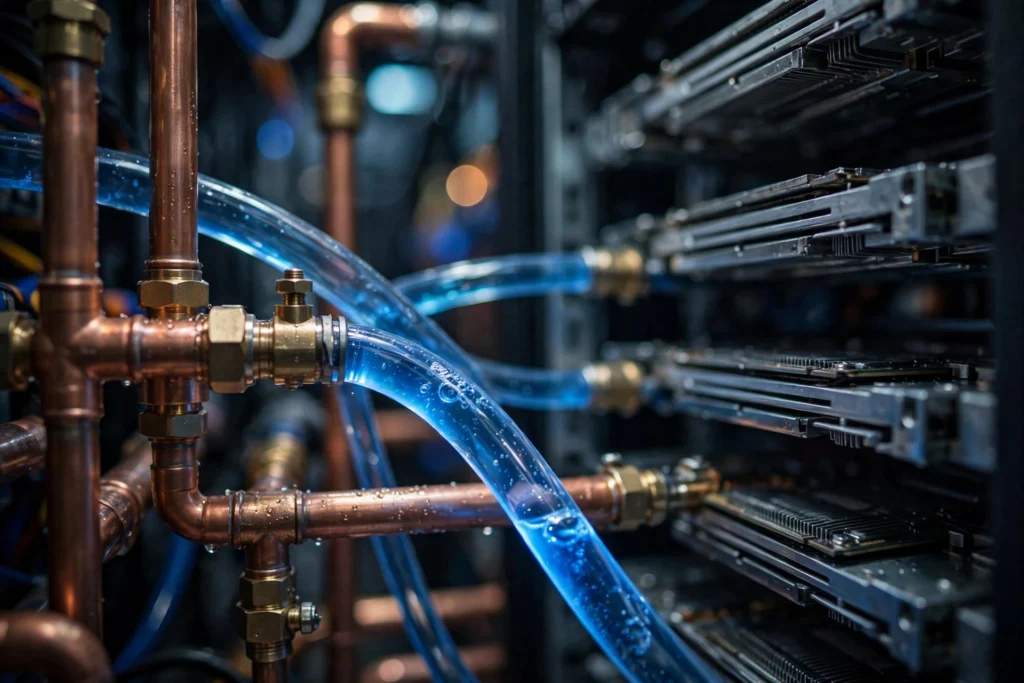
Beyond that, the companies said the venture would also make the equipment that powers and cools these systems: power distribution units, liquid-cooling systems and transformers. That is significant because as AI workloads grow denser, cooling and power have become the hardest parts of the data centre equation, not just the chips themselves.
- AI racks, servers, storage and networking equipment for data centres
- Power distribution units and transformers for AI-grade power supply
- Liquid-cooling systems for high-density AI compute
- Multi-gigawatt AI rack manufacturing capacity expected
Jabil is best known in India as an Apple supplier, part of the electronics manufacturing chain that has deepened its footprint in the country over the past few years. The company says it expects fiscal 2027 revenue of $44.5 billion and adjusted earnings per share of $17.55, and the India venture would add data centre hardware to its portfolio.
Why India, and why now
India’s data centre capacity is projected to reach between 5GW and 8GW by 2030, a steep climb driven by the AI wave, cloud adoption and the government’s data localisation push. Right now, much of the equipment that fills those facilities is imported. A domestic manufacturing line for AI racks and the power and cooling systems around them would shorten supply chains and cut costs for data centre builders.
The timing also fits into the broader “Make in India” momentum in electronics. The country has spent the last several years moving from assembling phones to making more of the value chain at home: components, displays and now, potentially, data centre hardware. The Adani group, meanwhile, already has a large data centre business through its AdaniConneX joint venture, which gives the new manufacturing entity a natural read on what Indian operators actually need.
What remains to be done
It is worth noting that Tuesday’s agreement is non-binding, which means it outlines intentions and structure but does not lock either party into the final investment. The companies will now work through the details: ownership terms, site selection, capacity build-up and the regulatory approvals that come with a manufacturing partnership of this scale.
Still, the direction of travel is clear. Global tech giants are racing to build AI infrastructure, and the countries that can make the hardware, not just host the servers, stand to capture more of the value. For India, a Jabil-Adani manufacturing venture would put a credible, scaled player on that map.
Frequently asked questions
What is the Jabil-Adani deal about?
The two companies have signed a non-binding agreement for a proposed 50:50 joint venture to manufacture and assemble AI and data centre equipment in India.
What will the joint venture manufacture?
AI racks, servers, storage and networking equipment, plus power and cooling gear such as power distribution units, liquid-cooling systems and transformers.
Is the deal final?
No. The agreement is non-binding and outlines the framework for the venture. Final terms and approvals are still to come.
How big is India’s data centre market?
Industry projections put India’s data centre capacity at between 5GW and 8GW by 2030, up sharply from current levels as AI and cloud demand grow.
Why does this matter for India?
Making data centre hardware domestically would reduce import dependence, lower costs for operators and deepen the Make in India electronics value chain.
Informeia will track this story as the proposed joint venture takes shape. Watch this space for updates on final terms, plant locations and capacity timelines.