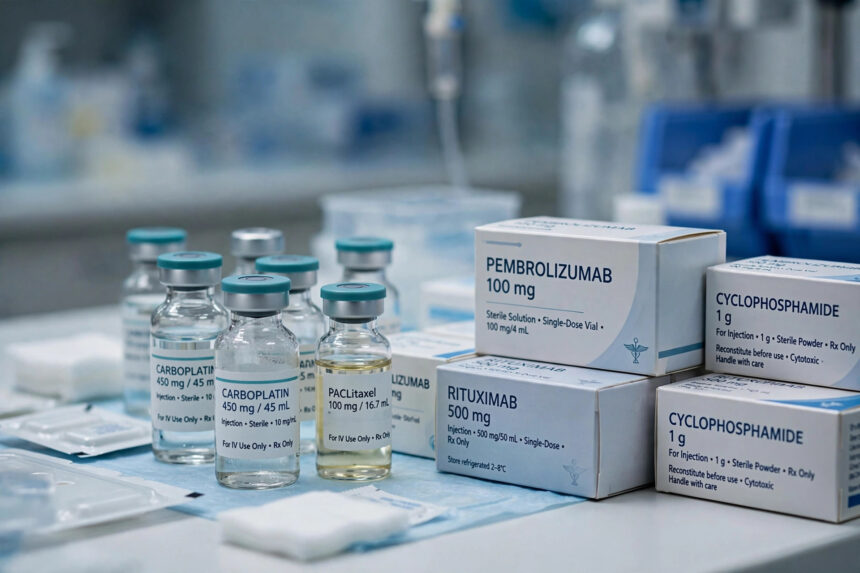
In a hearing that could reshape how every medicine in India is priced, the Centre told the Supreme Court on Monday that it will cap trade margins on anti-cancer drugs at 30 per cent of the maximum retail price. The court was not impressed.
A bench of Justices Vikram Nath and Sandeep Mehta said the Centre’s response was “hardly anything to be happy about” and asked a pointed question: if the government can cap the price of cancer drugs, why can it not bring all medicines under the same regime?
The government’s submission came after weeks of sharp questioning over the huge gap between what medicines cost to make and what patients end up paying. At the hearing, Solicitor General Tushar Mehta, appearing for the Centre, said the 30 per cent cap on cancer drug trade margins is expected to save patients around Rs 2,500 crore every year.
How the 30 per cent cap will work
The cap applies to the trade margin, which is the gap between the price at which medicines are supplied in the market and the MRP printed on the pack. By restricting that margin to 30 per cent of the MRP, the government aims to squeeze out the excessive markups that have burdened cancer patients for years.
According to the government’s submission, the cap will cover both patented and non-patented anti-cancer medicines. An expert committee headed by the Director General of Health Services has been tasked with identifying the drugs that will come under the cap. The National Pharmaceutical Pricing Authority (NPPA) will examine the committee’s recommendations before issuing a price notification to implement the measure.
The Centre said the list of covered drugs will not be static. It will be updated periodically to include additional anti-cancer medicines depending on market developments and public health needs, while inexpensive drugs will be kept out of the list.
Why the court called it insufficient
The bench was not satisfied with a cancer-drugs-only solution. Justice Nath pointed out that all costs, including transportation, raw materials and research, are already built into the MRP, so there was no justification for the inflated margins allowed on top of it.
The court flagged disturbing examples from earlier hearings:
- A single saline drip sold in the market for Rs 270, while its actual cost was Rs 11.
- An Indian-made cardiac stent supplied to retailers at around Rs 5,000 but carrying an MRP of Rs 25,000.
- A drug with an MRP of Rs 2,850 against a price to stockist of just Rs 78.29.
- A cancer medicine priced at Rs 2,700 carrying an MRP of Rs 27,000, which the court had earlier described as “broad daylight dacoity”.
The judges questioned why the benefit of price regulation should be confined to cancer drugs when several commonly used medicines and medical devices carry similarly high margins. The bench asked the Centre to explain why other medicines and devices could not also be brought under a margin regime comparable to the 16 per cent retailer margin prescribed under the Drugs (Prices Control) Order, 2013.

What the government said in defence
Additional Solicitor General Aishwarya Bhati, appearing with the Solicitor General, argued that the cost of medicines in India is the lowest in the world, and that this is one reason so many patients travel to the country for treatment.
The government also maintained that the 30 per cent cap is a significant step that balances patient relief with the need to keep supply chains viable. The Solicitor General said a formal notification with the list of covered cancer drugs will follow.
What happens next
The case is far from over. The petitions before the court, filed by advocate Kishan Chand Jain and paediatric surgeon Sanjay Kulshrestha, seek stricter enforcement of price controls across the pharmaceutical supply chain, not just for cancer drugs.
The court’s direction is clear: it wants the Centre to consider extending trade margin caps to all essential medicines and medical products. The next hearing is expected to examine how the government responds to that broader demand.
For cancer patients and their families, who often face bills running into lakhs of rupees, even a limited cap could mean real relief. But the bigger battle, as the court sees it, is about whether every patient in India pays a fair price for every medicine.
FAQs
What is the 30 per cent trade margin cap on cancer drugs?
It limits the gap between the price at which anti-cancer medicines enter the market and their printed MRP to 30 per cent, cutting down the excessive markups charged to patients.
How much will patients save?
The Centre told the Supreme Court the measure is expected to result in annual savings of approximately Rs 2,500 crore to patients.
When will the cap take effect?
An expert committee will identify the covered drugs, the NPPA will examine its recommendations, and a price notification will then implement the cap. No date has been announced yet.
Will the cap cover all cancer drugs?
It will cover both patented and non-patented anti-cancer medicines, with the list updated periodically. Inexpensive drugs will be excluded.
Could the cap be extended to other medicines?
The Supreme Court has asked why the measure is confined to cancer drugs and wants the Centre to consider a broader regime covering all essential medicines and medical devices.
Cancer treatment costs push thousands of Indian families into debt every year. This week’s Supreme Court hearing may have set off the most serious attempt yet to bring medicine pricing under control, and we will keep following it.