A parliamentary panel has called for a sweeping overhaul of the National Testing Agency (NTA), recommending that NEET-UG be shifted to a computer-based test, rallies be banned on examination days, and reasonable age and attempt limits be introduced for major entrance tests. The report, presented to the Rajya Sabha Chairman on Friday, is the sharpest institutional response yet to the paper leak controversy that led to the cancellation of NEET-UG 2026.
- Why this report matters
- The big recommendation: make NEET a computer-based test
- Experts from IITs, AIIMS and IIMs to vet questions
- Ban rallies on exam days
- Late by a minute should not ruin a year
- Age and attempt limits, and two-stage entrance tests
- Government centres in every district
- Accountability to Parliament
- What happens next
- FAQs
The 382nd report of the Department-related Parliamentary Standing Committee on Education, Women, Children, Youth and Sports is titled “Reforms and Strengthening of the National Testing Agency”. It was tabled by the committee headed by Rajya Sabha MP Mukul Wasnik, and its 270 examinations and more than 6.6 crore candidates between 2018 and 2026 show just how much rides on getting this right.
Why this report matters
The panel’s review follows the cancellation of NEET-UG 2026, which was conducted on May 3 and scrapped on May 12 over allegations of a question paper leak. The report notes that even after corrective steps taken earlier, the cancellation showed the need for deeper procedural and institutional reform.
That episode came on the back of the NEET paper leak fallout of 2024, which triggered nationwide student demonstrations and led to the eventual resignation of former Education Minister Dharmendra Pradhan. The committee noted that the NTA was a party to 474 court cases in 2024-25, of which 356 were tied to NEET-UG 2024 alone.

The big recommendation: make NEET a computer-based test
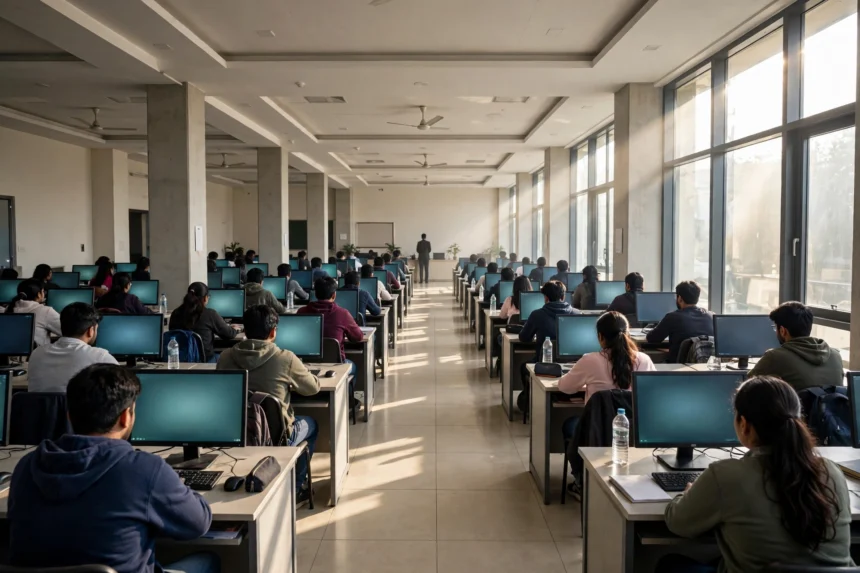
The Centre has already announced that NEET-UG will be conducted as a computer-based test from next year instead of the pen-and-paper mode. The panel strongly endorsed that move and added a crucial detail: in CBT mode, papers no longer need to be printed and transported to centres, so final question papers should be set very close to the examination itself.
To make that possible, the committee wants the NTA to build a large, diverse and continuously updated question bank. Questions would be drawn digitally from this bank using software tools, with only vetted experts seeing the final paper. The panel warned that repeatedly reusing the same question sets, or having examiners set fresh papers every year, puts the integrity of the exam at risk.
Experts from IITs, AIIMS and IIMs to vet questions
The report recommends that the NTA engage genuine experts from reputed institutions such as the IITs, AIIMS and IIMs to develop question banks and verify translations. Their professional track records should be checked to establish integrity and rule out conflicts of interest.
It also called for strict quarantine and sequestering of the final paper-vetters until the examination concludes, cutting off the human links in the chain through which leaks usually travel.
Ban rallies on exam days
In one of its most talked-about proposals, the panel said district administrations should deny permits for rallies, processions and large public gatherings on the dates of major competitive tests. The committee recommended amending the Public Examinations (Prevention of Unfair Means) Act, 2024 to make this a legal obligation.
The reasoning is simple: rallies cause traffic jams, and traffic jams make candidates miss reporting times. The report said smooth traffic and law-and-order arrangements must be in place well in advance so that no candidate is affected by an avoidable, external disturbance. Until now, the NTA has only issued advisories asking students to reach early.
Late by a minute should not ruin a year
The committee flagged a harsh reality faced by aspirants: candidates who arrive a minute or two late are frequently barred from entering at all, destroying a year of preparation over minor tardiness. It recommended that late-arriving candidates be allowed to enter after signing an undertaking, but only for the remaining examination time, with no additional time granted.
Age and attempt limits, and two-stage entrance tests
The panel noted that NEET-UG currently has no limit on the number of attempts and no effective upper age limit, pointing out that candidates above the age of 70 had also appeared for the examination. It recommended that the Education Ministry examine the feasibility of reasonable age and attempt limits for major tests, in consultation with the Health Ministry and other stakeholders, treating UGC-NET as an exception.
It also proposed exploring a two-stage format for large-scale entrance examinations: a common preliminary test followed by specialised main examinations for individual courses. This, the panel said, could separate candidates seeking nursing and AYUSH seats from those competing for MBBS seats.
Government centres in every district
To reduce dependence on private examination facilities, the committee called for at least one secure, government-owned examination centre in every district, with a concrete implementation plan for secure government CBT facilities. It suggested using the NTA’s Rs 590 crore surplus to build about 1,000 secure CBT centres, along with mock tests and IT labs for disadvantaged students.
The panel also flagged a 41% vacancy rate in the NTA’s sanctioned permanent posts and recommended hiring permanent specialists in cybersecurity, psychometrics and logistics, plus an in-house security team rather than relying on deputation or contractors.
Accountability to Parliament
Perhaps the most structural recommendation is a legislative framework to make the NTA accountable to both Houses of Parliament. The committee linked the credibility of public examinations to social justice and national integrity, and also called for compensation for candidates affected by examination cancellations, an independent grievance redressal mechanism, and a public registry of blacklisted examination vendors.
Interestingly, the report records that the Department of Higher Education told the committee that no paper leak had occurred in any NTA-conducted examination between the agency’s formation in 2017 and 2025. The committee said this assertion differed from the views of some members and recommended greater public disclosure of examination-related investigations.
What happens next
These are recommendations, not law. Building 1,000 centres, shifting a 25-lakh-candidate exam fully online, and amending the 2024 anti-cheating Act will need executive action, budget approval and time. But with the report now on the table, the pressure on the Education Ministry to act is real. Students preparing for next year’s exams will be watching every step.
FAQs
What did the parliamentary panel recommend for NEET-UG?
The panel recommended that NEET-UG be conducted as a computer-based test, with final papers set close to the exam date from a large, continuously updated question bank, vetted by experts from IITs, AIIMS and IIMs.
Can rallies really be banned on exam days?
The committee recommended amending the Public Examinations (Prevention of Unfair Means) Act, 2024 so that district administrations must deny permits for rallies, processions and large gatherings on major examination days to protect candidates from traffic delays.
Will there be age and attempt limits for NEET?
Not yet. The panel only asked the Education Ministry to examine the feasibility of reasonable age and attempt limits in consultation with the Health Ministry and other stakeholders.
What is the two-stage entrance test proposal?
The committee suggested exploring a common preliminary test followed by specialised mains for individual courses, which could separate MBBS aspirants from those seeking nursing and AYUSH seats.
Why was the NTA report ordered?
The report follows the cancellation of NEET-UG 2026 over paper leak allegations, the earlier NEET 2024 leak controversy, nationwide student protests and the resignation of former Education Minister Dharmendra Pradhan.
The road to a leak-proof examination system in India just got a detailed map. Whether the government follows it will decide how millions of aspirants experience the next exam season.