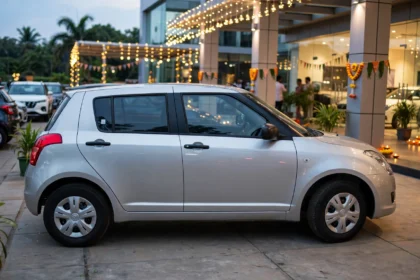

Buying a Maruti Suzuki is about to cost a little more. The company has raised prices of select models by 0.31 per cent on a sales volume-weighted average basis, with the new prices in force from Sunday, 22 November 2026. It is the fourth price hike from India’s largest carmaker this year, and it comes just as the industry is counting record festive sales.
Maruti announced the revision in a filing to the National Stock Exchange and the BSE. The filing did not name the affected models or give model-wise increases, so buyers will see the change reflected in showroom price lists rather than in a model-by-model announcement.
What has changed
The increase is small in percentage terms, but it applies across a range that sells in huge numbers. Maruti said it had continued efforts to cut costs, but that “prevailing cost pressures necessitate passing on a portion of the increase to the market”. In plain words, the company is absorbing part of the higher input costs and passing the rest to buyers.
On a car priced at Rs 10 lakh, a 0.31 per cent rise works out to roughly Rs 3,100. On a Rs 7 lakh hatchback, it is about Rs 2,200. Small amounts on their own, but this is the fourth time in 2026 that Maruti has moved prices up, and the increases are starting to add up.
The fourth hike of 2026
Maruti had already raised prices three times earlier in the year. Those three rounds together added a little over 1 per cent, chief financial officer Arnab Roy said on the company’s 27 October earnings call. Add Sunday’s revision, and the cumulative increase for 2026 now stands at a little over 1.3 per cent.
The reason is the same one the company has cited all year: commodity costs. Maruti said higher commodity costs linked to the West Asia conflict weighed on its operating profit in the July to September quarter. The company reported a 26.36 per cent fall in consolidated net profit for that quarter, even as sales volumes stayed strong.
Demand, for now, is not the problem. Maruti recorded its highest-ever monthly domestic sales of 2,16,789 units in October, up 20 per cent year on year, helped by the GST rate cut last year and a strong festive season. Its order book grew to about 2,70,000 vehicles after Dussehra. The price hike is about protecting margins, not about weak demand.
Hyundai and Tata are raising prices too
Maruti is not alone. Rival carmakers are passing on the same cost pressures, which makes this an industry-wide shift rather than a one-company decision.
- Hyundai Motor India raised prices by an average of 0.4 per cent in September. Its increases since January total about 1.4 per cent, and the company has said it may raise prices again in January.
- Tata Motors Passenger Vehicles raised prices by about 1.7 per cent on average across its petrol, diesel and electric range in three rounds in April, July and September. Managing director Shailesh Chandra said on the 13 November earnings call that a further increase is expected in the January to March quarter.

The pattern is clear. Steel, copper and other input costs have stayed high, and carmakers that absorbed part of the blow earlier in the year are now passing more of it on. With Hyundai weighing a January hike and Tata Motors signalling one for the January to March quarter, buyers should expect more revisions across brands in the coming months.
What it means if you are buying a car
If you have already booked a Maruti, check with your dealer whether the new prices apply to your booking. The company filing does not spell out how the hike treats cars booked but not yet delivered, and that detail varies by dealer and model.
If you are still deciding, the timing is worth noting. Maruti is still running its November offers, with benefits of up to Rs 1.51 lakh on the Victoris strong hybrid, and those offers run till 30 November. A discount on the car you want can easily outweigh a 0.31 per cent price rise, so it is worth comparing the final on-road price rather than the ex-showroom figure alone.
For buyers of other brands, the message is similar. Prices are drifting up across the industry, and waiting for a better deal may not help if the next round of hikes lands first. The smarter move is to lock in the price, the offers and the delivery date in writing before you pay the booking amount.
Why it matters
This hike is small, but it marks a turn in the market. For most of 2026, carmakers leaned on record volumes and the GST rate cut to keep prices in check, absorbing cost increases where they could. That cushion is now thinning. Four rounds of increases from Maruti, three from Tata Motors and a steady climb at Hyundai all point in the same direction: the era of flat car prices is ending.
For first-time buyers, the practical effect is modest today, roughly a few thousand rupees on a typical family car. The real question is what happens next. If commodity costs stay high and more hikes follow in early 2027, the cumulative increase could start to bite into the affordability gains that the GST cut delivered. That is the number to watch, not this single 0.31 per cent.
FAQs
How much have Maruti Suzuki prices gone up?
Prices of select models have risen by 0.31 per cent on a sales volume-weighted average basis, effective from 22 November 2026. It is the fourth hike of the year, taking the cumulative increase to a little over 1.3 per cent.
Which Maruti models are affected?
The company has not named the models. Its exchange filing says “select models” and gives no model-wise break-up, so buyers should confirm the revised price of the specific variant they want with a dealer.
Why is Maruti raising prices?
Sustained commodity cost pressures. Maruti said higher input costs, linked in part to the West Asia conflict, weighed on its operating profit in the July to September quarter.
Are other carmakers raising prices too?
Yes. Hyundai raised prices by 0.4 per cent in September and about 1.4 per cent since January. Tata Motors raised prices by about 1.7 per cent on average in three rounds this year and expects a further increase in the January to March quarter.
Should I buy now or wait?
If you have picked a model, compare the final on-road price with the offers running till 30 November. With more hikes signalled for early next year, waiting may cost more than it saves.
Maruti’s message to buyers is a familiar one in this market: prices move a little at a time, and the cheapest time to buy is usually before the next round lands.