Diwali shopping in India used to have a very familiar geography. The big metro malls set the tone, the Tier-1 cities grabbed the headline sales figures, and everyone else simply followed along. This festive season, that map is being redrawn, and the pen is in the hands of small-town India.
Data released this week on the first stretch of Diwali e-commerce sales shows order volumes surging 31 per cent year-on-year. But the real story is not how much India is buying. It is who is doing the buying. Tier-3 towns alone generated 42 per cent of all orders, and Tier-2 and Tier-3 markets together accounted for nearly two-thirds of total demand. The festive shopper of 2026 is not in a Mumbai high-rise. She is far more likely to be in Patna, Indore, Kochi or Surat, phone in hand, festival wishlist ready.
The numbers behind the surge
According to figures from e-commerce platform Unicommerce, covering the opening week of the Diwali sales, the growth is broad-based but strikingly bottom-up:
- E-commerce orders rose 31 per cent year-on-year, even as total gross merchandise value grew a more modest 17 per cent. Average order values slipped 10 per cent, which tells its own story: shoppers are placing smaller, more frequent orders rather than a few big-ticket splurges.
- Quick commerce order volumes jumped 85 per cent, as ten-minute fulfilment turned festive shopping into a same-evening activity. Quick commerce’s share of festive contribution has climbed from roughly 1-2 per cent last season to an estimated 10-15 per cent this season.
- Tier-3 towns contributed 42 per cent of all orders, with Tier-2 and Tier-3 markets together forming nearly two-thirds of total demand.
- Fast-moving consumer goods led category growth at 190 per cent volume growth, with healthy foods leading the charge, followed by beauty products at 69 per cent and home decor at 22 per cent.
- Delivery speeds improved 30 per cent over last year, thanks to logistics routing algorithms and automated AI tools that re-engaged undecided shoppers.
Quick commerce is rewriting festive habits
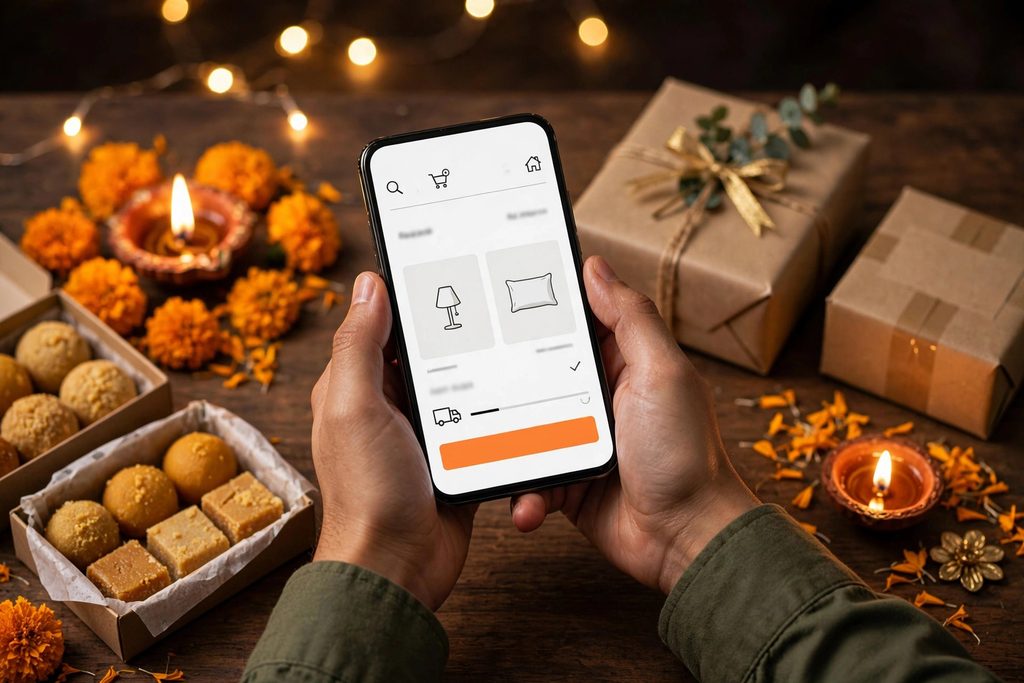
Perhaps the most visible change is how quickly people are buying. The 85 per cent jump in quick-commerce orders signals that festive shopping is no longer something you plan weeks in advance. Forgot mithai for a neighbour dropping by tonight? Need diyas for a last-minute pooja? The ten-minute delivery promise has quietly absorbed a whole class of festive errands that used to mean a trip to the market.
That shift matters most in smaller towns, where a large-format festive store may be kilometres away but a dark store is just around the corner. For gifting too, quick commerce has changed the rhythm. A hamper ordered at noon can be at someone’s door by evening, which means far more spontaneous, and far more frequent, festive giving.
What small-town India is actually buying
The basket tells a story of practicality with a festive twist. Healthy foods topping the FMCG charts at 190 per cent growth is the clearest sign that the old image of small-town festive bingeing is outdated. People want the celebration, but they are reading labels too.
Beauty, growing at 69 per cent and one of the fastest-growing categories, confirms that the festive glow-up is now a pan-India ritual. Home decor at 22 per cent growth completes the picture: Diwali cleaning is turning into Diwali redecorating, with shoppers spending on lifestyle upgrades, home products and kitchen appliances, not just one big festive purchase.
Industry voices are noticing. The Confederation of All India Traders projects total festive season sales to cross Rs 7 lakh crore this year, up from around Rs 6.05 lakh crore last year. Traders on the ground report strong demand across physical markets as well, and analysts note that more than 60 per cent of festive e-commerce orders are coming from Tier-2-plus cities. The mood, in other words, is buoyant, and it is being set in the smaller towns.
The quiet tech making it all work
Behind the visible shopping boom sits a layer of technology that barely existed in festive retail a few years ago. Automated AI tools are nudging undecided shoppers back to their carts, and logistics algorithms are routing couriers so efficiently that delivery speeds are up 30 per cent compared with last year. When millions of first-time festive buyers in small towns are ordering online, it is this invisible machinery that keeps the experience smooth enough to bring them back the next day.
How to shop the festive sales smarter
If you are planning your own Diwali purchases this week, a few habits from this year’s data can help:
- Compare quick-commerce prices with regular delivery. The ten-minute convenience is unbeatable for last-minute needs, but scheduled delivery is often cheaper for planned purchases.
- Use the smaller-order rhythm to your advantage. Shoppers are splitting purchases across days. That lets you track prices and grab the best deal on each item instead of committing all at once.
- Watch the essentials categories. The biggest volume growth is in daily-use items and healthy foods, which means the best discounts are not only on electronics and fashion.
- Shop local brands online. Many regional festive brands now sell directly through marketplaces, often at better prices than in the local market.
Frequently asked questions
Why is small-town India driving festive e-commerce growth this year?
Better logistics, wider smartphone access and quick-commerce dark stores have made online shopping as convenient in Tier-3 towns as in metros. With 42 per cent of all orders now coming from Tier-3 towns, the festive shopper of 2026 is increasingly a small-town buyer.
What are Indians buying most this Diwali season?
Fast-moving consumer goods, led by healthy foods, grew 190 per cent in volume. Beauty products grew 69 per cent and home decor 22 per cent, showing a shift toward practical festive spending alongside traditional celebrations.
How is quick commerce changing festive shopping?
Order volumes on quick-commerce platforms jumped 85 per cent as ten-minute deliveries absorbed last-minute festive needs, from mithai to diyas to gifts. Its share of festive shopping has risen to an estimated 10-15 per cent, up from 1-2 per cent last season.
Are shoppers spending more or less per order?
Less per order, but far more often. Average order values fell 10 per cent while total order volumes rose 31 per cent, pointing to smaller, more frequent festive purchases.
Is the festive sales momentum expected to continue?
Traders project the season’s total sales to cross Rs 7 lakh crore, up from Rs 6.05 lakh crore last year, and analysts report buoyant demand in both online and physical markets, especially across Tier-2 and smaller cities.
This Diwali, the biggest festive trend is not a product at all. It is a geography. Small-town India has stopped being the audience for the festive economy and become its engine. And the sales charts, this year, are reading them loud and clear.