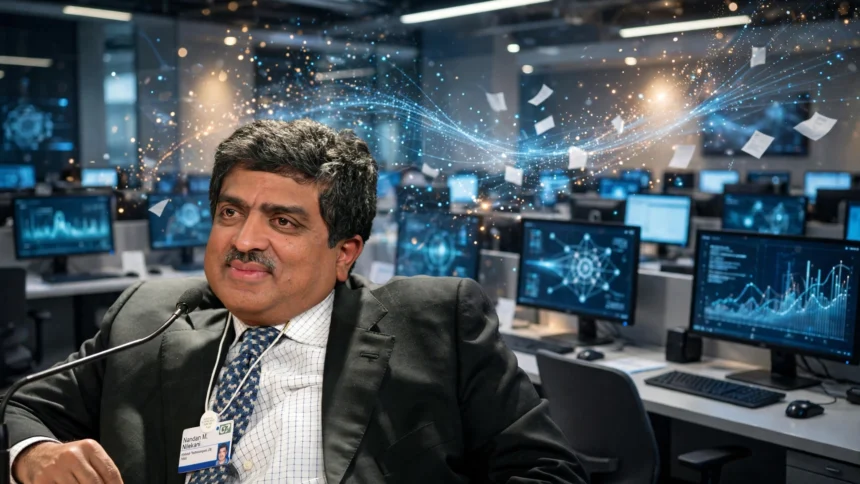
When Nandan Nilekani speaks about fixing India’s examination system, people tend to listen. On Tuesday, October 13, the Infosys co-founder took the stage at the Bloomberg New Economy Forum in New Delhi and laid out a plan that could change how every major test in the country is conducted: stop preparing question papers in advance, and let AI generate them on the day of the exam itself.
Nilekani chairs the high-powered panel that Prime Minister Narendra Modi set up to overhaul the country’s testing framework after a string of paper leaks shook public confidence. His proposal is simple in concept and radical in practice. Build one massive bank of questions, and only at the last minute, on the morning of the test, generate the actual question paper. If there is no fixed paper sitting in a locker, a printing press, or a courier van, there is nothing to steal.
The core idea: kill the fixed question paper
The logic, as Nilekani explained it, is economic. A question paper prepared weeks in advance creates an incentive for it to be sold. Remove the paper, and you remove the market. Under his vision, a large repository of vetted questions would sit on a secure system. On exam day, the paper for that shift would be assembled moments before candidates walk in. There would be no printed copies travelling across states, no PDFs changing hands on messaging apps, and no midnight deals over leaked sets.
When asked whether artificial intelligence could do the generating on the morning of the examination, Nilekani was enthusiastic. The technology, he suggested, is ready. What matters is building the question bank carefully, with enough depth and balance that any generated paper is fair, comparable across shifts, and aligned to the syllabus.
A nationwide push for computer-based testing
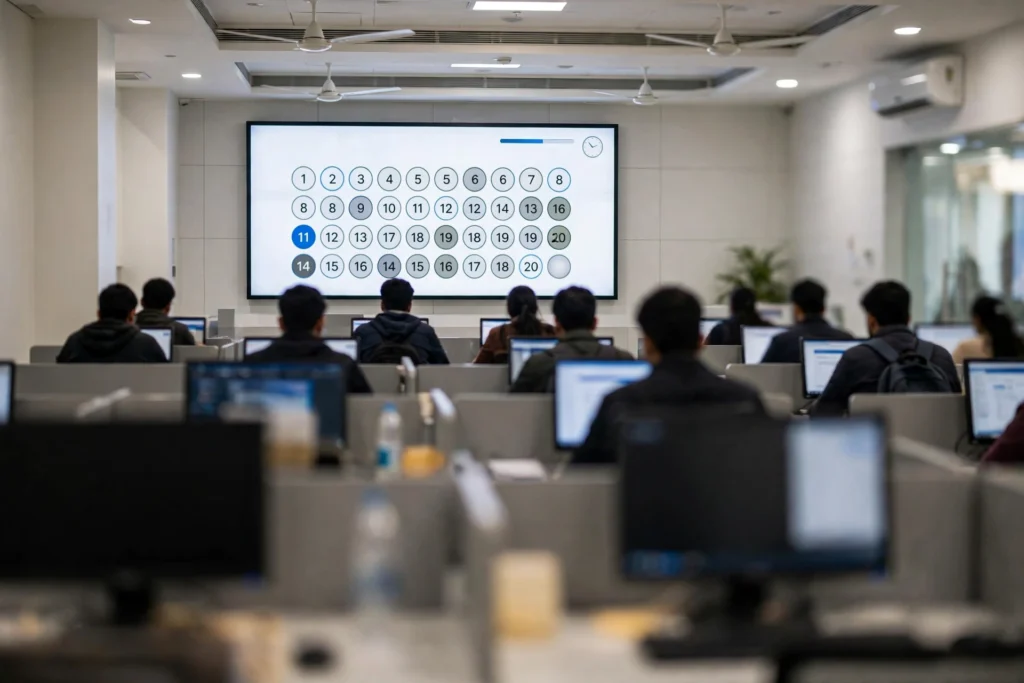
The second pillar of the plan is a full move to computer-based testing for all major examinations. India already has around 150,000 test locations where a student can sit for a digital exam, Nilekani said, but that network needs to grow substantially before every exam can go online.
Computer-based tests would take printed papers out of the equation entirely. Questions would appear on screen, responses would be captured digitally, and results could be processed faster and more transparently. It is the same direction that examinations like JEE Main and several others have already taken, and Nilekani wants the entire ecosystem to follow.
Why this is happening now
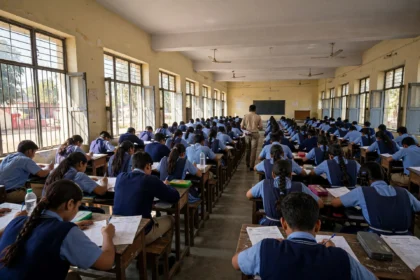
The reforms panel was born out of crisis. Earlier this year, the leak of the NEET-UG question paper triggered a wave of student protests led by young aspirants, and the controversy eventually led to the resignation of then Union Education Minister Dharmendra Pradhan. Millions of students who had spent years preparing felt their future had been compromised overnight.
The Prime Minister turned to Nilekani, the man who built Aadhaar, one of the world’s largest digital identity systems, to fix the machinery of testing. The panel has been tasked with producing its recommendations within three months, and the government has signalled that it wants to act on them quickly.
What it could mean for students
If the plan goes through, aspirants preparing for NEET, JEE, UPSC, SSC, UGC NET and state-level tests would face a very different examination environment. Coaching centres that bank on predicting the exact paper would lose their edge, while genuine concept-based preparation would matter more than ever.
Some of the expected benefits:
- No advance paper, no leak: with the paper generated on exam day, the window for malpractice shrinks dramatically.
- Fairer testing: a large, well-designed question bank can offer balanced papers across shifts and regions.
- Faster results: digital testing and automated evaluation can cut the long wait for scores and cut-offs.
- Level playing field: standardised computer-based centres reduce the variation between urban and rural exam experiences.
The challenges ahead
Experts who have studied the proposal point out that it will not be a simple switch. A question bank of this scale must be guarded with the same rigour as the papers it replaces, because a breach of the bank would be worse than the leak of a single paper. Rural and remote areas will need reliable test centres with power backup, secure networks, and trained staff.
There is also the question of trust. Students and parents have been burned before, and they will want to see that generated papers are truly equivalent in difficulty, that the AI systems are audited, and that the entire process is transparent. Nilekani himself acknowledged that these are systemic issues, and said the committee intends to address each of them.
For now, all eyes are on the panel’s recommendations, due within three months. If implemented well, Tuesday’s announcement could mark the beginning of the end of India’s paper-leak era.
FAQs
Who proposed AI-generated question papers for Indian exams?
Nandan Nilekani, Infosys co-founder and chairman of the exam reforms panel, proposed the idea at the Bloomberg New Economy Forum in New Delhi on October 13, 2026.
How would AI-generated question papers stop leaks?
Instead of preparing one fixed paper in advance, a massive bank of questions would be created. The actual paper would be generated at the last minute on exam day, leaving no paper to steal or sell.
Which exams could this apply to?
The proposal is aimed at major national examinations such as NEET, JEE, UPSC, SSC and UGC NET, along with a shift toward computer-based testing across the board.
When will the exam reforms panel submit its recommendations?
Nilekani said the panel has about three months to develop its recommendations, and the Prime Minister is keen to implement them.
What is the computer-based testing plan?
Nilekani called for expanding the existing network of around 150,000 test locations so that all major exams can be conducted on computers instead of on printed paper.
Informeia will track the exam reforms panel’s recommendations as they are announced.