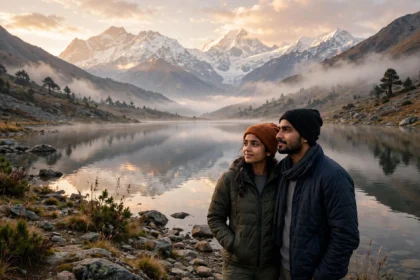
The great Indian holiday is quietly changing its address. Instead of the familiar hotel tower with its long corridors and identical rooms, more families this season are collecting the keys to an entire villa. A kitchen of their own. A terrace where grandparents can sit for hours. Enough bedrooms that nobody has to draw lots for the sofa bed.
This is not a passing mood. A new report released on Friday, How India Travels 2026, by Booking.com and VIDEC Consultants, says alternative accommodation has graduated from a backpacker niche into a massive pillar of Indian travel. The study surveyed 2,359 travellers and 1,131 property owners and managers in June this year, across metros, tier one and tier two cities. Its message is blunt: the hotel is no longer the default.
The death of the four separate rooms
For decades, a family holiday meant booking four rooms down the same corridor and waving at each other across the breakfast buffet. The report says villas and large apartments have solved this with brutal simplicity: about four out of every five villa bookings involve groups or families.
Families are increasingly scattered across cities, and the annual holiday has become the one moment everyone converges in the same place. A standard hotel is simply not built for that kind of reunion. A villa is. Privacy, a common kitchen, a living room where three generations can argue about what to watch.
Homeowners turn accidental entrepreneurs
Running a guesthouse used to mean a handwritten ledger and a key on a cork float. Now, a striking 61 percent of homeowners see hosting as an entrepreneurial venture rather than a side gig, running second homes with the precision of startups.
Dynamic pricing is their sharpest tool. PriceLabs data cited in the report shows that smartly managed listings can boost revenue by more than 100 percent. Weekend spikes, event-week surges and seasonal demand are no longer left on the table.
Monsoon Goa is the new December
Indian travellers used to follow rigid seasonal habits. Hills in May, beaches in December, and complaints about the humidity in between. Operators say that pattern is breaking. Goa in the monsoon is booming because travellers have figured out it is green, lush and delightfully uncrowded.
The Goa government wants to ride this wave inland. Its Goa Beyond Beaches programme, launched in 2022, aims to move visitors deeper into the state’s culture, communities and local economy. Under the state’s homestay
policy, homestays in hinterland talukas are being promoted with priority for women, creating a new generation of women tourism entrepreneurs.
Even the corner office is checking in
Business travel was supposed to be immune. Yet the report finds the corporate share of alternative stays, particularly aparthotels and serviced apartments, creeping steadily upward. Given the choice between a compact hotel desk and an apartment with a living room and a kitchen, longer-stay professionals are choosing space.
The event-day multiplier
Big events remain the ultimate pressure test. A cricket final, a large concert or a religious gathering can overwhelm a city’s hotel stock within hours. Alternative stays act like a sponge, absorbing the sudden influx, and the data shows occupancies and daily rates shooting up on event days. For travellers this festive season, the lesson is simple: lock in early.
The trust gap nobody should ignore
It is not all linen curtains and organic honey. The survey flags honest friction: 63 percent of guests say coordinating check-in with a host can feel complicated, and 70 percent worry about hidden surprises. A hotel is predictability. A homestay is a relationship. Sometimes that relationship involves a stunning heritage bungalow with a private pool, and sometimes it involves hunting for the switch that heats the bathroom water.
The authenticity dividend
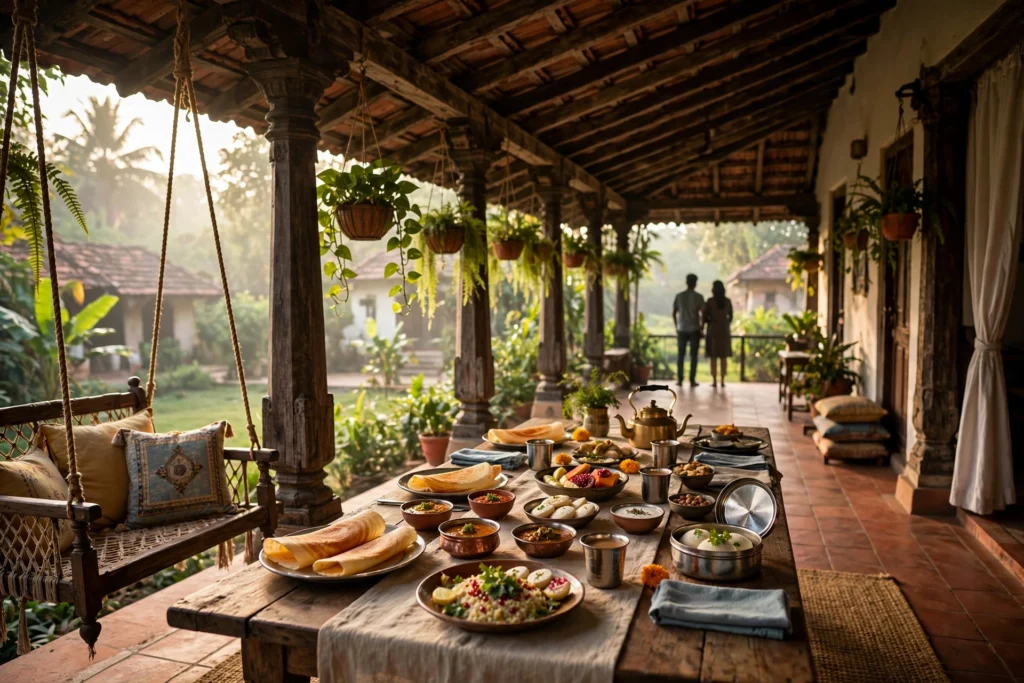
What pulls travellers past that hesitation is the promise of something real. Between 55 and 60 percent of travellers now prioritise locally sourced, seasonal food, and many choose alternative stays specifically to support local communities. A homestay breakfast cooked by a local family, a villa manager who knows the nearest hidden waterfall. A hotel tower cannot mass produce those things.
- Book early for event weeks: cricket finals, big concerts and festivals send alternative-stay rates soaring.
- Compare the real total: for groups, one villa often beats three or four hotel rooms, but check cleaning fees and security deposits.
- Talk to the host before paying: confirm check-in timing, kitchen access and house rules in writing.
- Read recent reviews: the newest ones, not the highest ones, tell you what the stay is like right now.
FAQs
What is the How India Travels 2026 report?
A quantitative study by Booking.com and VIDEC Consultants, released in October 2026, based on June 2026 surveys of 2,359 travellers and 1,131 property owners across India.
Why are Indians choosing villas and homestays over hotels?
Space, privacy, private kitchens and the chance for multi-generational families to stay under one roof. About four in five villa bookings are driven by groups or families.
Are homestays cheaper than hotels in India?
It depends. For groups and longer stays, a whole villa often works out cheaper than multiple hotel rooms. But dynamic pricing means rates swing sharply on weekends and event days.
Is it safe to book a homestay?
Mostly yes if you do your homework. Choose verified listings, read recent reviews, and confirm check-in details with the host before arrival.
The Indian traveller has grown up. The holiday is no longer about a room with a view. It is about a house with a heartbeat.