
New Delhi is quietly rewriting its own economic history. India has now grown at more than 7 per cent for five consecutive calendar years, matching the famous 2003-2007 boom that first put the country on global investors’ radar as a BRIC powerhouse. And if the latest forecasts hold, this run will go even further, becoming the longest stretch of high growth in two decades.
The observation comes from Kyunghoon Kim, the South Korean economist who heads South Asia research at the Korea Institute for International Economic Policy (KIEP). Writing on X this week, Kim said the milestone deserved far more attention than it has received so far.
Five years above 7 per cent
Kim’s numbers tell a striking story. After the economy contracted 5.8 per cent in 2020 during the pandemic, it rebounded 9.7 per cent in 2021. Growth then stayed above 7 per cent in each of the next four years, completing a five-year run at 2021-2025 with a simple average of 7.83 per cent.
That is the second-highest five-year average since records began in 1960, just behind the 7.89 per cent recorded during 2003-2007. Back then, India was a $1 trillion economy riding a global wave of cheap credit. Today’s economy is nearly $4 trillion, which means the same 7 per cent growth now adds roughly four times as much actual output as it did twenty years ago.
“That makes five consecutive years of growth above 7 per cent, matching the 2003-2007 run. If current forecasts hold, India will surpass that streak,” Kim wrote.
Forecasters keep raising their numbers
What makes this moment unusual is that the world’s big forecasting institutions are upgrading India at the same time, and almost in chorus. The International Monetary Fund lifted its FY27 projection to 7 per cent from 6.4 per cent in its October World Economic Outlook, released in Bangkok. The World Bank raised its estimate to 7.1 per cent from 6.6 per cent. The Reserve Bank of India itself now expects 7.1 per cent growth this fiscal year, up from 6.6 per cent in June.
The OECD has also pencilled in 7.1 per cent, while the Asian Development Bank, S&P Global Ratings and Moody’s sit around 7 per cent. Fitch Ratings is a touch more cautious at 6.9 per cent. Deloitte India, meanwhile, expects 7.1 to 7.3 per cent, driven by private investment picking up.
The upgrades follow a strong start to the fiscal year. Official data showed GDP grew 7.8 per cent in the April-June quarter, powered by an 11.9 per cent jump in gross fixed capital formation, the measure that captures investment in factories, roads and machinery.
- IMF: 7.0 per cent for FY27 (up from 6.4 per cent in July)
- World Bank: 7.1 per cent for FY27 (up from 6.6 per cent)
- RBI: 7.1 per cent for FY27 (up from 6.6 per cent in June)
- OECD: 7.1 per cent; ADB, S&P, Moody’s: around 7 per cent
- Deloitte India: 7.1 to 7.3 per cent on a private investment revival
Why economists say this time is different
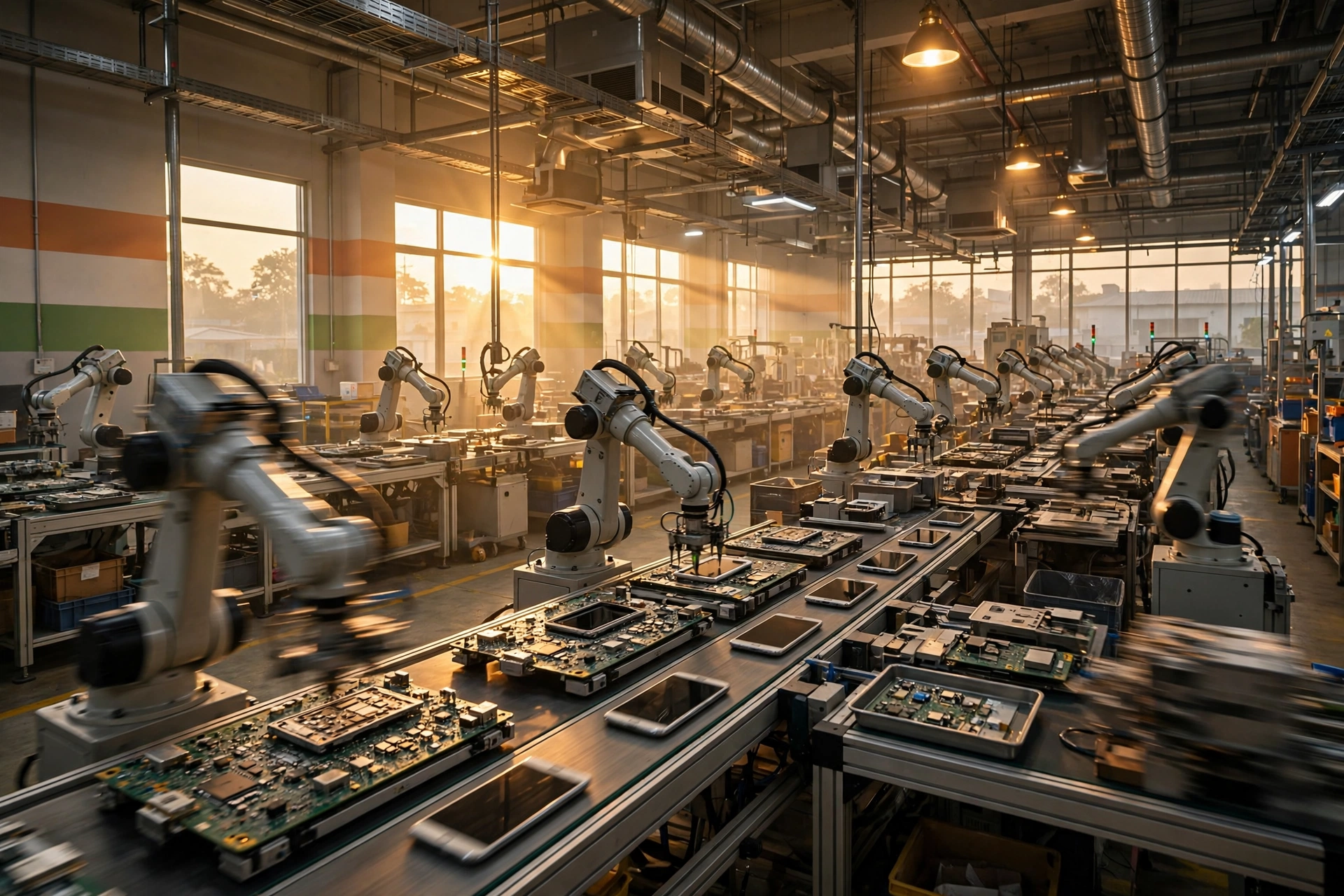
Kim’s central argument is not just that the numbers are high, but that sustaining them is harder and more impressive than it looks. Post-pandemic growth has unfolded amid a much larger economic base, recurring energy shocks and a fractured global trading environment. The government has pushed self-reliance and production-linked incentive schemes that have turned India into a meaningful electronics export hub, broadening the growth base beyond the consumption and services story of the 2000s.
Krishna Srinivasan, who leads the IMF’s Asia and Pacific department, echoed the sentiment this week. India entered the recent period of energy shocks with strong fundamentals, sound fiscal prudence and robust underlying momentum, he said, adding that intermittent rupee fluctuations reflect shifting global interest rate differentials and crude prices rather than any structural weakness.
The IMF also formally welcomed India’s revised GDP methodology this week, saying it conforms to sound statistical practices. That endorsement removes a long-running technical dispute that had clouded debates about the quality of Indian growth data.
Challenges remain
Kim himself acknowledged that plenty of problems remain. A $4 trillion economy growing at 7 per cent still needs to generate jobs fast enough for a young workforce, manage inflation running above the RBI’s comfort zone, and navigate tariffs and geopolitical friction. Private investment, the missing engine for much of the past decade, is only now showing signs of revival.
Still, the arithmetic is hard to argue with. With global growth pegged at 3.4 per cent by the IMF, India’s 7 per cent makes it among the fastest-growing major economies in the world, and the one most analysts expect to stay there. As Kim put it, the performance of a country of 1.4 billion people deserves a moment of recognition, and perhaps a few more decimal points of forecast upgrades when the next quarterly numbers arrive.
FAQs
Q. How fast has India grown over the last five years?
India averaged 7.83 per cent GDP growth between 2021 and 2025, the second-highest five-year average since 1960, according to KIEP economist Kyunghoon Kim.
Q. When did India last grow this fast for this long?
The previous five-year run above 7 per cent was 2003-2007, which averaged 7.89 per cent. The current streak matches that record and could surpass it.
Q. What are major institutions forecasting for India’s growth now?
The IMF projects 7 per cent for FY27, the World Bank and RBI expect 7.1 per cent, and the OECD, ADB, S&P and Moody’s cluster around 7 per cent.
Q. Why is a 7 per cent growth rate more significant now than in 2007?
Because India’s GDP is nearly $4 trillion today versus just over $1 trillion in 2007, so the same percentage growth adds roughly four times more actual output.
Q. What drove the latest forecast upgrades?
Strong domestic demand, a 7.8 per cent Q1 FY27 print led by an 11.9 per cent surge in investment, resilient services activity and improving private investment conditions.
Informeia will track India’s quarterly GDP data and forecast updates through the fiscal year.