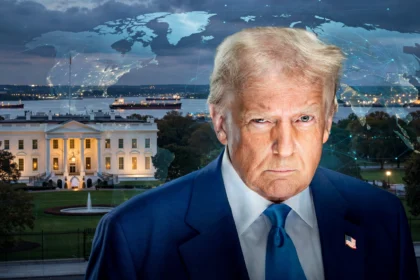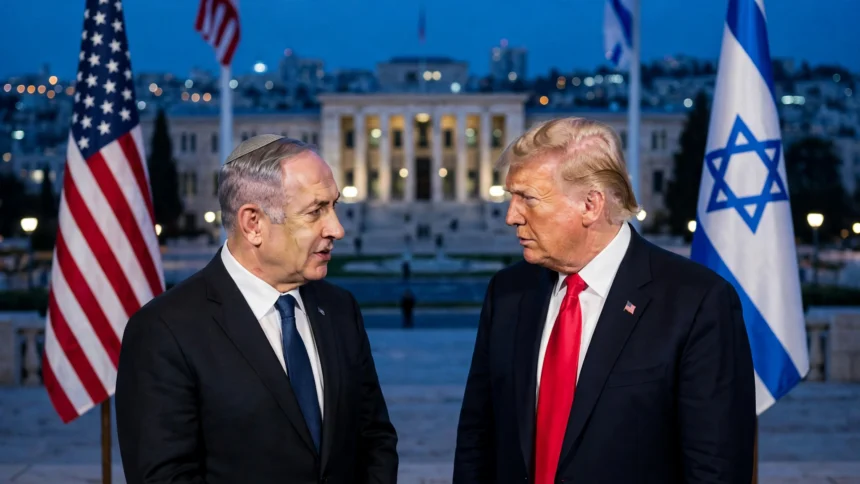
Donald Trump has picked his man in Israel’s next election, and he is not being subtle about it. On Sunday, the US president endorsed Israeli Prime Minister Benjamin Netanyahu, just eight days before Israelis head to the polls on October 27 for the country’s first parliamentary election since the October 7, 2023 attacks.
The message, posted on Trump’s Truth Social platform and addressed “To the Great People of Israel,” praised Netanyahu as a strong and brilliant partner. The endorsement adds a dramatic American voice to what is already one of the most consequential elections in Israel’s history.
“Complete and Total Endorsement”
In his post, Trump wrote: “Bibi Netanyahu has been Strong, Brave, and Brilliant in the face of tremendous opposition, including that coming from even Israel, itself.” He added that Netanyahu had been watched under the most trying of times, saying “Normal men or women in such situations would have wilted under the pressure. But Bibi did not wilt, he actually got stronger, and maintains that same Strength today.”
The message closed with a declaration that left no room for interpretation: “Please let this Letter serve to represent my Complete and Total Endorsement of Bibi Netanyahu in his upcoming Race for Re-Election as Prime Minister of Israel.”
Netanyahu responded within hours, thanking Trump on X and writing, “Thank you, President Trump, for your tremendous support and for our work together. Together we will complete the mission!”
Why the timing matters
The endorsement did not come out of nowhere. Trump and Netanyahu have worked closely together in recent years, including joint US-Israeli strikes on Iran earlier this year. That conflict has now entered its seventh month, rattling energy markets and shaking economies across the Middle East, and Trump has pointed to that campaign as proof of a working partnership.
Netanyahu’s Likud party moved quickly to capitalise on the endorsement. In a video released on Sunday, the prime minister said he and Trump had “crushed Iran” together and argued that re-election would let him work with the US president to “eliminate the Iranian threat over the next two years, or even sooner.”
Trump also warned that if Israel had the wrong leader, America would have to “do this work ourselves,” adding he was “not inclined to do so.” He told Axios journalist Barak Ravid the timing was deliberate: “I was always going to do that. I just didn’t want to do it too soon.”
A tight race at home
For all the fanfare, it is far from clear the endorsement will move Israeli voters. Recent polling has shown Netanyahu locked in a tight race with centrist rivals, and no candidate has a clear path to power. Israel’s prime minister is not chosen by a direct popular vote. The leader of the party or bloc best able to assemble a coalition in the 120-seat Knesset gets the job, which means the election could lead to weeks of hard bargaining.
The vote is being widely seen as a referendum on Netanyahu himself. It is Israel’s first election since Hamas-led attackers struck on October 7, 2023, an attack that shook the country and plunged the Middle East into war across Gaza, Lebanon and Iran. Opposition politicians have accused Netanyahu of bearing personal responsibility for the security failure, claiming he ignored warnings before the attack.
One wrinkle: Israeli public support for Trump has softened amid disagreements between Washington and Jerusalem over Iran policy. An endorsement from abroad can cut both ways in Israeli politics, and rivals may frame it as foreign interference.
What it means for the region
Beyond Israel’s borders, the endorsement signals that Trump’s Middle East policy will stay anchored to Netanyahu as long as he remains in office. The two leaders’ shared hard line on Iran has defined the region’s politics for years, and Trump’s message suggests that will continue if Netanyahu wins another term.
For India and the rest of Asia, the stakes are not abstract. The Iran conflict has disrupted energy markets and shipping routes the region depends on, and any change in Israel’s leadership could ripple through oil prices and trade. A Netanyahu victory would mean continuity. A defeat would open a period of uncertainty in one of the world’s most volatile regions.
Frequently asked questions
When is the Israeli parliamentary election?
Israel votes on October 27, 2026, its first national election since the October 7, 2023 attacks.
How is Israel’s prime minister chosen?
Voters elect parties to the 120-seat Knesset, not the prime minister directly. The party or bloc leader who can assemble a majority coalition forms the government and becomes prime minister.
What exactly did Trump say?
In a Truth Social post addressed “To the Great People of Israel,” Trump gave Netanyahu his “Complete and Total Endorsement,” calling him a “great warrior prime minister.”
Could the endorsement backfire?
Possibly. Israeli public support for Trump has softened amid US-Israel disagreements over Iran, and opponents may cast the endorsement as foreign interference in a domestic vote.
What happens if Netanyahu loses?
Coalition talks could take weeks. A new leader might shift the tone of the Iran conflict, with consequences for energy markets and regional stability.
The October 27 vote will decide whether Netanyahu, Israel’s longest-serving prime minister, survives the defining crisis of his career. Informeia will track the results and what they mean for the region as they come in.