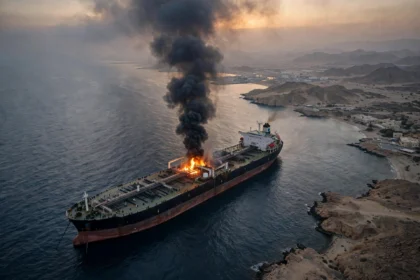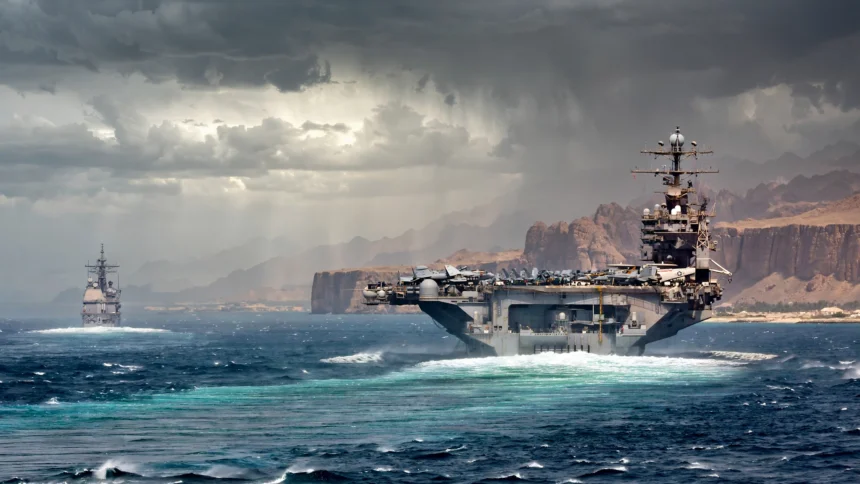
Iran has put the world’s undersea internet cables in its crosshairs. In a sharply worded warning delivered in Tehran on Monday, the country’s Islamic Revolutionary Guard Corps said seven major internet cables beneath the Strait of Hormuz could become “new targets” if the conflict with the United States resumes. The warning, reported by Iranian state television, immediately raised the stakes in a waterway that already carries a fifth of the world’s oil.
- The drone claim, hours apart
- Why the Strait of Hormuz matters this much
- What this means for India
- How we got here
- FAQs
- Which undersea cables run under the Strait of Hormuz?
- Did Iran actually attack any internet cables?
- How would damaged cables affect India?
- What is the current state of the US-Iran conflict?
Speaking at a ceremony at Tehran’s Sacred Defense Museum, IRGC spokesman Hossein Mohebbi said the seven cables carry global internet and commercial data traffic, then added: “We just want them to know that new targets will be unveiled. New weapons will be unveiled.” He also vowed to drive what he called the remnants of US power out of the region.
Mohebbi stopped short of saying Iran has decided to attack the cables. His remarks were reported by Iran’s state broadcaster IRIB, and they echo a warning from earlier this month by Mohsen Rezaei, the secretary of Iran’s Supreme National Security Council. Rezaei told Press TV that Tehran could target undersea internet cables, data centers and AI facilities linked to the US if another war broke out.
The drone claim, hours apart
The cable warning came on the same day Iranian media reported another dramatic claim. Iran’s semi-official WANA news agency said the IRGC shot down a US MQ-9 drone near the Strait of Hormuz using what it described as a new generation air defense system, and put the tally of American drones downed by Iran at 54.
That figure comes only from Iranian sources. The United States has not commented on Monday’s claim. The IRGC made a similar announcement in September, when it called a downed MQ-9 the 52nd such interception, again without American confirmation. Each MQ-9 costs at least $30 million, so if true, the claim would mark a meaningful loss of American reconnaissance capacity in the Gulf.
Why the Strait of Hormuz matters this much
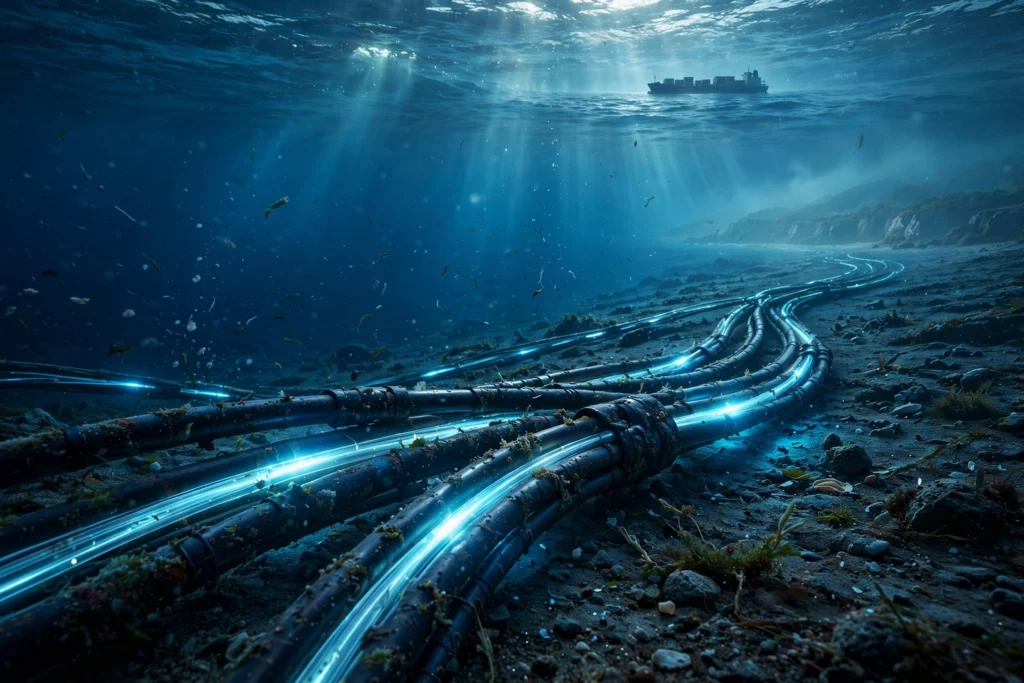
The strait connects the Persian Gulf with the Gulf of Oman, and almost all of the oil exported from Saudi Arabia, the UAE, Kuwait, Iraq and Qatar passes through it. But Monday’s warning points to a second, less visible dependency: data.
- Telecom research firm TeleGeography identifies the Asia-Africa-Europe 1, FALCON and Gulf Bridge International systems among the cables crossing the strait.
- Gulf states have poured billions into data centers and AI infrastructure, all of it dependent on reliable connectivity.
- Attacks on cables could disrupt banking, telecommunications and cloud services across the region, while repairs would be slow in waters affected by military operations.
Most Europe-Asia data traffic uses other routes, so a cable cut would not switch off the global internet. But for Gulf financial centers and the region’s growing hyperscale data centers, even partial disruption would be painful, and repair ships would face security risks in a war zone.
What this means for India
India has two direct reasons to watch this closely. First, energy: the bulk of India’s Gulf crude imports transit the strait, and any escalation tends to push up shipping insurance and crude prices, costs that reach petrol pumps and the import bill. Second, connectivity: India is one of the world’s biggest data consumers, and its traffic to Europe flows through multiple cable routes, some of them via the region around the strait.
New Delhi has kept channels open with Tehran, Washington and the Gulf capitals while staying officially neutral.
How we got here
The current confrontation began when the United States and Israel launched military operations against Iran on February 28. Tehran responded with missile and drone attacks across the region and effectively closed the Strait of Hormuz, while Washington later imposed a naval blockade on Iranian ports.
A June memorandum of understanding between the US and Iran on freedom of navigation briefly calmed things down, but implementation stalled over security disagreements. Since then, attacks on commercial shipping have continued, negotiations have sputtered, and the waterway has stayed tense.
FAQs
Which undersea cables run under the Strait of Hormuz?
Research firm TeleGeography names the Asia-Africa-Europe 1, FALCON and Gulf Bridge International systems among those crossing the strait. IRGC spokesman Hossein Mohebbi said seven major cables in total pass beneath the waterway.
Did Iran actually attack any internet cables?
No. Iran has warned it could target the cables if fighting with the US resumes, but has not said it has decided to do so. Separately, Iranian media claimed an American MQ-9 drone was shot down on Monday, a claim Washington has not confirmed.
How would damaged cables affect India?
Most Europe-Asia internet traffic uses other routes, so Indian users would likely see slower or rerouted traffic rather than an outage. The bigger hit for India would come through oil prices and shipping costs if an escalation chokes the strait.
What is the current state of the US-Iran conflict?
Active hostilities followed the February 28 operations, and a June understanding on freedom of navigation has stalled. Attacks on commercial shipping and sharp rhetoric from both sides have continued through October.
For now, Monday’s warning is just that, a warning. But by naming the cables under the Strait of Hormuz as potential targets, Iran has widened the map of what a renewed conflict could break, and the whole world, India included, will be watching the strait a little more carefully this week.