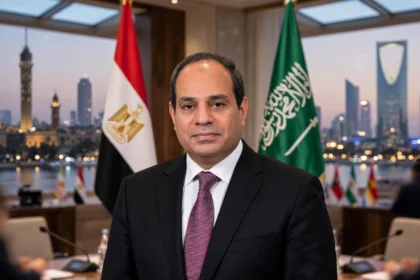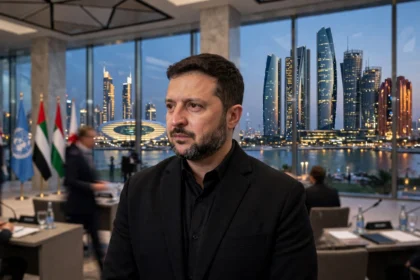
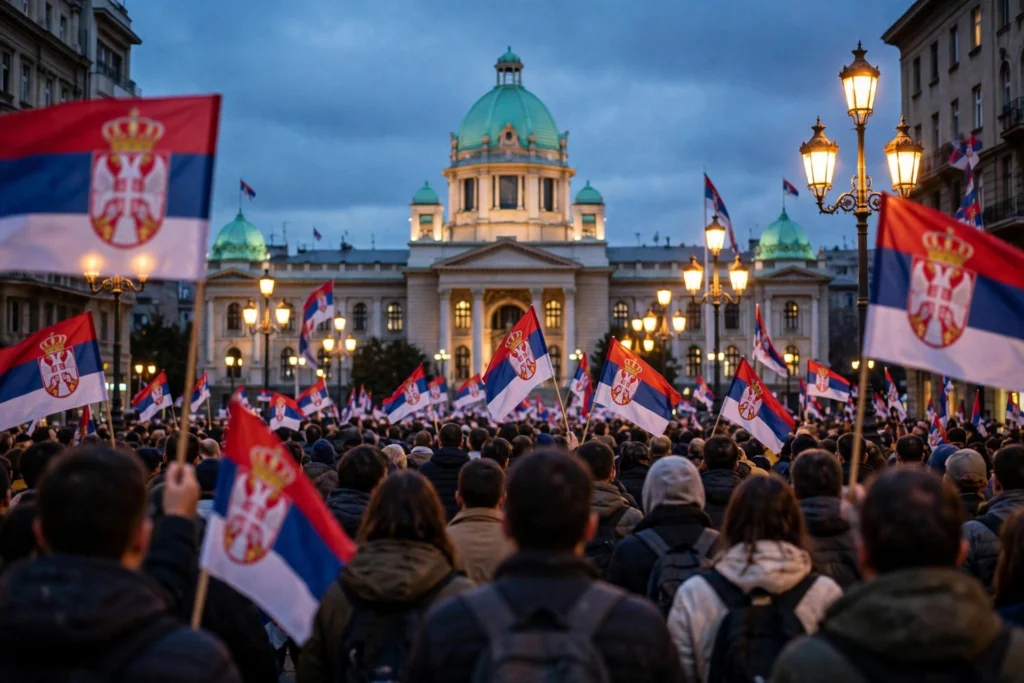
Belgrade did not go quiet on Sunday night. Tens of thousands of people filled the Serbian capital’s main boulevards, horns blaring and flags waving, after the man who had dominated the country’s politics for more than a decade admitted he had lost. For the students who started this movement with street protests and little else, it was the night their campaign became a government in waiting.
Serbia voted on Sunday, October 25, 2026, in a snap parliamentary election that turned into a straight contest between the ruling establishment and a movement born on university campuses. By Monday morning the result was no longer in doubt. The Student List had won a clear majority in the 250 seat National Assembly, and long serving leader Aleksandar Vucic had conceded defeat on live television.
A concession that came on election night
Vucic did not wait for the final count. “It is clear that we have lost these elections, the Student List has won,” he told supporters, putting his own camp’s estimate at between 135 and 140 seats for the students and around 105 for his Serbian Progressive Party.
Within moments, Belgrade erupted. Crowds chanted that he was done, danced in the streets and lit flares, according to reporters on the ground, and celebrations spread to other cities and towns across the country. Vucic, who has served as prime minister or president since 2014, did not hide his bitterness. He blamed independent media and alleged interference by unnamed European countries and what he called an “American deep state” for his defeat.
How students turned protest into parliament
The movement began in grief and anger. In 2024, sixteen people died when a railway station canopy collapsed in the northern city of Novi Sad. The tragedy became a rallying point for accusations of corruption, corner cutting and a lack of accountability, and students took to the streets demanding answers.
What started as campus protests grew into a nationwide movement. Demonstrators accused the government of eroding democratic standards, squeezing independent institutions and concentrating power. Vucic had called the snap election in September 2026, hoping a fresh vote would settle the question in his favour. Instead, it gave his critics a ballot paper to match their street presence.
The Student List was deliberately different from a normal party. With no single figurehead, it put forward 250 candidates drawn from universities and everyday professions, including academics, lawyers, doctors, actors, farmers and musicians. Turnout reached about 67.6 percent, a high figure for a parliamentary election, and the students’ late surge proved decisive.
The numbers that settled it
With almost 99 percent of votes counted, figures reported on Monday put the Student List at 52.7 percent of the vote, against 39.2 percent for Vucic’s SNS led alliance. That translated into 139 seats for the students, comfortably above the 126 needed for a majority, with 97 seats for the SNS alliance and the remainder held by minority lists.
- Student List: 52.7 percent of the vote, 139 seats
- Vucic’s SNS alliance: 39.2 percent of the vote, 97 seats
- Majority needed: 126 of 250 seats
- Turnout: about 67.6 percent
Serbia, a country of about 6.5 million people, is the largest economy in the Western Balkans. Its next government must balance the European Union, its largest trading partner, against close ties with Russia and China.
Why it matters beyond Serbia
The result lands in a year when student and youth movements across Europe have been testing established governments. Serbia is now the clearest example of such a movement actually winning power, and it follows the defeat earlier in 2026 of Hungary’s Viktor Orban, another long serving leader who had presented himself as unbeatable.
For the European Union, a government promising anti corruption reform could reopen Serbia’s stalled path towards closer integration. Brussels will also watch whether a protest movement can handle budgets, public services and foreign policy.
The hard part starts now
Celebration is the easy part. The movement has no experienced prime minister in waiting, no settled cabinet and no detailed governing programme beyond its core promises on corruption, institutions and public services. Analysts quoted on Monday warned that bureaucratic resistance and the movement’s lack of governing experience could make the transition difficult, even with a solid majority.
Nearly four in ten voters backed Vucic’s alliance, so who emerges as prime minister and how the 139 student backed lawmakers hold together will decide whether this becomes a lasting shift or a brief celebration.
For now, Serbia has woken up to a new political era. The students who marched for accountability after Novi Sad are no longer just protesters. They are, by a clear democratic mandate, the country’s next governing majority, and the whole region is watching what they do next.
FAQs
Who won Serbia’s parliamentary election? The Student List, backed by the student protest movement, won with 52.7 percent of the vote and 139 of 250 parliamentary seats, according to near final results reported on Monday.
When was the election held? Serbians voted on Sunday, October 25, 2026, in a snap parliamentary election called by Aleksandar Vucic in September 2026.
Why did the student protests start? The protests began after sixteen people died in the collapse of a railway station canopy in Novi Sad in 2024. Demonstrators demanded accountability and accused the government of corruption and eroding democratic standards.
Does this election remove Vucic as president? This was a parliamentary election, not a presidential vote. It gives the Student List control of parliament and the right to form the next government. Vucic conceded the parliamentary contest on election night.
What happens next in Serbia? The Student List must now choose a prime minister, form a government and turn its anti corruption promises into policy, while managing relations with the European Union, Russia and China.
Serbia’s next chapter will not be written in one night of celebration. It will be written in the months of governing that follow, and that is where this remarkable student victory will truly be tested.