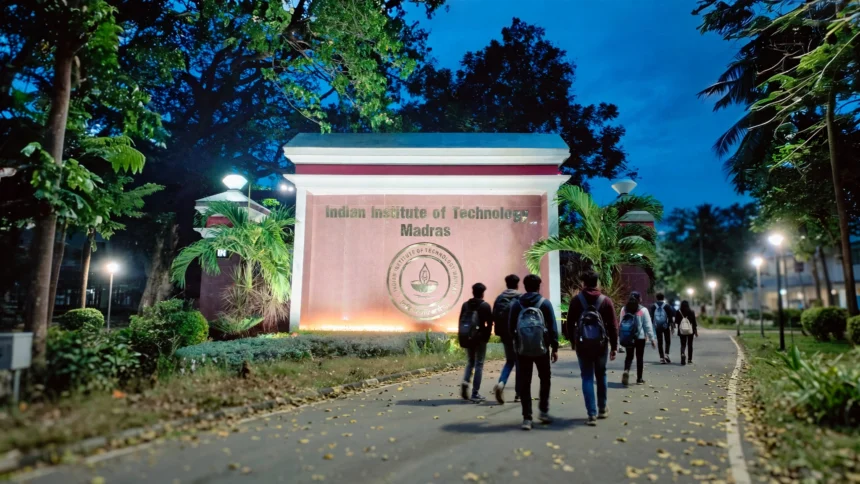
Nagpur, October 27: India has the largest young population in the world, and still only three in every ten young people make it to higher education. That gap was the blunt warning from IIT Madras director V Kamakoti in Nagpur on October 26, and it is hard to argue with the arithmetic behind it.
Speaking at an event in the city, Kamakoti said the gross enrolment ratio in higher education stands at 30 percent. India has the largest population in the 15 to 35 age group, he said, but inadequate access to quality education remains a major concern. If the ratio does not rise in the next decade, he warned, India risks being counted among the least educated countries.
Kamakoti tied the numbers to villages, scholarships and practical training that turns a degree into a livelihood.
What Kamakoti actually said
The core of his argument was simple. The National Education Policy envisages raising the gross enrolment ratio in higher education to 50 percent by 2035. That means adding, in effect, two more students in higher education for every ten young people, compared with where India stands today.
“While govt is formulating policies, citizens must also contribute actively to achieving this goal,” Kamakoti said, according to reports of the Nagpur event. The line matters because it shifts part of the responsibility away from Delhi and state capitals and towards classrooms, families, alumni networks and local communities.
He also stressed preserving India’s traditional knowledge while advancing modern technology.
Why 30 percent is the number to watch
The gross enrolment ratio is not a pass percentage or a ranking. It measures how many young people in the relevant age group are enrolled in higher education, compared with the total population in that age group. At 30 percent, seven in ten are outside the system altogether, in work, in training, preparing for exams, or simply out of options.
That is why the 50 percent target for 2035 keeps coming up. It is not only about more colleges. It is about whether a student in a village, a small town or a working family can see a realistic route from school to a degree, and whether that degree leads somewhere worth going.
In Chennai recently, Kamakoti made the same point to scholarship students: villages are the symbol of India, outreach to village students matters, and each student should pass scholarship information on to two more students.
Skills, chips and a training centre
In Nagpur, Kamakoti also pointed to work already under way at IIT Madras. The institute began developing indigenous microprocessors in 2012 and successfully booted its first processor on September 21, 2021. He told the audience he had received news of another processor being booted just before arriving in Nagpur.
He said IIT Madras and the Government of Tamil Nadu are collaborating to establish a semiconductor training centre focused on chip design and packaging, which will become operational soon. The training, he said, is intended not only for B.E. and B.Tech graduates but also for diploma holders. “Our goal is to see Tamils working and excelling on a global stage,” he said.
What students and families can take from it
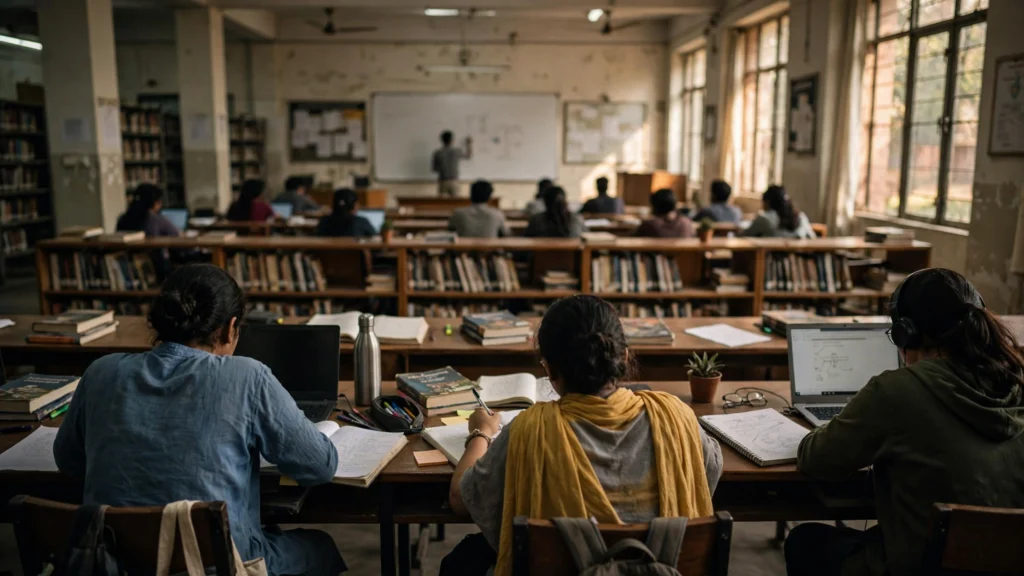
For a student finishing school this year, a national ratio can feel abstract. The practical questions are closer to home: can I afford it, will I get in, and will it lead to work?
- Look for help early: Scholarships and fee support only help if students hear about them in time. Ask teachers and seniors, and check deadlines well before the final week.
- Keep more than one route open: A degree, a diploma, a skill course and an apprenticeship are not rungs on a single ladder. For chip design and manufacturing, the diploma route can be a genuine entry point.
- Count the whole cost: Fees are only part of the expense. Travel, hostel, books and a laptop all shape whether a family can say yes.
- Ask what the course leads to: Ask colleges about labs, internships and what former students do now, before choosing a course on the strength of a brochure.
- Pass the information on: If you find a scholarship or training programme, tell two other students. That small habit was Kamakoti’s own suggestion, and it costs nothing.
Raising enrolment from 30 percent to 50 percent will need more seats, more teachers and more money. It will also need trust, built course by course, and the daily work of reaching students in villages and small towns.
FAQs
What is India’s current gross enrolment ratio in higher education?
According to V Kamakoti, speaking in Nagpur on October 26, it stands at 30 percent.
What is the target for 2035?
The National Education Policy envisages raising the ratio to 50 percent by 2035, a goal Kamakoti repeated in Nagpur and in Chennai.
What semiconductor training did he mention?
IIT Madras and the Government of Tamil Nadu are collaborating on a semiconductor training centre focused on chip design and packaging, for graduates and diploma holders.
What can students do right now?
Find out about scholarships early, keep degree and diploma routes in mind, check the full cost of a course, and share useful information with other students.
Informeia will follow announcements on higher education enrolment, scholarships and training programmes as new details are confirmed.