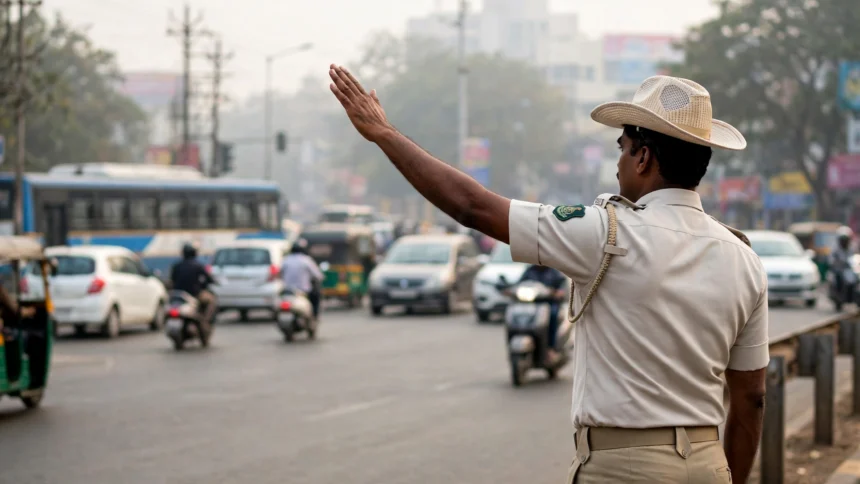
For the men and women who keep Bengaluru moving, the working day starts in traffic and ends in dust. Bus drivers spend hours behind the wheel, traffic police stand at junctions through the rush, pourakarmikas sweep roads before the city wakes, and construction workers breathe in the air around building sites all day. A long screening programme has now put numbers to what many of them have felt for years: a large share show early signs that their lungs are not working as well as they should.
The findings were presented at a roundtable in Bengaluru on Monday, organised by the VAAYU Occupational and Environmental Respiratory Illness Clinic, known as VOERIC. Doctors at the clinic have screened more than 10,000 frontline workers since November 2023. Their message was direct: the problem is widespread, and regular checks matter because early changes are easy to miss.
What the screening found
The survey covered four groups who spend their working lives outdoors or on the road: 4,517 BMTC drivers, 3,285 traffic police personnel, 2,169 construction workers and 379 pourakarmikas. Across all four groups, doctors found higher than normal rates of early lung function abnormalities.
Pourakarmikas, the civic workers who sweep streets and handle waste, showed the highest share. Around 45 per cent of them had indications of reduced lung function. BMTC workers followed at 29.5 per cent, traffic police at 28 per cent, and construction workers at 15 per cent. Doctors described the pattern as PRISm, where the lungs do not fill and empty as fully as expected even when the usual breathing test ratio looks preserved.
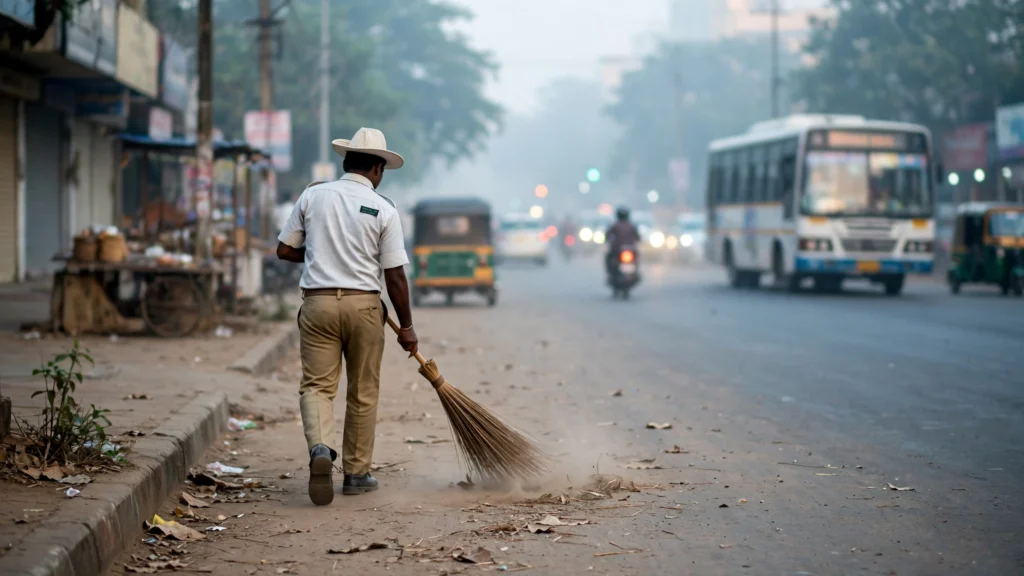
Why doctors are worried, even without symptoms
Dr Ravindra M Mehta, founder and medical director of VAAYU Chest and Sleep Specialists, said many workers with impaired lung function had few or no symptoms. That is exactly why the clinic argues for early detection. When lung changes are found early, workers can be monitored and treated sooner.
For context, Dr Mehta said 28 to 45 per cent of screened workers had impaired lung function, compared with 5 to 10 per cent in some comparison groups. He also cautioned that further research is needed on how far workplace exposure itself contributed in each case.
Mask use was low: 88.2 per cent of BMTC drivers never used one, along with 55 per cent of traffic police. Masks alone will not solve the problem, doctors said, but they are a simple immediate step.
Air pollution is the new tobacco, says senior doctor
Bengaluru Rural MP Dr C N Manjunath, a former director of the Jayadeva Institute, called air pollution the new tobacco at the roundtable. He warned of its links to heart attacks, strokes, respiratory diseases and adverse pregnancy outcomes, and called for measures to curb vehicular emissions, traffic congestion and construction dust, and to improve waste disposal. Doctors said they now factor traffic and travel time into patient histories.
What experts want to happen next
The roundtable, titled Protecting Those Who Protect Our City, ended with practical asks. Annual medical screening would cost about Rs 2,000 to Rs 2,500 per worker, Dr Mehta said, with costs potentially falling by around 25 per cent at scale. The clinic has proposed a five to six year cohort study covering 750 BBMP personnel and 750 traffic police personnel, at an estimated Rs 10 to 15 lakh per month, drawing on government and corporate social responsibility funding if granted.
- Regular, funded screening for outdoor and transport workers, with follow up for those found to have early lung changes.
- Masks and clear health education, plus protective equipment made a contractual requirement for employers.
- Adjusted sanitation schedules to reduce exposure during peak traffic hours, and better occupational health infrastructure.
- An agreement with BMTC to screen more than 5,000 additional workers, which the clinic said it has been waiting for.
- Longer follow up over five to 10 years, so doctors can track how lung function changes over time.
Swetavalli Raghavan, adviser to the Karnataka Department of Health and Family Welfare, said existing laws must work in tandem, and awareness alone will not suffice. Clean air, the screening suggests, is also a workplace issue.
FAQs
Who was screened?
More than 10,000 frontline workers since November 2023, including 4,517 BMTC drivers, 3,285 traffic police personnel, 2,169 construction workers and 379 pourakarmikas.
What does reduced lung function mean?
Breathing tests showed early abnormalities, most often a PRISm pattern, where lung capacity is reduced even though the standard breathing ratio looks preserved. Many workers had few or no symptoms.
Does this prove air pollution caused the changes?
No, not on its own. Doctors linked the pattern to prolonged exposure to traffic emissions, road dust and construction dust, but Dr Mehta cautioned that further research is needed on how far workplace exposure contributed in each case.
What happens next?
Doctors proposed annual screening, a long term cohort study, wider mask use, protective equipment, and a BMTC agreement to screen over 5,000 more workers. Funding and government involvement will decide the pace.
Doctors presented the findings in Bengaluru on Monday. The screening programme continues, and the clinic says longer follow up is needed to understand the full long term picture.