A United Launch Alliance Vulcan rocket carrying 40 Amazon Leo internet satellites failed about 10 minutes after lifting off from Cape Canaveral on Sunday, destroying the entire payload and handing ULA its first outright mission failure in 20 years. The setback is a serious blow to Amazon’s race to build a satellite broadband network that can rival SpaceX’s Starlink.
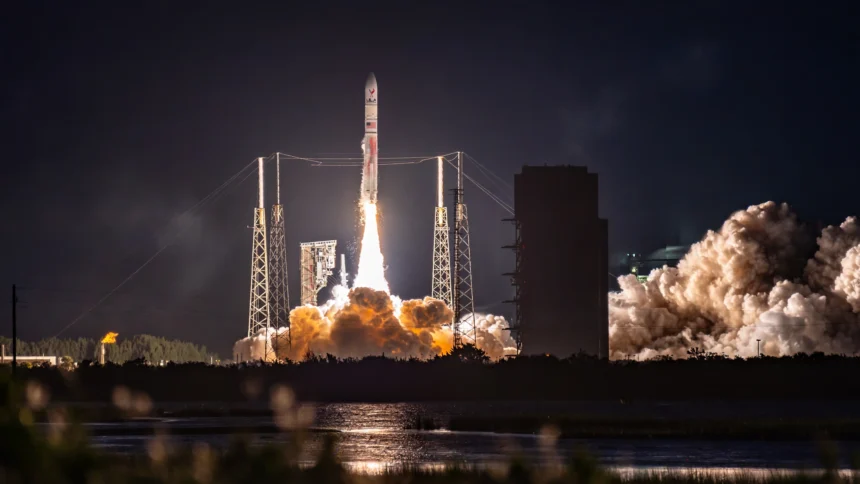
The 214-foot rocket lifted off from Space Launch Complex 41 at Cape Canaveral, Florida, at 12:40 pm on Sunday, November 15. It was Vulcan’s fifth flight since its January 2024 debut, and its first in nine months after a long pause while engineers investigated problems with the rocket’s boosters and main engines.
For the first few minutes, everything looked normal. The six strap-on solid rocket boosters fired and separated on schedule. Then, during the firing of the Centaur upper stage, something went wrong, and about 50 minutes after liftoff, ULA confirmed the loss.
“Based on data received by our Launch Director, we confirm that the Vulcan vehicle launched from Space Launch Complex 41 suffered an anomaly 10 minutes into the flight and failed to deliver the Amazon mission to orbit,” the company said. ULA added that the cause was not immediately clear and that it would work with Amazon and the relevant authorities to find out what happened.
What went wrong on the climb to orbit
The mission, known as Vulcan Leo 1, had already been delayed twice over the weekend. A refuelling problem scrubbed Friday’s attempt, and the launch was pushed again before finally going ahead on Sunday afternoon.
Vulcan thundered off the pad on 3.8 million pounds of thrust from its six solid boosters and two methane-burning BE-4 engines, supplied by Blue Origin, the space company founded by Amazon founder Jeff Bezos. The boosters appeared to work normally, and early reporting based on ULA’s flight timeline suggested the trouble began during the Centaur upper stage’s planned 12-minute burn. ULA has not yet confirmed which part of the rocket failed.
The failure is the first total loss of a ULA rocket since the Boeing-Lockheed Martin joint venture was formed in 2006. ULA built its reputation on reliability with its workhorse Atlas 5 rocket, and Vulcan is the vehicle meant to replace it. A lengthy technical investigation is now expected, and the rocket is likely to stay grounded for months while engineers study the flight data and fix what went wrong.
A blow to Amazon’s satellite internet plans
The 40 satellites on board were the largest single batch Amazon had ever tried to launch for Leo. Amazon has bought 38 Vulcan launches, and Vulcan was expected to carry nearly half of the first-generation constellation, planned to include more than 3,200 satellites.
So far Amazon has put about 398 Leo satellites into orbit across 14 launches, roughly 12 percent of the total needed for global coverage. It had not launched any Leo satellites since July. Sunday’s flight would have pushed the total to 438. The next launch must now wait for ULA’s investigation to run its course.
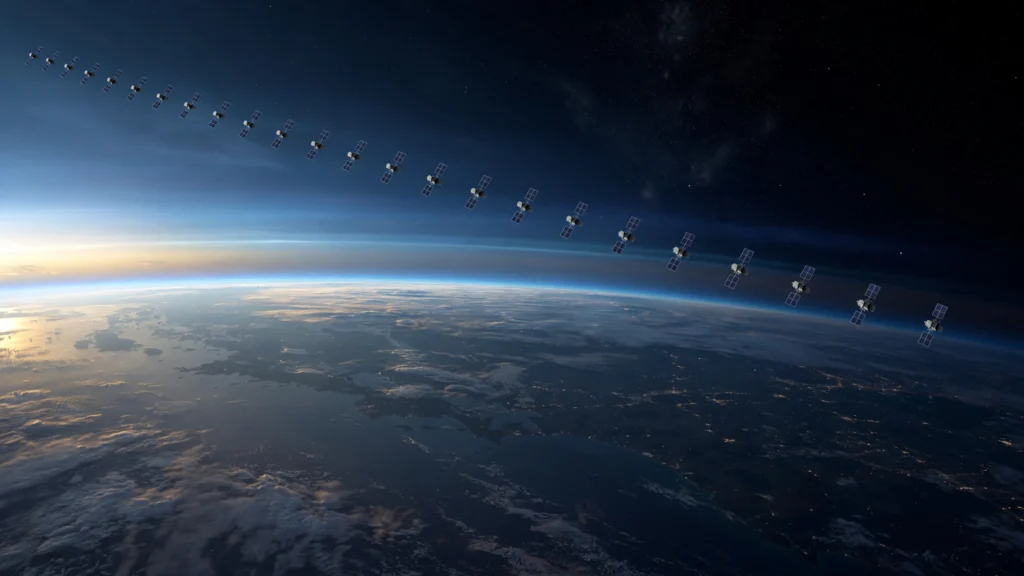
Amazon planned to start its commercial Leo internet service in 2026, taking on Starlink in the fast-growing space broadband market. The company has also flown Leo satellites on eight Atlas 5 rockets, but Vulcan was supposed to be the main workhorse for the build-out.
The failure also has wider consequences. Vulcan is central to ULA’s plans for US national security launches, and a long grounding would ripple through a schedule already stretched after the nine-month pause.
What happens next
ULA says it will work closely with its customer and other appropriate organisations to find the cause, decide on corrective action and return to flight as quickly as possible. In practice, that process takes time: after past rocket failures, investigations have run for months, and every fix must be tested before the next launch is cleared.
For Amazon, the question is how quickly it can get deployment moving again. It has other rockets available, including Atlas 5, but its Vulcan contract was the backbone of the plan. Until ULA explains what failed, the timetable for the Leo network, and for Amazon’s challenge to Starlink, is on hold.
FAQs
How many satellites were lost in the Vulcan failure?
40 Amazon Leo internet satellites were destroyed when the ULA Vulcan rocket failed about 10 minutes after liftoff on Sunday, November 15.
When did the Vulcan rocket launch and fail?
It lifted off from Space Launch Complex 41 at Cape Canaveral, Florida, at 12:40 pm local time on Sunday, November 15. The anomaly struck about 10 minutes into the flight.
Has ULA ever lost a rocket before?
No. This was the first outright mission failure for United Launch Alliance since the Boeing-Lockheed Martin joint venture was formed in 2006.
What does the failure mean for Amazon Leo?
Amazon has about 398 Leo satellites in orbit out of more than 3,200 needed. With 38 Vulcan launches booked, the failure delays its satellite deployment and its planned 2026 commercial service until ULA completes its investigation.
What caused the Vulcan rocket to fail?
The cause is not yet known. ULA says the anomaly happened about 10 minutes into the flight, and early reports point to the Centaur upper stage, but the company has not confirmed a cause.
ULA’s Vulcan will fly again only after engineers find the fault and fix it. For now, Amazon’s satellite internet dream waits on the ground.