More than 3,000 kilometres from Mumbai, in open waters off the north-eastern coast of Somalia, a hijacked fishing vessel and its 20 crew members are safe tonight. The Indian Navy said on Tuesday that it had stormed the vessel, Azini, and freed every crew member on board, ending an operation that lasted more than 48 hours without a single casualty or injury.
The rescue, completed on Monday, was announced by the Navy on Tuesday, 3 November. Defence Minister Rajnath Singh congratulated the Navy, and the Iranian embassy in New Delhi publicly thanked India for bringing its nationals home safely.
How the rescue unfolded
Azini, an Iranian fishing vessel, was seized by an armed pirate group on 29 October between the coastal towns of Bandar Bayla and Hafun in north-eastern Somalia, according to reports based on the Navy statement and regional maritime officials. Twelve armed pirates were reported to have taken control of the vessel.
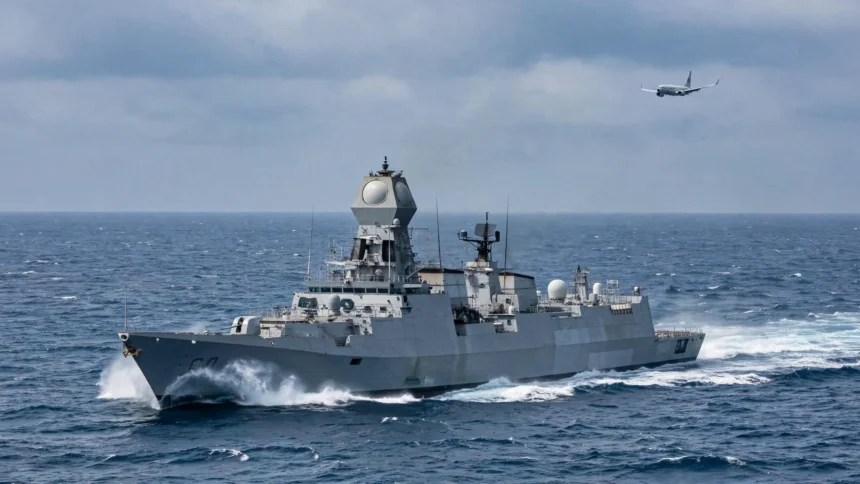
Responding to the incident, the Navy tasked a mission-deployed warship to intercept the hijacked vessel, supported by a maritime reconnaissance aircraft that helped locate and track it. The two platforms worked together to contain Azini and restrict its movement while commanders planned the next step.
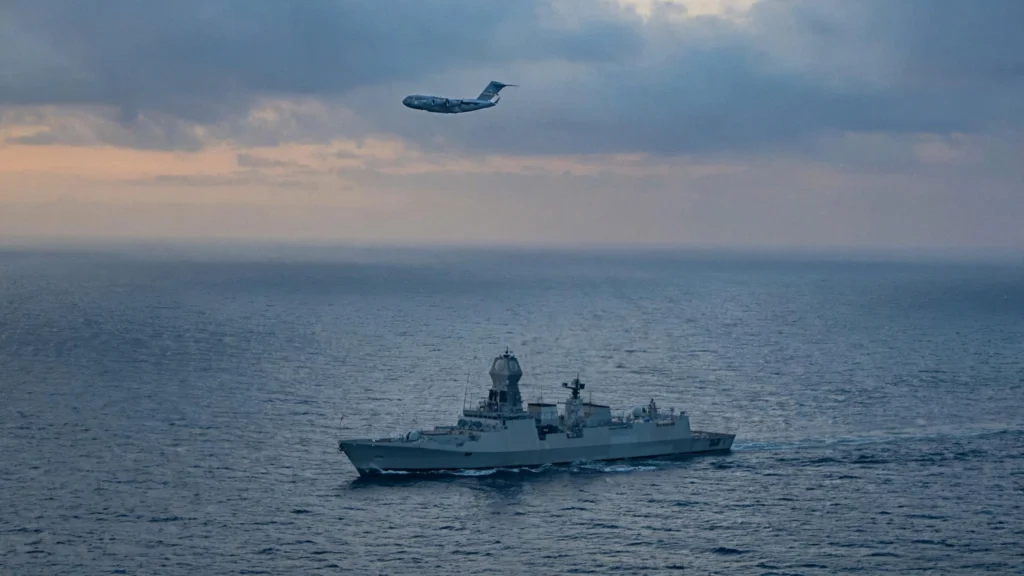
The decisive phase came with a precision airdrop. Marine Commandos, the Navy’s special forces, were inducted into the area by an Indian Air Force C-17 aircraft. The commandos then carried out a swift tactical intervention, secured the vessel, overcame the pirate threat and freed all 20 crew members.
The Navy said the operation was executed with speed and coordination, and that every crew member was rescued safely. Reports citing a Puntland maritime police official said the suspected pirates were later disarmed and brought ashore, but the Navy’s own statement focused on the rescue itself: 20 people freed, no casualties, no injuries.
Why Azini mattered beyond one boat
The hijacking raised alarm well beyond the vessel itself. Maritime security agencies had warned that Azini could be turned into a “mother ship”, a larger hijacked vessel used as a floating base to launch further attacks on merchant ships operating in the region.
That is a familiar pattern in piracy off Somalia. A fishing boat offers pirates fuel, supplies, range and cover, and from it they can send out smaller attack boats far from shore. Stopping the hijacked vessel early, before it could be put to that use, was therefore part of the mission, not just a rescue.
The location made the task harder. The operation played out more than 3,000 kilometres from Mumbai, in waters where help is not close at hand and where coordination between a ship, an aircraft and commandos dropped from the air has to work the first time. That it did, with no one hurt, is the detail the Navy and the Defence Minister both underlined.
A long reach, and a message to shipping
India has kept warships mission-deployed in the northern and central Arabian Sea and the Gulf of Aden for maritime security operations, and the Azini rescue fits that pattern. The Navy’s statement described a warship already on deployment being tasked to the incident, rather than a force assembled from scratch.
The message for commercial shipping is practical. Crews transiting these waters know that a hijacking may draw a response combining surveillance from the air, a warship on the surface and special forces if needed.
The Iranian embassy’s public thanks, posted on Tuesday, added a diplomatic note to the military one. It thanked the Government of India, the Indian Navy and the Indian Air Force for the successful operation to rescue the 20 Iranian crew members, a gesture that underlines how maritime security in these waters is a shared concern across countries.
What happens next
The Navy has not released further details about the condition of the vessel or the next steps for the crew. What is already clear is the outcome that matters most: 20 people who boarded a fishing vessel for work are alive and free after days in the hands of armed pirates, and a vessel that could have seeded more attacks is back under control.
FAQs
What happened to the fishing vessel Azini?
Azini, an Iranian fishing vessel, was hijacked by an armed pirate group on 29 October off north-eastern Somalia. The Indian Navy retook the vessel in an operation completed on Monday and freed all 20 crew members.
How many crew members were rescued?
All 20 crew members were rescued safely, according to the Indian Navy. The Navy said there were no casualties or injuries during the operation.
How long did the operation last?
More than 48 hours, from the Navy’s response to the hijacking through tracking, containment and the final tactical intervention.
Which forces took part in the rescue?
A mission-deployed Indian Navy warship, a maritime reconnaissance aircraft, Marine Commandos and an Indian Air Force C-17 aircraft that carried out the precision airdrop of the commandos.
Why was the hijacking seen as a wider threat?
Maritime security agencies warned that Azini could have been used as a “mother ship” to launch further pirate attacks on merchant vessels in the region, which is why containing it quickly mattered.
The Azini rescue will be remembered less for its drama than for its discipline: a distant vessel tracked, contained and retaken, and 20 crew members brought home safe.