
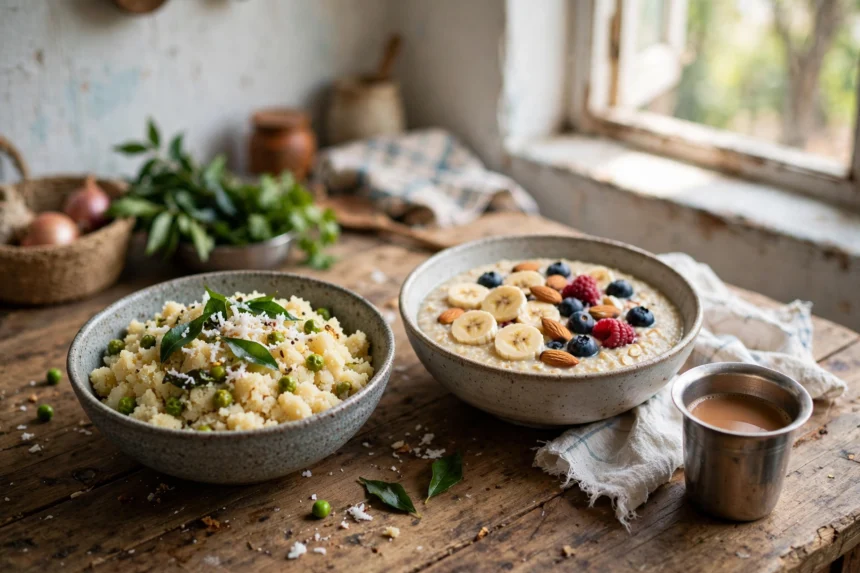
Upma or oats porridge? It is a question that comes up in Indian kitchens almost every morning. Both are quick and familiar, and both claim to be the healthier start to the day. A nutritionist has now broken down the difference, and the answer depends on what your body needs most.
Kanikka Malhotra, a consultant dietician and certified diabetes educator, compared the two in a piece published today, November 16. Her verdict: oats have the edge on fibre and blood sugar control, but sooji is far from a bad choice when cooked the right way.
Why oats win on fibre
The biggest difference is fibre. Oats are rich in soluble fibre, especially beta-glucan, which slows down how quickly sugar enters the bloodstream. That is why oats are so often recommended for blood sugar and cholesterol.
“Oats are the ultimate dietary fibre source because they are high in soluble fibre, specifically beta-glucan. This kind of fibre supports healthy digestion, lowers cholesterol, and controls blood sugar,” Malhotra said. Sooji, by comparison, contains some fibre, but the quantity is significantly lower.
The numbers tell the same story. Per 100 grams, oats carry roughly 10 grams of fibre, while sooji has around 3.5 grams. That gap is the main reason oats keep you full for longer after breakfast.

Protein: oats have a small advantage
Both grains offer a moderate amount of protein, but the quality differs. Oats provide complete protein, containing all the essential amino acids, which makes them a valuable option for vegetarians and vegans. Sooji has around 13 grams of protein per 100 grams against about 17 grams in oats, but its amino acid profile is not as complete.
Pairing sooji with dal, curd or vegetables can close the gap, but oats start ahead on their own.
Blood sugar: the deciding factor for many
For people with diabetes, the choice is clearer. Malhotra notes that oats are generally more advantageous for keeping blood sugar stable, because their high fibre content slows the absorption of sugar into the blood.
Sooji has a medium glycaemic index, roughly 55 to 65, while oats sit around 55. The difference looks small on paper, but the fibre in oats makes the sugar release steadier. Sooji is not off the table, though. A vegetable upma, cooked with less oil and eaten in a sensible portion, can still fit into a diabetes friendly diet.
What should be avoided is the sugary side of sooji. Sooji halwa, loaded with sugar and ghee, behaves very differently from a plain upma, and it can spike blood sugar quickly.
Weight loss and digestion
Both grains can support weight management when they are part of a balanced diet, but oats have the advantage again. Their higher fibre content keeps hunger away for longer, which can mean fewer calories through the rest of the morning.
Sooji has its own strength: it is light and easy to digest, a good option for children, older adults and anyone recovering from illness. Oats, with their heavier fibre load, can feel bulky to people not used to them.
Malhotra adds that weight management also needs regular activity, mindful eating and overall calorie balance, not just the right grain.
Which one should you pick?
- For diabetes or cholesterol: oats, thanks to beta-glucan fibre and steadier blood sugar.
- For weight loss: oats, because they keep you full for longer.
- For a light, easy breakfast: sooji, especially as vegetable upma for kids and older family members.
- For vegetarians: oats, for their complete protein profile.
- For gluten-free diets: oats are naturally gluten free, but buy certified gluten free packs to avoid cross contamination. Sooji contains gluten and does not suit coeliac diets.
How to make each one healthier
Neither grain is healthy or unhealthy on its own. What you add decides that. A vegetable upma with peas, carrots and peanuts beats a plain oily one, and oats with milk, nuts and fruit beat instant oats loaded with sugar.
A simple rule works for both: add vegetables or protein, keep added sugar and ghee low, and watch the portion.
So the morning debate has a practical answer. If blood sugar, cholesterol or weight is your main concern, oats are the stronger pick. If you want something light, quick and easy on the stomach, sooji cooked well is a perfectly good breakfast.
FAQs
Which is better for diabetes, sooji or oats?
Oats, because their soluble fibre, beta-glucan, slows sugar absorption and keeps blood sugar steadier. Sooji can still be eaten in moderate portions, ideally as vegetable upma.
Can I eat sooji every day?
Yes, in sensible portions and preferably as upma or idli with vegetables and protein. Avoid eating it daily as sugary halwa, which is high in sugar and fat.
Is sooji bad for weight loss?
No. Sooji is light and low in fat, and its protein helps with fullness. Oats keep you full longer because of their higher fibre, but a vegetable upma can still fit a weight loss diet.
Which keeps you full longer, oats or sooji?
Oats, because they contain roughly three times the fibre of sooji per 100 grams, and that fibre slows digestion.
Are oats gluten free?
Oats are naturally gluten free, but ordinary packs can be contaminated during processing. People with coeliac disease should buy certified gluten free oats. Sooji contains gluten.
Disclaimer: This article is based on expert views and publicly available nutritional information. Always consult your health practitioner before starting any new diet routine.
What is your usual breakfast, upma or oats? Tell us in the comments.