More than 10,000 people have been moved to safety in northern West Bengal after a glacial lake burst its banks in Bhutan, sending a surge of water down the Mo Chhu river system towards India. The outburst, reported on Thursday evening, has put districts along the Sankosh river on high alert, with officials in both West Bengal and Assam watching river levels hour by hour.
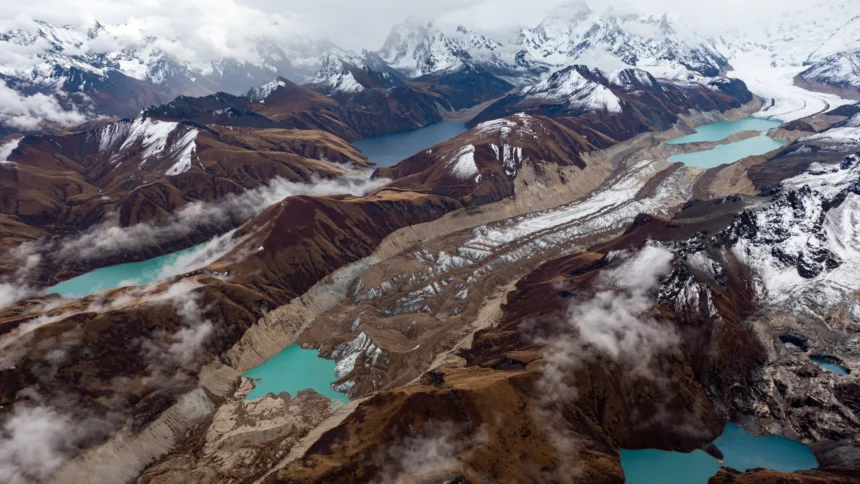
The lake at the centre of the scare is Sintaphu Lake, near Wakila Mountain in Lungo, in the Laya region of Bhutan’s Gasa district. Bhutanese media and officials say the breach released nearly 7.4 million cubic metres of water, enough to reshape riverbanks downstream and carry mud, rocks and debris for kilometres.
By Friday, the immediate danger in Bhutan itself appeared to be easing, but the downstream alert in India was still very much in force. In Alipurduar district of West Bengal, the administration shifted around 12,000 people living along the Sankosh to safer areas as a precaution, while Assam placed its Dhubri and Kokrajhar districts on alert.
What happened in Bhutan
According to Bhutan’s state broadcaster and local reports, the outburst took place on Thursday evening at Sintaphu Lake, a high-altitude glacial lake at the headwaters of the Mo Chhu. Floodwater reached Taktsemakhang at about 8.15 pm, damaging the road to Laya, one of Bhutan’s most remote highland communities, and forcing its closure.
The surge washed away the Gasa Tshachu hot spring complex near the banks of the Mo Chhu and cut a section of the Punakha-Gasa highway. Reports also said two bailey bridges were likely washed away. Bhutan’s National Centre for Hydrology and Meteorology is monitoring river levels, and warning sirens were sounded in the affected valleys. As of Friday morning, no deaths or injuries had been reported, though the full extent of the damage was still being assessed.
Why Bengal and Assam went on alert
Water from Sintaphu flows into the Mo Chhu, which runs south through Gasa and Punakha, joins the Pho Chhu to form the Punatsangchhu, and then enters India as the Sankosh river. That direct connection is why an event high in the Bhutan Himalaya can become a flood threat in the plains within hours.
India’s Central Water Commission issued a special flood advisory on Thursday, warning of a flash flood in the upper reaches of the Punatsangchhu and a possible sudden rise in the Sankosh. The advisory said floodwater was expected to reach the India-Bhutan border within six to eight hours and could affect Alipurduar in West Bengal and Dhubri in Assam.
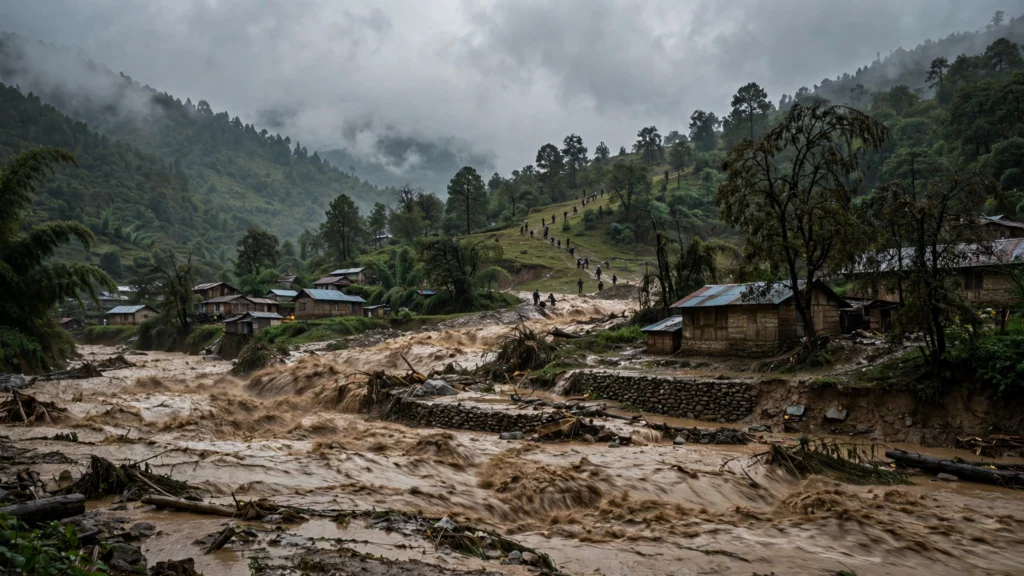
In West Bengal, the Sankosh rose by nearly two feet on Friday morning, and a red alert remained in force for the river system. Disaster management teams were activated, with the National Disaster Response Force, the State Disaster Response Force and Civil Defence personnel mobilised.
West Bengal water resources minister Nisith Pramanik urged residents near tea gardens and riverbeds in Cooch Behar, Tufanganj and Basirhat areas to evacuate immediately. In Alipurduar, officials said 4,000 to 5,000 people were moved into shelters, including school buildings, while more than 6,000 others were relocated, taking the total shifted to around 12,000. District officials said the situation was under control.
In Assam, Chief Minister Himanta Biswa Sarma said the state government was closely monitoring the possible impact across vulnerable revenue circles of Dhubri and Kokrajhar districts. The Assam State Disaster Management Authority said the Sankosh level was steady as of 6.30 am on Friday and no evacuation had started in Dhubri, though disaster response teams were on standby.
A known Himalayan risk
Sintaphu is not an unknown lake. It appears on Bhutan’s official list of 17 potentially dangerous glacial lakes, out of 567 glacial lakes in the country. Bhutan’s mountainous terrain, its glaciers and its steep river valleys make it particularly vulnerable to such outbursts, and most of the lakes identified as dangerous feed into the Manas and Punatsangchhu river systems of north-central Bhutan.
For now, the focus remains on the river gauges. Officials in both states have asked people along the Sankosh and its tributaries to stay away from riverbanks and move to relief camps if asked. The next readings from the Sankosh will decide whether the alert is scaled down or extended.
Frequently asked questions
What is a glacial lake outburst flood? It happens when a lake formed by melting glacier water suddenly breaches its natural dam of rock, ice and debris, releasing a large volume of water downstream in a short time.
Which lake burst in Bhutan? Sintaphu Lake, near Wakila Mountain in Lungo, Laya Gewog, in Bhutan’s Gasa district. It is one of 17 glacial lakes Bhutan lists as potentially dangerous.
How much water was released? Around 7.4 million cubic metres of water surged into the Mo river system, according to Bhutanese reports cited by Indian media.
Which Indian districts are affected? Alipurduar in West Bengal, where around 12,000 people were shifted to safety, and Dhubri and Kokrajhar in Assam, which are on alert and under close watch.
Has anyone been hurt? As of Friday morning, no deaths or injuries had been reported. Damage in Bhutan includes the Gasa Tshachu hot spring complex, a section of the Punakha-Gasa highway and bridges.
The coming days will show how quickly the Sankosh settles and how fast repair work can begin in the high valleys of Gasa.