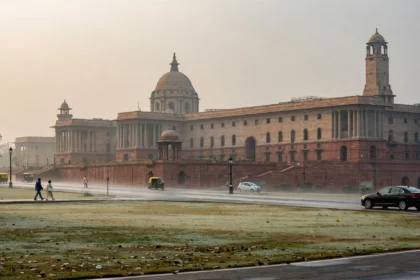
New Delhi: India is on track to cross $1 trillion in exports this financial year, Chief Economic Adviser V Anantha Nageswaran said this week, pointing to nearly $480 billion of trade in the first six months alone. If the pace holds, he said, the country will reach or even exceed a milestone it has never hit before.
Speaking at the ISID-IDRA Fourth National Conference in New Delhi on Thursday, Nageswaran kept his message simple: the numbers so far support the ambition, but the second half will decide it. Trade of around $480 billion in April to September, repeated over a full year, puts the $1 trillion mark within reach.
The claim did not come from the CEA alone. In a separate interview on Friday, Indian Institute of Foreign Trade Vice-Chancellor K Rangarajan struck a similar note, saying he too expected India to surpass $1 trillion in exports. Two senior economic voices, speaking days apart, have now put the same big number on the table.
The $480 billion first half
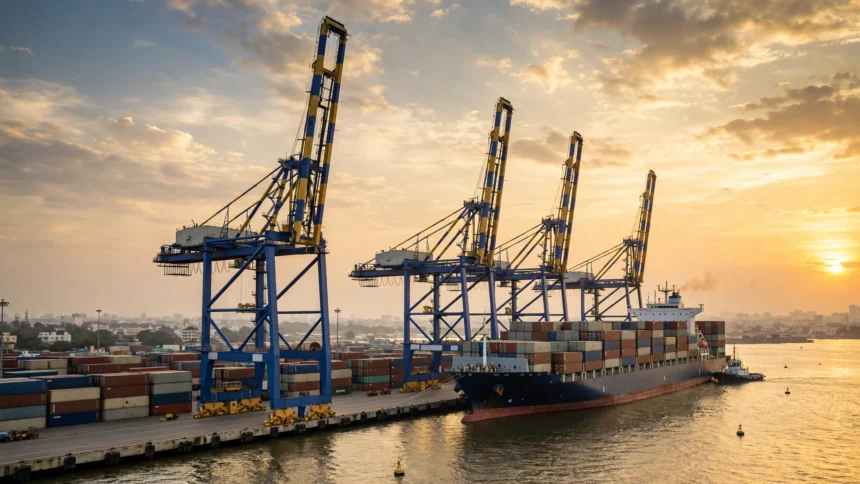
The arithmetic behind the optimism is straightforward. India recorded trade of about $480 billion in the first half of 2026-27. Repeating that performance in the second half takes the annual figure close to $1 trillion, and even a slightly softer second half keeps the target in sight.
The broader economy is giving the export story a tailwind. Real GDP grew 7.8 per cent in the April to June quarter, manufacturing value added rose 9.2 per cent, and gross fixed capital formation, a measure of investment in factories, machinery and infrastructure, grew 11.9 per cent.
The manufacturing catch
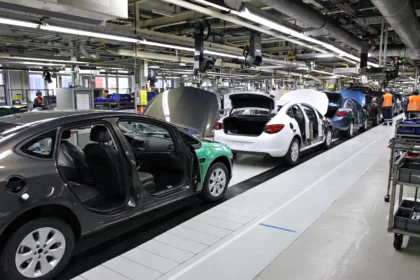
Nageswaran, however, attached a clear condition to his forecast: India must get stronger at making things at home. Global supply disruptions have made access to critical resources less certain, he said, and the country can no longer count on world markets to supply essential goods as reliably as they did before the pandemic.
His prescription was blunt. Industries that receive government support must show results in return, either through stronger export performance or the ability to match import prices. “We have to insist on quid pro quo from the industry in terms of export competitiveness, and or import parity,” he said. Protection without investment in productivity, he warned, would only weaken industrial resilience over time.
The data shows why he is pressing the point. Manufacturing’s share of gross value added was broadly unchanged at 14.8 per cent in 2025-26, compared with 14.7 per cent in 2022-23. Manufacturing has grown, but not yet faster than the rest of the economy for long enough to lift its share.
The oil and deficit problem
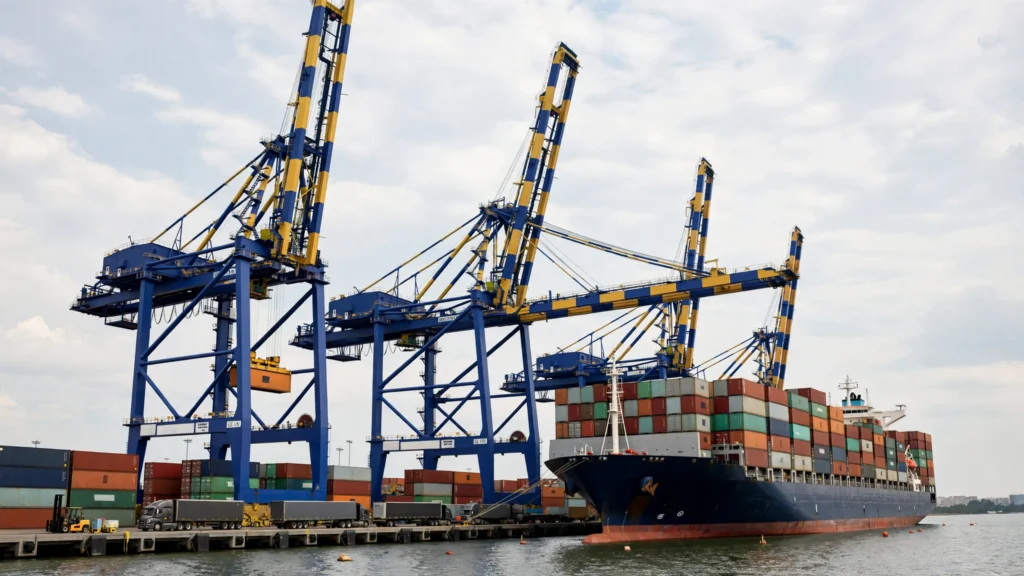
There is a second catch, and it sits on the import side of the ledger. Core merchandise imports grew 19.7 per cent year on year during April to September 2026, faster than the 16.2 per cent growth in core exports. When imports grow faster than exports, the trade gap widens, and that gap is hard to close while India depends heavily on imported oil.
Rangarajan was direct about this. “Trade deficit will continue to be there till the time we have more and more dependence on oil,” he said. But he added that the picture is improving at the edges: India has become an important refining centre, and rising exports of value-added petroleum products are helping offset part of the oil import bill.
What has to happen next
For the $1 trillion target to hold, a few things need to fall into place in the coming months:
- Second-half trade must match the first half. Any sharp slowdown in global demand would put the arithmetic under strain.
- Manufacturers must convert support into competitiveness. The CEA’s quid pro quo test means support should show up as exports or import-beating prices.
- Trade agreements must turn into orders. Businesses need to work through tariff lines and rules of origin rather than leaving the detail to policymakers.
- Energy costs must stay manageable. Higher crude prices would widen the import bill and squeeze the very exporters the target depends on.
None of this is guaranteed. Geopolitical tensions, supply disruptions and tariff uncertainty all sit on the risk side. But the starting position is unusually strong: a $480 billion first half, a growing economy and two senior officials publicly backing the same milestone. The next five months will tell whether this week’s optimism was early, or exactly on time.
FAQs
What is the $1 trillion export target?
The value of India’s total exports, goods and services combined, for 2026-27. The CEA said India is on track to reach or exceed it if the current trade pace continues.
How much did India trade in the first half?
Around $480 billion in the first six months of 2026-27, roughly half of the annual target.
Who else has backed the forecast?
IIFT Vice-Chancellor K Rangarajan said on Friday that he was optimistic India would surpass $1 trillion in exports this year.
What could stop India reaching $1 trillion?
Slower global demand, higher crude oil prices, imports growing faster than exports, and supply disruptions are the main risks both officials flagged.
Why is manufacturing central to the target?
Sustained export growth needs competitive domestic production, and the CEA says industry support should be linked to export performance or import-beating prices.