In many Indian families, autoimmune disease does not arrive once. It shows up again and again, in a parent, a sibling, a cousin, sometimes in different forms. One person lives with lupus, another with vitiligo, a third with type 1 diabetes. Doctors have long suspected a shared thread running through such families. Now, a major new study wants to find it.
The Indian Council of Medical Research (ICMR) has funded a four-year, multi-centre study that will follow 200 families in which autoimmune diseases cluster. The project was announced at AIIMS, New Delhi, on Thursday.
The formal title is a mouthful: Genomic Profiling and Identification of Targetable Shared Immunopathogenic Events in Multiplex Families with Autoimmune Diseases. Behind it is a simple question. When the immune system turns against the body in one family member, why does it often do the same, differently, in another, and why do some relatives stay healthy?
What the study will actually do
Researchers will recruit what they call multiplex families, households where several members live with autoimmune conditions. Each family must have at least three affected members, including at least one person with systemic lupus erythematosus (SLE), commonly known as lupus. At least two unaffected relatives must also take part, so every family contributes a minimum of five participants.
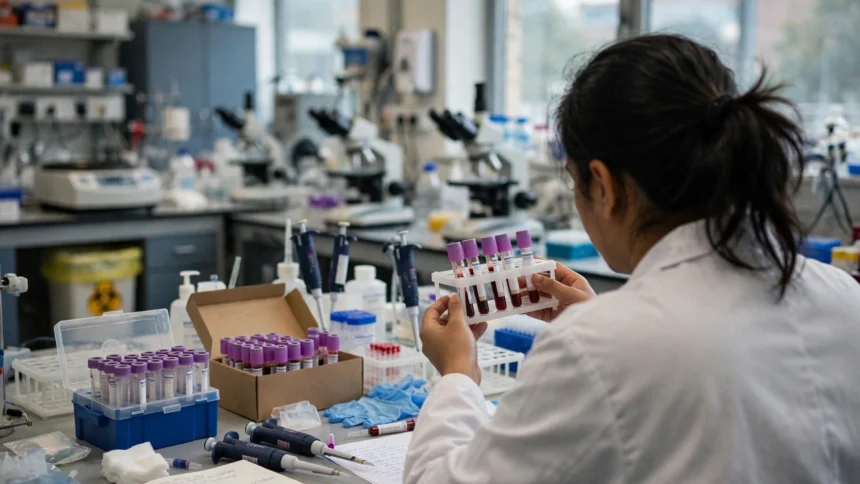
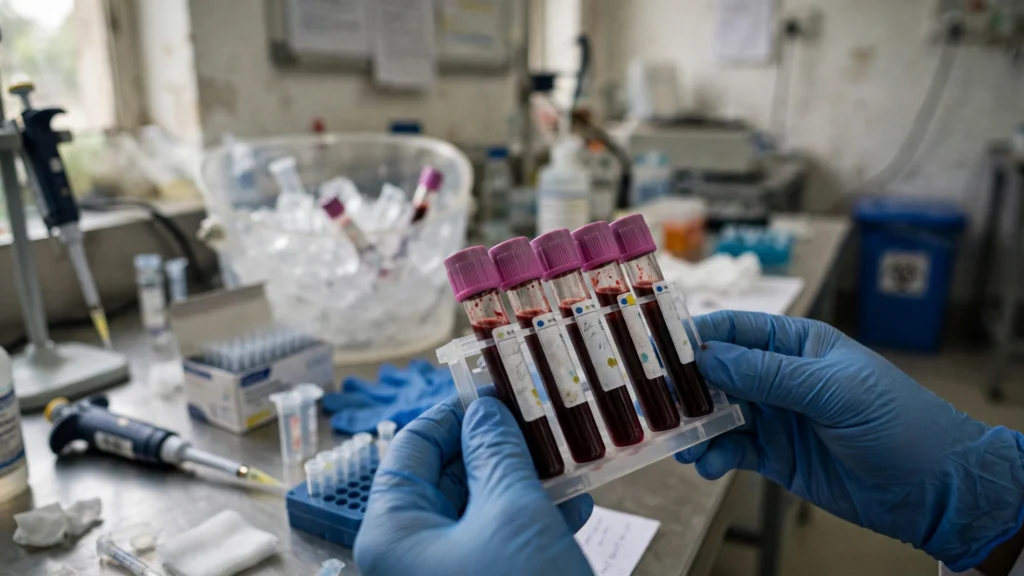
Blood samples will be collected from affected and unaffected members alike. Scientists will then compare genetic variations, cytokine profiles and other immune markers, looking for shared patterns that separate families with clustered disease from the general population. The comparison with healthy relatives is central to the design: it may show what protects some people, not only what puts others at risk.
Analysis will happen on a rolling basis over the four years, rather than waiting until all 200 families are enrolled. That matters for patients, because early findings can shape later work instead of sitting in a freezer until the end of the project.
Six centres, one shared cohort
The study brings together six clinical centres across the country:
- AIIMS, New Delhi
- AIIMS Bibinagar, Telangana
- Sanjay Gandhi Postgraduate Institute of Medical Sciences (SGPGI), Lucknow
- St John’s Medical College, Bengaluru
- Nizam’s Institute of Medical Sciences (NIMS), Hyderabad
- Medical College, Kolkata
The project is coordinated by Dr Dipyaman Ganguly of Ashoka University, Sonipat, Haryana, with Dr Ranjan Gupta, additional professor in rheumatology at AIIMS Delhi, coordinating the AIIMS arm.
Who can take part
Lupus is the anchor condition. Every participating family needs at least one member diagnosed with SLE, which can affect the skin, joints, kidneys and other organs. Other affected relatives may have conditions such as myositis, Sjogren’s syndrome, type 1 diabetes or vitiligo, subject to the study’s eligibility criteria.
AIIMS Delhi is inviting eligible families, particularly those in Delhi and the National Capital Region, to come forward and check whether they qualify. Reports say the institute has already identified two potentially eligible families among patients in follow-up care, though their participation still depends on consent and confirmation that they meet the criteria.
Dr Gupta has stressed an important nuance at the announcement: genes alone do not decide who develops an autoimmune disease. Environmental factors also play a role, which is one reason the study pairs genetic work with detailed immune profiling instead of treating DNA as the whole answer.
Why this study matters now
Autoimmune diseases cover more than 80 distinct diagnoses, and they are often difficult to pin down early. Symptoms overlap, flare and fade, and patients can spend years moving between specialists before getting a name for what they have. A shared biological signature, if the study finds one, could eventually help doctors spot risk earlier and choose treatments more precisely.
The story has drawn particular attention in Kerala, where local coverage notes autoimmune conditions are a major concern. The study itself, however, is national in scope.
What it is not
It is important not to oversell this. The study is not a screening programme, and it cannot currently predict whether an unaffected relative will go on to develop an autoimmune condition.
Eligible families in the Delhi-NCR region can contact the AIIMS Delhi rheumatology team to check their eligibility. Details shared in press coverage include phone number 7303061991 and email dr.guptaranjan@aiims.edu. As with any research study, participation is voluntary and depends on informed consent and confirmed eligibility.
FAQs
What is the ICMR autoimmune study?
It is a four-year, ICMR-funded project studying 200 families with multiple members affected by autoimmune diseases, to find shared genetic and immune factors behind the clustering.
Who can join the study?
Families with at least three affected members, including at least one person with lupus, plus at least two unaffected relatives. Final eligibility is confirmed by the study team.
Which hospitals are involved?
AIIMS Delhi and AIIMS Bibinagar, SGPGI Lucknow, St John’s Bengaluru, NIMS Hyderabad and Medical College Kolkata, coordinated by Ashoka University.
Will it tell me if I will get an autoimmune disease?
No. It is a research study, not a screening programme, and it cannot currently predict whether an unaffected relative will develop a condition.
How long will the study run?
Four years, with recruitment and analysis proceeding together rather than waiting for all 200 families to enrol first.
The next few years will decide whether this cohort delivers the breakthrough its designers hope for. For now, the study gives 200 families a chance to turn a painful family pattern into knowledge that could help many more.