India’s consumption engine, the force that has carried the economy through a turbulent year, may be running on borrowed time. That is the warning from Axis Bank, whose senior economist has said the spending boom visible in headline numbers is being propped up by government support and household borrowing, and neither leg may hold for much longer.
Tanay Dalal, Senior Vice President for Economic Research at Axis Bank, said in an interview with news agency ANI on Monday that consumption growth could face challenges in the coming months. The economy itself is doing reasonably well, he stressed, with several high-frequency indicators showing healthy activity. But beneath the headline, the picture is more fragile than it looks.
Retail sales are already cooling
The first signs of strain are visible in the shop floor data. Retail sales growth, measured by the Retailers Association of India, slowed from 10 per cent in August to 8 per cent in October. Passenger vehicle sales during Navratri fell 20 per cent, and air travel was another area showing weakness, Dalal said.
“There were already signs of households trying to save a buck, households slowing down personal consumption, households straining on the credit side,” he said, describing a consumer who is still spending but increasingly carefully.
The slowdown matters because private consumption accounts for well over half of India’s GDP. When households pull back, factories, shops and services feel it within weeks.
Two props holding up spending
Dalal’s central argument is that today’s consumption numbers flatter the underlying reality. “Consumption numbers look good at a headline basis, but probably are supported by public sector spending of around 1.7 to 2 per cent of GDP,” he said.
The first prop is the government. Indirect support, including fertiliser and LPG subsidies and cuts in excise duty on fuel, has contributed around 1.7 per cent of GDP, Dalal estimated. That figure could climb to 1.92 per cent if crude oil prices stay above 100 dollars a barrel, since higher crude inflates the subsidy bill. With Brent crude still trading above that level, the fiscal cost of keeping fuel and cooking gas affordable keeps rising.
The second prop is credit. Household borrowing is doing much of the heavy lifting: non-banking financial company (NBFC) credit to households is running at around 40 per cent, while unsecured loans by banks are growing at roughly 30 per cent year on year. Gold loans and loans against shares have also stayed strong, Dalal noted, but he cautioned that these sources of support may not keep driving consumption in the future.
Put together, the message is blunt: “This consumption tailwind might not be sustainable going ahead,” Dalal said, warning that growth could face headwinds if financial and public sector support weakens.
Inflation adds to the squeeze
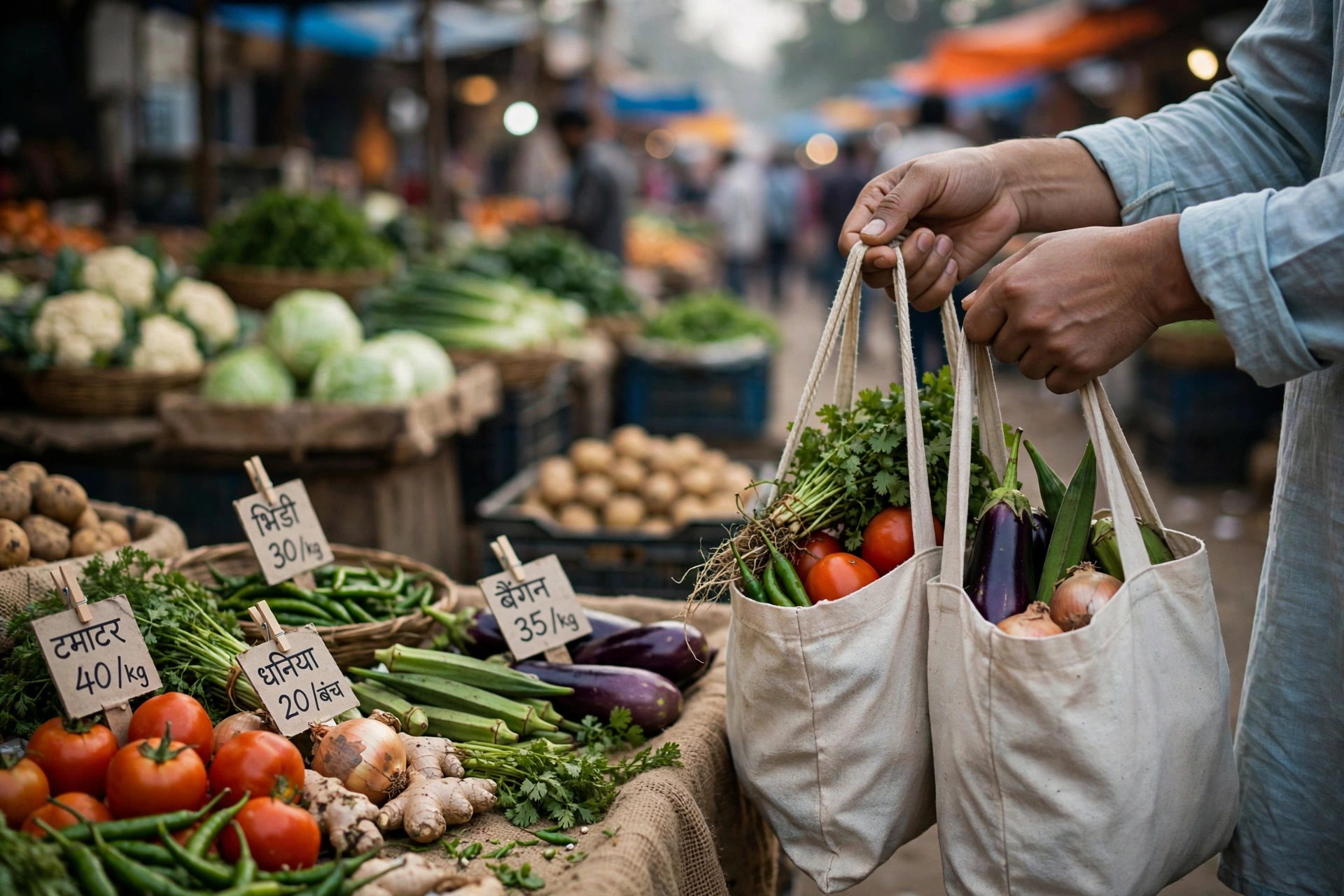
The warning lands at an awkward moment for household budgets. Dalal estimated that retail inflation could have reached around 6.3 per cent in October, though he added that he had not completed his calculations. If confirmed, that would be above the Reserve Bank of India’s 6 per cent upper tolerance limit, and it would mean real incomes are being squeezed even as nominal spending holds up.
High inflation also complicates the policy response. Price pressures driven by crude and food costs leave the central bank little room to cut rates to support demand, while the government’s subsidy bill grows at exactly the moment its fiscal space narrows.
What to watch next
- November retail data: whether the October slowdown to 8 per cent deepens once the full festive season figures are in.
- Credit growth: whether unsecured lending stays near 30 per cent or regulators and banks start tapping the brakes.
- Crude prices: oil above 100 dollars a barrel pushes the subsidy burden toward 1.92 per cent of GDP, tightening the fiscal cushion.
- Official inflation: the October CPI print will confirm or soften Dalal’s 6.3 per cent estimate.
- Festive demand: early signs are mixed, with food and grocery holding up better than durables and jewellery.
None of this predicts a consumption collapse. Dalal’s point is narrower: recent spending strength has had help, and it should not be assumed to last forever. The next few months of retail, credit and inflation data will show whether the consumer is merely catching breath or genuinely running out of steam.
FAQs
Who warned about India’s consumption growth?
Tanay Dalal, Senior Vice President for Economic Research at Axis Bank, in an interview with ANI on November 2, 2026.
Why does Axis Bank think consumption growth may slow?
Because spending is being supported by government subsidies worth around 1.7 per cent of GDP and rapid household borrowing, including unsecured bank loans growing about 30 per cent a year, and neither support may be sustainable.
How much have retail sales slowed?
Retail sales growth slowed from 10 per cent in August to 8 per cent in October, according to Retailers Association of India data cited by Dalal.
What is the October inflation estimate?
Dalal estimated retail inflation could have reached around 6.3 per cent in October, while noting his calculations were not yet complete.
Does this mean a recession is coming?
No. Dalal said the economy is performing reasonably well overall; his warning is that consumption growth could face headwinds if government and credit support weakens.
Stay with Informeia for the latest updates on the Indian economy, inflation and consumer trends.