Washington/New Delhi, Oct 31: The International Monetary Fund has a clear message for India as energy prices stay volatile: let the rupee do the adjusting first. At its regular briefing in Washington this week, the Fund said the currency should be India’s “first line of defense” against the energy shock coming out of the Middle East, rather than heavy intervention by the Reserve Bank of India to hold the exchange rate steady.
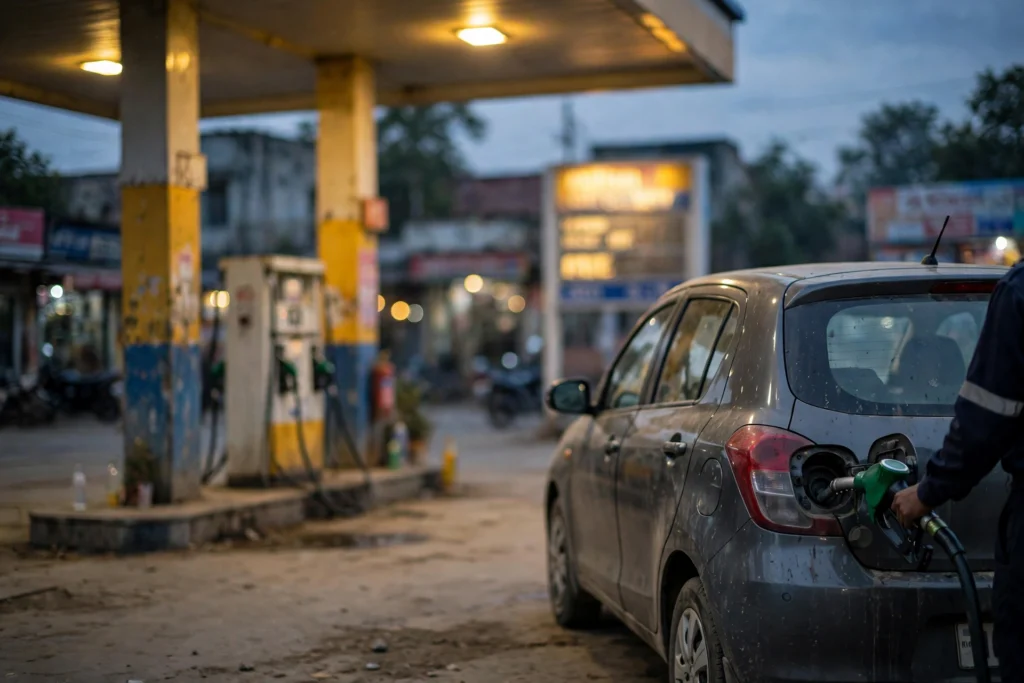
The advice matters because India imports most of its crude oil. When energy prices jump, the import bill rises and the effects can feed through to fuel prices and inflation. A currency allowed to move can absorb part of that shock, instead of forcing the central bank to spend reserves defending a particular level.
IMF Communications Director Julie Kozack was answering a question about the RBI’s recent intervention to support the rupee. She said she was echoing Krishna Srinivasan, head of the Fund’s Asia and Pacific Department. “Given the ongoing energy shocks that India is confronting, like all countries, our view is that the rupee should be the first line of defense in the face of these shocks,” she said.
“So, allowing the exchange rate to move freely to reflect the impact of these shocks is important to help the Indian economy adjust to these shocks,” Kozack added. “But in the case of India, our view is that exchange rate flexibility remains the preferable policy response.”
Growth forecast held at 7 per cent
Alongside the currency advice, the IMF kept its growth outlook for India unchanged. Kozack described India as “really an engine of growth in the world economy” and said the Fund projects growth at 7 per cent for both FY 2026-27 and FY 2027-28. The drivers, she said, are robust domestic demand and strong services activity.
What a weaker rupee means for households
For most readers, the rupee debate sounds abstract. Its effects are not:
- Fuel and transport: India pays for crude oil in dollars, so a weaker rupee makes each barrel costlier in rupee terms, even if the dollar price of oil does not move.
- Inflation: Higher fuel and transport costs can push up prices for goods that have to be moved across the country, from food to manufactured items.
- Imports: Everything priced in dollars, from electronics components to some medicines and fertiliser inputs, becomes more expensive when the rupee softens.
- Exports: On the other side, exporters can gain some competitiveness, because their dollar earnings convert into more rupees.
The trade-off is the heart of the debate. Letting the rupee slide helps exporters and protects reserves, but it can add to inflation. Holding it steady protects import prices in the short run, but it costs reserves. There is no painless option.
The risk the IMF is watching: weather
Kozack also flagged the main downside risk to the outlook, and it has nothing to do with oil. Worse-than-expected weather, including a possible El Nino, could lower crop yields, weigh on activity in rural areas, push up food price inflation, and hurt household purchasing power. For now, she said, those risks have not materialised.
That warning matters for inflation too. A poor harvest can tighten household budgets fast, and if food and fuel costs rose together, the RBI would be fighting price pressure from two directions at once.
The Fund will next reassess its India projections in its January World Economic Outlook update. Until then, the 7 per cent forecast for both this fiscal year and the next stands as the baseline, with weather and energy prices as the two swing factors to watch.
Why this debate is live right now
The timing is no accident. Energy markets have been on edge through the Middle East tensions, and every RBI intervention invites the same question: is the central bank smoothing volatility, or resisting a move that fundamentals justify? The IMF’s answer leans toward smoothing rather than resisting, so that importers, exporters, and consumers all get the price signal and adjust.
For policymakers, the practical question is balance. A flexible rupee does not mean abandoning the market, and the RBI is unlikely to step away entirely. The likelier path is familiar: intervene to prevent sharp, disorderly swings, but allow the broader trend to reflect energy prices and capital flows.
FAQs
What did the IMF actually say about the rupee?
It said the rupee should be India’s “first line of defense” against the energy shock from the Middle East, meaning exchange rate flexibility is preferable to heavy RBI intervention.
What is India’s growth forecast now?
The IMF projects growth at 7 per cent for both FY 2026-27 and FY 2027-28, citing robust domestic demand and strong services activity.
Why does a weaker rupee push up prices?
India imports most of its crude oil and pays in dollars, so a softer rupee raises the cost of oil and other imports, feeding into fuel and goods prices.
What is the biggest risk to the outlook?
Weather. The IMF flagged worse-than-expected weather, including a possible El Nino, which could cut crop yields, lift food inflation, and hurt rural incomes. It said those risks have not materialised yet.
When will the IMF update its forecast next?
In its January World Economic Outlook update.
The debate will not be settled by one briefing. But the IMF has stated its position plainly: in an energy shock, let the currency absorb the first blow, protect reserves, and keep the focus on growth and inflation.