Indians bought a lot less gold by weight in the July to September quarter, but they still spent more money on it. That contrast sums up the latest World Gold Council report, released on November 3, which puts total demand at 162.5 tonnes, down 29 percent from 229.8 tonnes in the same quarter last year.
The value of that demand rose 3 percent to Rs 2,41,900 crore, compared with Rs 2,35,090 crore a year earlier. In plain terms, households bought fewer grams because each gram cost a lot more, not because they had stopped valuing gold.
The average price during the quarter was 4,262 dollars a troy ounce, or Rs 1,48,891 per 10 grams, against 3,457 dollars and Rs 1,02,287 in the same period last year, excluding import duty and GST. That jump, of roughly 45 percent in rupee terms, is the single biggest reason behind the volume fall.
What the numbers say
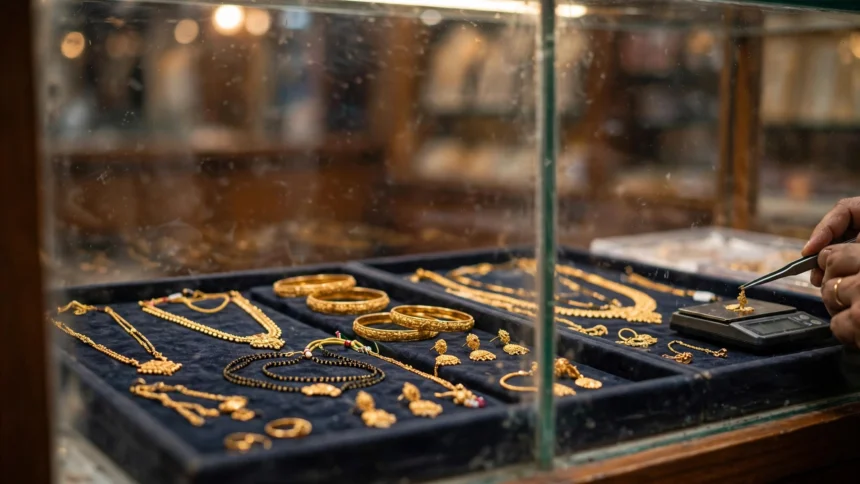
The headline fall hides different stories inside the market. Jewellery, still the largest part of Indian gold demand, slipped 20 percent to 99.9 tonnes from 125 tonnes. Its value, however, rose 16 percent to Rs 1,48,700 crore, which shows buyers choosing lighter pieces or fewer items rather than walking away entirely.
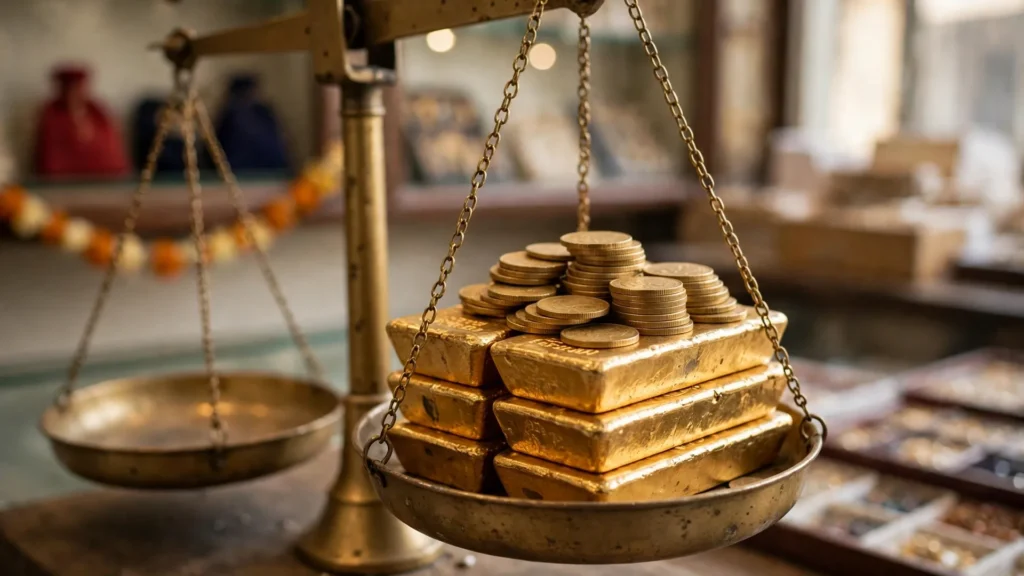
Investment demand fell harder. Bar and coin purchases dropped 40 percent to 55 tonnes from 91.6 tonnes, while demand for gold exchange traded funds halved to 5.3 tonnes from 10.7 tonnes. The Reserve Bank of India, meanwhile, bought no gold in the quarter, against 0.2 tonnes in the same quarter last year.
- Total demand: 162.5 tonnes, down 29 percent year on year
- Total value: Rs 2,41,900 crore, up 3 percent year on year
- Jewellery: 99.9 tonnes, down 20 percent; value up 16 percent
- Bars and coins: 55 tonnes, down 40 percent
- Gold ETFs: 5.3 tonnes, down 50 percent
- Average price: Rs 1,48,891 per 10 grams, against Rs 1,02,287 a year ago
Why buyers pulled back
Price was the main brake, but it was not the only one. The World Gold Council also pointed to the higher import duty and to an appeal by Prime Minister Narendra Modi to curb purchases, both of which weighed on sentiment during the quarter.
World Gold Council Regional CEO for India, Sachin Jain, said elevated prices changed how consumers behaved. Buyers became more considered, prioritised purchases, and looked for ways to balance affordability with long term value, including exchange programmes and deferred buying.
There was also a timing effect. Some purchases shifted into the December quarter because key festivals fall later this year, and a late-quarter price pullback encouraged some deferred buying.
The duty and smuggling twist
The duty story is where the report turns uncomfortable for policymakers. The government raised the gold import duty in May to 15 percent, from 6 percent, and official imports fell sharply in the September quarter.
At the same time, unofficial inflows surged. The council’s estimates put them at about 50 tonnes in the quarter, against just 3 tonnes in the same quarter last year, a three year high. Industry estimates cited in press coverage suggest the full year unofficial figure could be higher still, but the direction is clear: a steep duty gap created a strong incentive to bypass official channels.
Estimates of unofficial trade are always uncertain, but the data show a market split: official demand down, prices high, and a large volume moving outside official channels.
What it means for the December quarter
For the rest of the year, the council has lowered its expectations. It now projects full year demand at 625 to 675 tonnes, against an earlier projection of 650 to 750 tonnes made in April, a range some coverage describes as pointing to a six year low.
The December quarter still offers a chance of recovery. Jain said softening prices should revive demand, particularly with the festival season starting with Dhanteras and a longer wedding season ahead.
For ordinary buyers, the message is practical. Gold has not lost its place in Indian households, but at current prices it is being bought in smaller quantities, more carefully, and often after waiting for a price dip.
FAQs
How much did India’s gold demand fall in the September quarter?
It fell 29 percent year on year to 162.5 tonnes, from 229.8 tonnes in July to September 2025, according to the World Gold Council.
Why did demand fall if spending rose?
Because prices rose sharply. The average domestic price was about 45 percent higher than a year earlier, so buyers spent 3 percent more in total while buying 29 percent less by weight.
Which segment fell the most?
Investment demand fell hardest. Bar and coin purchases dropped 40 percent to 55 tonnes, and gold ETF demand halved to 5.3 tonnes, while jewellery demand fell 20 percent to 99.9 tonnes.
What is the full year forecast now?
The World Gold Council projects 625 to 675 tonnes for 2026, down from its earlier 650 to 750 tonne projection, reflecting the impact of elevated prices on purchases.
Could demand recover in the December quarter?
Possibly. The council points to softer prices late in the September quarter, the festival season, and a longer wedding season, but affordability remains the key constraint.
Source: World Gold Council Q3 2026 Gold Demand Trends report, as reported on November 3, 2026.