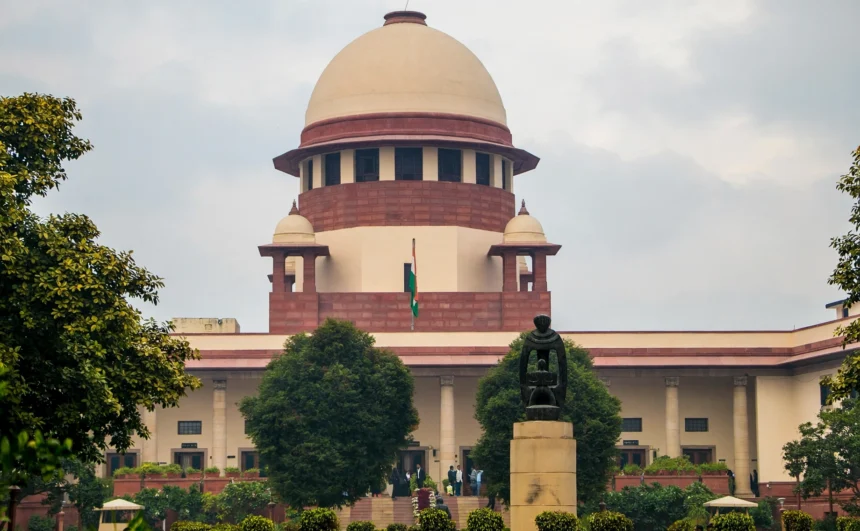
The Supreme Court on Tuesday gave big relief to Samajwadi Party leader Azam Khan in the fake birth certificate case. A bench of Justices Dipankar Datta and Sheel Nagu dismissed the Uttar Pradesh government’s appeal against the Allahabad High Court order that had stayed Khan’s conviction. The court went a step further and extended the same relief to his wife, Tazeen Fatma, and son, Abdullah Azam Khan, staying their convictions too.
The order ends a split that had lasted for more than two years. In May 2024, the High Court stayed the conviction of Azam Khan alone, but refused the same protection to his wife and son. On Tuesday, the Supreme Court corrected that uneven outcome, holding that all three members of the family would now stand on the same footing while the case continues.
What the Supreme Court decided
Three petitions were before the court. The Uttar Pradesh government had challenged the relief given to Azam Khan, while Tazeen Fatma and Abdullah Azam Khan had separately challenged the High Court’s refusal to stay their convictions. The bench dismissed the state’s appeal and allowed the appeals filed by Fatma and Abdullah Azam Khan.
“We have dismissed the appeal of the State government. We have allowed the appeals of Abdullah Azam Khan and Tazeen Fatima,” the bench said while pronouncing the order, according to court reports. The case is titled State of Uttar Pradesh v. Mohammad Azam Khan and others.
It is important to be clear about what the order does and does not do. A stay on conviction is not an acquittal. The convictions remain on record, but their legal effect is paused while the appeals against them are heard. The underlying case will still be decided on its merits.
The case so far: a seven-year timeline
The case began on January 3, 2019, when Akash Saxena, who is now the BJP MLA from Rampur, lodged a complaint alleging that Azam Khan and his wife had obtained two birth certificates for their son, Abdullah Azam Khan, carrying different dates of birth.
In October 2023, a Rampur sessions court convicted all three family members on charges including cheating, forgery and criminal conspiracy under Sections 420, 467, 468, 471, 472 and 120B of the Indian Penal Code. The court sentenced each of them to seven years in prison. The conviction cost Azam Khan his Rampur assembly seat at the time.
On May 24, 2024, the Allahabad High Court suspended the sentences of all three and granted them bail. But when it came to the conviction itself, the High Court drew a line: it stayed Azam Khan’s conviction and refused the same relief to his wife and son, distinguishing the senior leader’s alleged role from theirs.
The Uttar Pradesh government then moved the Supreme Court against the relief given to Khan. His wife and son moved the court the other way, against the refusal of relief to them. Tuesday’s order settles both challenges at once: the state’s appeal fails, and the family gets uniform relief.

Why it matters
A stay on conviction carries real political weight in India. Under the Representation of the People Act, a legislator convicted of an offence and sentenced to two years or more stands disqualified. A stay on the conviction lifts that bar, which is why such orders are fought so hard in court. For Azam Khan, one of the Samajwadi Party’s most prominent faces in western Uttar Pradesh, the order removes a legal cloud that has hung over him since October 2023.
The timing adds to the significance. The order comes just over a month after SP chief Akhilesh Yadav visited Azam Khan in jail on October 23, a meeting read widely as a signal that the party is rallying around its veteran leader ahead of the 2027 Uttar Pradesh assembly elections. A leader free of the immediate shadow of a conviction is a very different political asset from one fighting to keep his seat.
The order also matters for how courts treat families facing the same prosecution. The High Court’s 2024 approach had created an odd split: three people convicted together, in the same trial, on the same set of facts, but with different legal protection. The Supreme Court has now said that where the facts are shared, the relief should be shared too. That reasoning could be cited by other accused persons in similar multi-accused cases who find themselves on the wrong side of a split order.
What happens next
The appeals against the convictions will now proceed, with the stays in place. The Uttar Pradesh government can continue to contest the case on merits, and the prosecution’s core allegation, that two birth certificates were procured for Abdullah Azam Khan, will still have to be tested in full. For now, though, the family has won the immediate legal battle, and the political conversation in Rampur and Lucknow is likely to shift from the courtroom to the campaign trail.
FAQs
What did the Supreme Court decide on Tuesday?
The court dismissed the Uttar Pradesh government’s appeal against the stay on Azam Khan’s conviction in the fake birth certificate case, and stayed the convictions of his wife Tazeen Fatma and son Abdullah Azam Khan as well.
What is the fake birth certificate case about?
The case alleges that Azam Khan and his wife obtained two birth certificates for their son Abdullah Azam Khan, with different dates of birth. The complaint was filed in January 2019 by Akash Saxena, now the BJP MLA from Rampur.
What punishment did the trial court give?
In October 2023, a Rampur sessions court convicted all three family members of cheating, forgery and criminal conspiracy and sentenced each of them to seven years in prison.
Does the Supreme Court order mean Azam Khan is acquitted?
No. A stay on conviction pauses the legal effect of the conviction while the appeals are heard. It is not an acquittal, and the case will still be decided on its merits.
Why does a stay on conviction matter politically?
A conviction with a sentence of two years or more disqualifies a legislator under the Representation of the People Act. A stay on the conviction lifts that disqualification, which is why the order is significant for Azam Khan’s political future.
The Supreme Court has spoken, and for the Khan family, the long legal fight now moves to the next stage with the pressure of a live conviction lifted, at least for now.