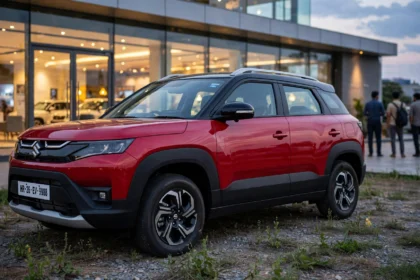

If you have been planning to buy a new car, tomorrow is the last day to escape the next round of price hikes. From December 1, Tata Motors and Hyundai will raise prices across their line-ups, joining Maruti Suzuki, which has already revised its prices. Audi follows in January.
What changes from December 1
Tata Motors Passenger Vehicles will raise prices by an average of 0.5 per cent across its entire range of cars and SUVs, covering both petrol and diesel models and electric vehicles. On a car priced at Rs 10 lakh, the average increase works out to about Rs 5,000. Hyundai Motor India will increase prices of select models and variants by up to Rs 8,000, with the exact amount varying by variant.
Maruti Suzuki, India’s largest carmaker, has already raised prices of select models by around 0.31 per cent on a volume-weighted average basis, effective November 22. Audi India will raise ex-showroom prices by up to 2 per cent from January 1, 2027.
- Tata Motors: average 0.5 per cent more, entire range including EVs, from December 1, 2026
- Hyundai: up to Rs 8,000 more, select models and variants, from December 1, 2026
- Maruti Suzuki: about 0.31 per cent more, select models, from November 22, 2026
- Audi India: up to 2 per cent more, entire range, from January 1, 2027

The fourth hike of the year
For Tata and Hyundai, this is the fourth price revision of calendar 2026. Tata raised prices by a weighted average of 0.5 per cent on its petrol and diesel range in April, followed by increases of up to 1.5 per cent in July and up to Rs 25,000 in September. Maruti’s November revision is its fourth price change of the financial year.
Why carmakers are raising prices
All four carmakers have blamed rising input and commodity costs. The companies say they absorbed a large part of the increase and are passing on only a portion to buyers. Rising copper prices were flagged as a key pressure during recent earnings calls, alongside steel and rubber.
A weak festive season for cars
The hikes come after a soft festive season for passenger vehicles. Data released by the Federation of Automobile Dealers Associations (FADA) on November 23 showed passenger vehicle retail sales fell 7.16 per cent year on year to 7,48,616 units during the 42-day festive period, against 8,06,322 units a year earlier. Overall vehicle retail sales touched a record 55.25 lakh units, up 2.21 per cent, and electric vehicle sales surged more than 52 per cent to cross five lakh units in a single festive season for the first time.
Why it matters
The timing is what makes this round matter for buyers. December is traditionally the discount season, when dealers clear stock before the new year, and this year the discounts will compete directly with higher sticker prices. A buyer who books now can lock in the old price, while one who waits may find that a year-end discount is partly eaten up by the hike.
There is a second angle worth noting. Tata’s hike covers its electric vehicles too, at a time when EV sales are the fastest growing part of the market. Because this is the fourth increase of the year for Tata and Hyundai, the pressure on input costs looks persistent rather than a one-off spike. If copper, steel and rubber stay expensive, more revisions could follow in 2027, starting with Audi in January.
For the industry, the hikes are also a test. Passenger vehicle sales already slipped during the festive season despite record overall auto sales. If December discounts fail to offset the higher prices, the month could stay soft. If discounts do the job, December could still end the year on a strong note.
What buyers can do
- If your booking is nearly final, ask the dealer to bill the car before December 1, since a car billed before that date escapes this round.
- Compare the hike against December discounts. A year-end discount can outweigh a small increase, especially on slow-moving models.
- Check variant-wise prices. Hyundai’s hike applies only to select models and variants, so the model you want may be unaffected.
- Audi buyers have more time. The luxury brand’s increase takes effect on January 1, leaving a month to decide.
FAQs
From when do Tata and Hyundai car prices rise?
From December 1, 2026. Tata Motors raises prices by an average of 0.5 per cent and Hyundai by up to Rs 8,000 on select models and variants.
How much more will a Tata car cost?
On average 0.5 per cent more across the range, including electric vehicles. On a car priced at Rs 10 lakh, that works out to about Rs 5,000.
How much is Hyundai raising prices?
Up to Rs 8,000, on select models and variants only. The exact increase varies by variant.
Has Maruti Suzuki raised prices too?
Yes. Maruti raised prices of select models by around 0.31 per cent on a volume-weighted average basis, effective November 22, 2026.
Is Audi raising prices as well?
Yes. Audi India will raise ex-showroom prices by up to 2 per cent across its range from January 1, 2027.
Car prices change from tomorrow, so anyone close to a decision has one clear deadline: get the car billed before December 1.