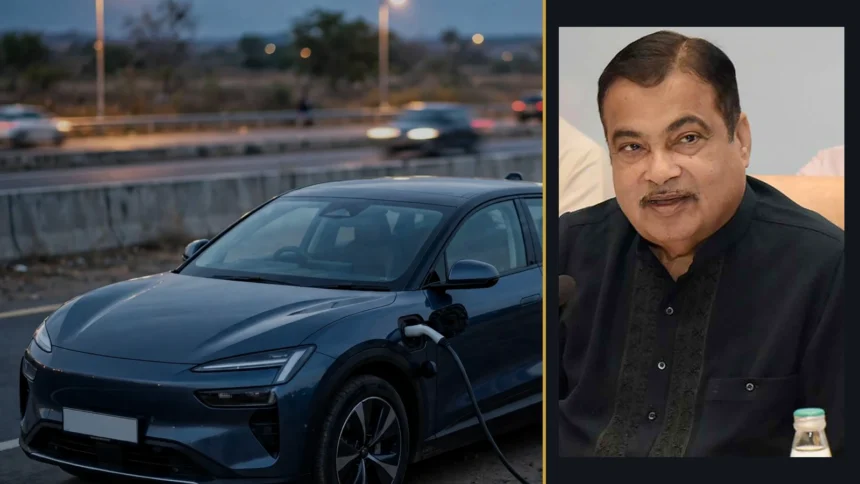
Union Road Transport and Highways Minister Nitin Gadkari has set out one of the clearest roadmaps yet for India’s electric vehicle push. Speaking in New Delhi on Wednesday, he said the National Highways Authority of India (NHAI) will install 700 new EV charging stations over the next two years, and predicted that 35 to 40 per cent of all cars sold in the country next year will be electric.
The announcement came at the EV Ecosystem Awards in New Delhi, on a day when Delhi’s air quality was back in the very poor category, with the Air Quality Index at 379, according to the Central Pollution Control Board.
“Pollution is a major problem. You know how high the pollution level is in Delhi today. In the future, reducing pollution in the country will be the biggest challenge,” Gadkari said at the event.
700 charging stations on national highways
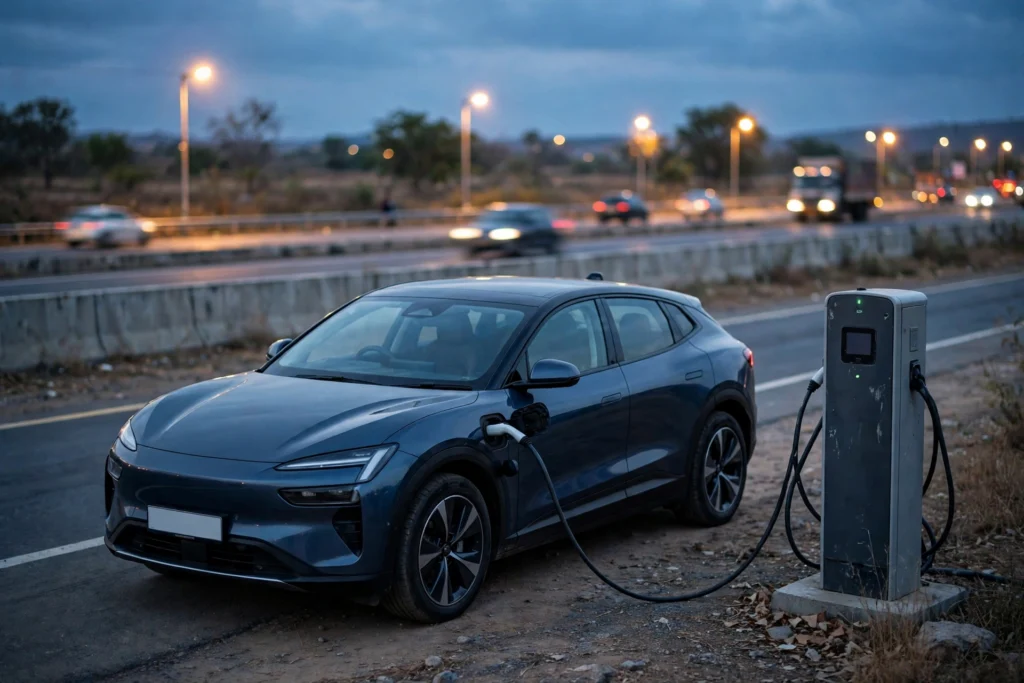
The centrepiece of the announcement is the charging network. NHAI has set a target of putting up 700 charging stations over the coming two years, a move aimed squarely at the worry that still holds many buyers back: where to charge on a long drive.
For most Indian car buyers, the charging question matters more than the car itself. A family considering its first electric car wants to know whether it can drive from Delhi to Jaipur or Mumbai to Pune without hunting for a plug, and highway charging is meant to answer exactly that question.
35 to 40 per cent electric: how big is the jump?
Gadkari’s prediction is bold. He said that by next year, at least 35 to 40 per cent of cars sold in India will be electric. That would be a sharp climb from where the market stands today.
EV registrations jumped 74.7 per cent in October, taking the electric share of the market to 7.3 per cent, with Tata Motors and Mahindra leading the growth. Moving from 7.3 per cent to 35 per cent in a year would need charging, prices and model choice to all move in the same direction at once.
The minister’s argument is that running costs are already on the EV’s side. He said India is trying to become self-reliant in EV production because the cost of operating an electric vehicle is lower than that of a vehicle running on fossil fuels.
Pollution and the Rs 22 lakh crore import bill
Behind the EV push sits a much bigger number. Gadkari said India needs to cut its fossil fuel import bill of Rs 22 lakh crore, and encouraging EVs is one of the main ways to do it. Every litre of petrol not burned is a litre not imported.
Delhi’s air has slipped back into the very poor category this week, and the capital’s pollution debate returns every winter with the same urgency. Gadkari tied the two together directly, saying the government sees clean mobility as both an economic and a health question.
Flex-fuel and hydrogen: the other half of the plan
Electric cars are only one part of the minister’s plan. He also confirmed that Toyota will launch the Innova’s flex-fuel model on November 26, a car that can run on E100, or nearly pure ethanol.
The launch follows changes notified last month by the Ministry of Road Transport and Highways to the Central Motor Vehicles Rules, which now allow flex-fuel vehicles that can run on E100. Flex-fuel vehicles are designed for higher ethanol blends such as E85 and E100, unlike conventional petrol cars, which are approved only for lower ethanol blends.
Green hydrogen got a mention too. Gadkari said green hydrogen is the future and that India can become a net exporter of clean hydrogen.
An industry chasing the world number one spot
Gadkari also set out the scale of his ambition for the auto sector itself. When he took charge as transport minister, he said, the size of the Indian automobile industry was Rs 14 lakh crore. It now stands at Rs 22 lakh crore, still third in the world behind the United States at Rs 78 lakh crore and China at Rs 47 lakh crore.
Whether the 35 to 40 per cent prediction comes true will be judged by next year’s sales figures. But the direction of travel is now clear: more chargers, more electric models, and a government betting that clean transport can cut both pollution and the import bill.
FAQs
How many EV charging stations is NHAI planning?
NHAI has set a target of installing 700 charging stations over the next two years, as announced by Union Minister Nitin Gadkari on Wednesday.
What share of car sales does Gadkari expect to be electric?
He predicted that by next year, at least 35 to 40 per cent of cars sold in India will be electric, up from a 7.3 per cent market share in October 2026.
When will Toyota launch the Innova flex-fuel model?
Toyota will launch the Innova’s flex-fuel model on November 26. It can run on E100, which is nearly pure ethanol.
What is E100 fuel?
E100 is nearly pure ethanol. Flex-fuel vehicles are designed to run on higher ethanol blends such as E85 and E100, unlike conventional petrol vehicles, which are approved for lower ethanol blends.
India’s EV story is moving fast, and the next year will show whether charging networks and new models can turn a bold prediction into reality.