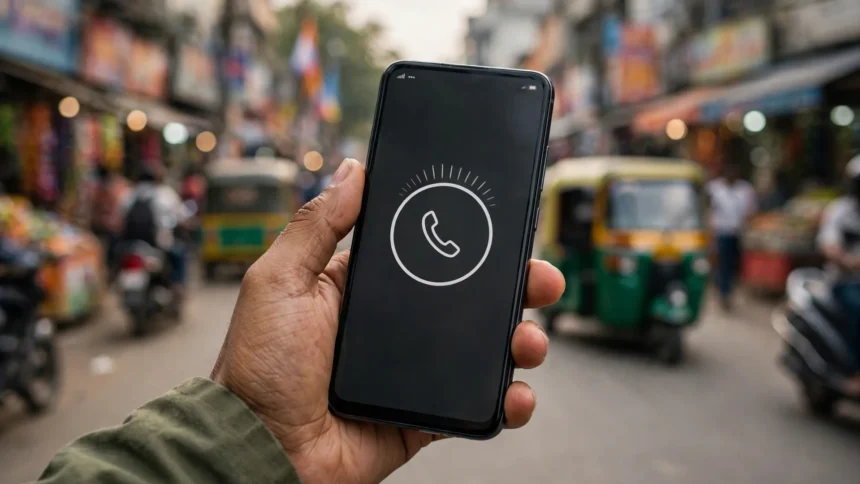
From today, November 1, 2026, an unknown number flashing on your phone in India should no longer be a complete mystery. Telecom operators have begun rolling out Calling Name Presentation, or CNAP, a network-level service that shows the caller’s name alongside the number on incoming calls. If you have ever stared at an unfamiliar number and wondered whether to pick up or let it ring out, this change is aimed squarely at that moment of hesitation.
The Department of Telecommunications (DoT) directed all access service providers to implement CNAP across their service areas from November 1. The direction, issued through a circular dated October 13, covers Reliance Jio, Bharti Airtel, Vodafone Idea and state-owned BSNL. You do not need to do anything to get it. There is no app to install, no form to fill and no separate request to make. The name arrives through the mobile network itself, as part of the call.
What exactly will you see on your screen?
What appears depends on the kind of call coming in, and on whether you have already saved the number.
- Saved numbers: the name you stored in your contacts will continue to appear, exactly as before. Your saved name always takes priority over the network record.
- Unsaved domestic numbers: you will see the number plus the name recorded in the caller’s subscriber details with their telecom operator, which comes from the caller’s KYC records.
- Unsaved international numbers: instead of a name, your screen will display “International Call”, making it immediately clear the call originated outside India.
- Hidden numbers: subscribers who have opted for Calling Line Identification Restriction (CLIR), the existing facility for restricting caller identification, will not have their names displayed.

Why the government pushed for CNAP
The idea is not new. The Telecom Regulatory Authority of India (TRAI) recommended CNAP back in February 2024, arguing that subscribers should know who is calling them without depending on a third-party app. In October 2025, TRAI agreed to the DoT proposal to make the service available by default, removing the need for individual activation requests. The November 1 rollout is the result of that long process, and it rests on the Telecommunications (Authorisation for Provision of Principal Telecommunication Services) Rules, 2026, and the Unified Licence Agreement.
Which networks and phones are covered?
For now, CNAP is rolling out on 4G and newer mobile networks, including 5G. That covers the overwhelming majority of smartphone users in India, including every Jio subscriber, since Jio runs only 4G and 5G networks. The rollout on 2G, 3G and fixed landline networks will be considered separately, so users on older networks may not see the change immediately.
What CNAP will not do
It is important to be clear about the limits, because a name on the screen can create a false sense of security if it is misunderstood.
- It does not block spam. CNAP shows a name, it does not stop unwanted calls from reaching you. You will still need your phone’s spam filters and blocking tools for that.
- It shows the SIM registrant, not necessarily the speaker. If a SIM is registered in someone else’s name, or the KYC record is outdated, the registered name may appear instead of the person actually holding the phone.
- It does not cover internet calls. Calls made through messaging apps work outside the telecom network, so CNAP does not apply to them.
- It does not override privacy choices. CLIR subscribers stay hidden, and businesses with bulk connections may be offered a facility to display a preferred or verified trade name instead of the subscriber record name.
In short, treat the displayed name as a useful clue, not as proof of identity. If a caller claiming to be from your bank asks for an OTP or a payment, the name on the screen is no reason to trust them. Hang up and call the official number instead.
What to check on your own number
Since the name shown for your outgoing calls comes from your operator’s KYC record, check that record is accurate this week. If your SIM is still registered in a family member’s name, or under an old spelling, that is the name other people may now see when you call them. Updating your KYC details with your operator is the only way to make sure the right name travels with your number.
FAQs
Do I need to activate CNAP or install an app?
No. Operators must provide it without a separate request, and it works through the mobile network, not through an app.
Will my saved contacts change?
No. The name you saved in your phone will continue to appear for saved numbers, and it takes priority over the network record.
What will international calls show?
Unsaved international numbers will display “International Call” instead of a subscriber name.
Does CNAP block spam or fraud calls?
No. It only displays the caller’s name, which reflects the SIM registration, so stay cautious about OTP or payment requests.
Is CNAP available on 2G, 3G and landlines?
Not yet. The November 1 rollout covers 4G and newer networks, including 5G. Older networks and landlines will be considered separately.
That is the change in a nutshell: fewer truly unknown calls, a clearer label on international calls, and no action needed from you. If the name looks wrong, remember it is only as accurate as the KYC record behind it.